ZH-CSC Shuttle Experiment Video Analysis System
- PRODUCT DETAIL
ZH-CSC Shuttle Experiment Video Analysis System
Product Introduction
The
ZH-CSC Shuttle Experiment Video Analysis System is a laboratory instrument
designed for quantitative analysis of animal learning, memory, conditioned
reflexes, and avoidance behavior. Based on the shuttle box paradigm, the system
evaluates how experimental animals learn to move between safe zones in response
to conditioned auditory stimuli and electrical stimulation.
The
system integrates a shuttle box, programmable sound stimulation, adjustable
constant-current and constant-voltage electrical stimulation, and
computer-based experimental control. Its cyclically shifted pulse stimulation
method helps maintain effective grid stimulation as animals change position.
The
ZH-CSC records key behavioral indicators, including avoidance latency, escape
responses, and error counts, providing quantitative data for neuroscience,
neurophysiology, neuropharmacology, and cognitive function research.
Performance Features
1. Embedded Control
System: Uses an embedded microcontroller as the main hardware control core for reliable
experimental operation.
2. Programmable
Stimulation: Software allows direct adjustment of stimulus voltage,
current, and sound delay.
3.Constant-Current and
Constant-Voltage Output: Supports controlled electrical stimulation for
standardized behavioral experiments.
4. Cyclic Grid
Stimulation: Applies cyclically shifted pulse stimulation across
electrodes to reduce the risk of ineffective stimulation when animals remain on
the same grid electrode.
5. Adjustable Stimulus
Parameters: Provides adjustable square-wave peak voltage and current
settings for different experimental requirements.
6. USB Connectivity: Uses USB
interfaces for system signal communication and computer-based control.
7. Multi-Size Animal
Compatibility: The stimulation system is designed to accommodate animals
of different sizes.
8. Automated Behavioral Recording: Collects
behavioral response parameters for quantitative learning and memory assessment.
9. Multiple Analysis Indicators: Measures
response latency, active avoidance, passive escape, and error counts.
Working Principle
The
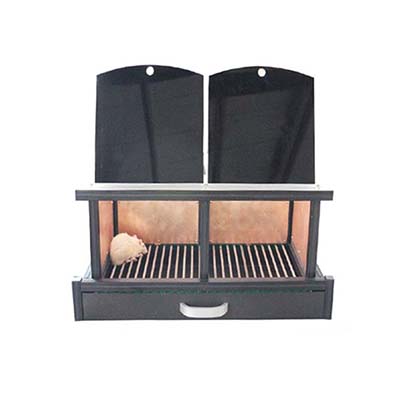
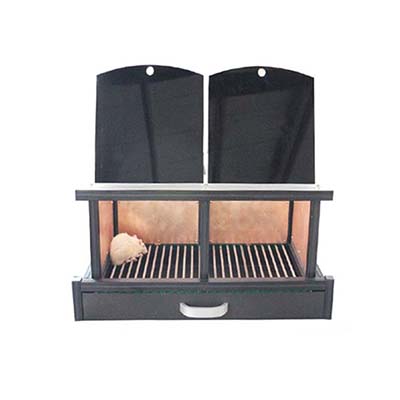
ZH-CSC uses a two-compartment shuttle box with a stainless-steel grid floor.
During an experiment, an auditory conditioned stimulus is presented before
electrical stimulation is delivered according to the programmed protocol.
Animals
can respond by moving into the opposite safe compartment. Responses occurring
during the conditioned-stimulus interval before electrical stimulation are
classified as active avoidance. Responses occurring after electrical
stimulation begins are generally classified as escape responses. Failure to
make the required response is recorded according to the configured experimental
scoring rules.
Through
repeated training, animals may learn to move to the safe compartment in
response to the auditory cue alone. The computer-based system records response
timing and behavioral outcomes, allowing researchers to evaluate learning
acquisition, memory performance, and avoidance behavior.
Shorter
active avoidance latency can indicate faster learned responses under comparable
experimental conditions, although interpretation should account for locomotor
activity, sensory function, stress, and other potential confounding factors.
Technical Parameters
Parameter
Specification
Model
ZH-CSC
Product
Type
Shuttle
Experiment Video Analysis System
Main
Application
Animal
learning, memory, and avoidance behavior analysis
Shuttle
Box Dimensions
700
× 260 × 430 mm
Single
Compartment Internal Dimensions
250
× 185 × 300 mm
Power
Supply
AC
220 V
Grid
Current Adjustment Range
0.04–3.5
mA
Current
Adjustment Step
0.02
mA
Current
Error
Less
than 0.04 mA
Grid
Voltage Adjustment Range
30–120
V, square-wave peak
Voltage
Adjustment Step
1
V
Peak
Voltage Error
Less
than 5%
Grid
Stimulation Frequency
96
Hz
Frequency
Error
1%
Sound
Stimulus Delay
0–255
seconds
Stimulation
Waveform
Square
wave
Control
System
Embedded
microcontroller
Communication
Interface
USB
Stimulation
Modes
Constant-current
and constant-voltage
Software
Control
Programmable
stimulus parameters and automated data recording
Analysis Indicators
Indicator
Description
First
Correct Latency
Time
required to achieve the first correct avoidance response
Total
Correct Latency
Cumulative
latency associated with correct responses, according to the software's
calculation method
Number
of Active Avoidance Responses
Count
of successful avoidance responses before electrical stimulation
First
Error Latency
Time
to the first incorrect response, as defined by the experimental protocol
Total
Error Latency
Cumulative
latency associated with incorrect responses
Passive
Escape Responses
Responses
occurring after electrical stimulation begins
Number
of Errors
Total
recorded incorrect responses
Application Scenarios
• Learning
and Memory Research: Evaluating acquisition and retention of
conditioned avoidance responses.
• Cognitive
Neuroscience: Investigating neural mechanisms underlying learning,
memory, and behavioral adaptation.
•Neurophysiology: Studying
physiological processes associated with conditioned reflexes and avoidance
learning.
• Neuropharmacology: Assessing
the effects of experimental compounds on learning and memory performance.
• Cognitive
Impairment Research: Supporting experimental studies of cognitive
decline and impaired learning.
• Behavioral
Neuroscience: Quantifying rodent responses to auditory cues and aversive
stimuli.
• Preliminary Behavioral
Screening: Providing complementary measurements for broader learning, memory, and
cognitive function studies.
ZH-CSC vs. Traditional Shuttle Box Systems
Comparison Factor
ZH-CSC System
Traditional Manual Shuttle Box
Experimental
Control
Computer-based
parameter control
May
rely on manual adjustment
Current
and Voltage
Adjustable
through software
Depends
on the stimulation controller
Sound
Stimulus Delay
Programmable
from 0–255 seconds
Depends
on the equipment
Grid
Stimulation
Cyclically
shifted pulse stimulation
May
use fixed-electrode stimulation
Communication
USB
interface
Depends
on the system
Behavioral
Recording
Automated
parameter recording
May
require manual recording
Analysis
Indicators
Multiple
latency, avoidance, and error indicators
Depends
on the recording and analysis method
Experimental
Consistency
Programmable
stimulation supports standardized protocols
Depends
on equipment and operator procedures
Frequently Asked Questions (FAQ)
1. What is the ZH-CSC Shuttle Experiment Video Analysis
System used for?
It
is used to study animal learning, memory, conditioned reflexes, active
avoidance, and escape behavior, primarily in laboratory behavioral
neuroscience.
2. How does the shuttle box experiment work?
An
auditory cue is presented before an aversive electrical stimulus. Animals learn
to move into the opposite compartment during the cue interval to avoid the
stimulus.
3. What is the difference between active avoidance and
passive escape?
Active
avoidance occurs when an animal responds to the conditioned cue before
electrical stimulation begins. Escape occurs when the animal responds after the
aversive stimulus has started.
4. What electrical stimulation parameters can be adjusted?
The
system provides a current adjustment range of 0.04–3.5 mA and a square-wave
peak voltage range of 30–120 V, with software-configurable settings.
5. Can the auditory stimulus timing be programmed?
Yes.
The specified sound stimulus delay can be adjusted from 0 to 255 seconds.
6. What is the advantage of cyclically shifted grid
stimulation?
It
helps reduce the possibility that an animal will avoid effective stimulation
simply by standing on the same grid electrode, supporting more consistent
stimulus delivery.
7. What behavioral indicators can the system analyze?
The
listed indicators include first and total correct latency, active avoidance
counts, first and total error latency, passive escape responses, and error
counts.
8. Which animals can be used with the ZH-CSC?
The
stimulation system is designed for animals of different sizes. Actual species
and body-size compatibility should be confirmed against the manufacturer's
recommended experimental configurations.
9. How is the system connected to a computer?
The
system uses USB interfaces for communication and supports software-based
stimulation control and behavioral data recording.