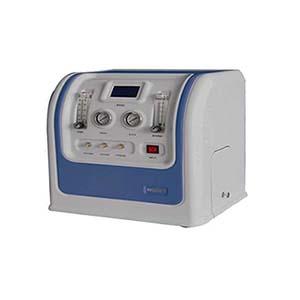
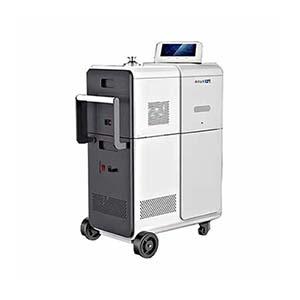
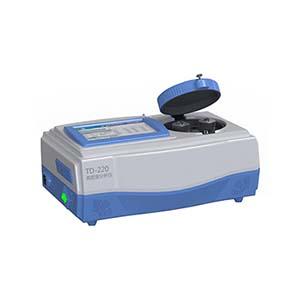
G-DenPyc 2900 Fully Automatic Powder True Density Analyzer
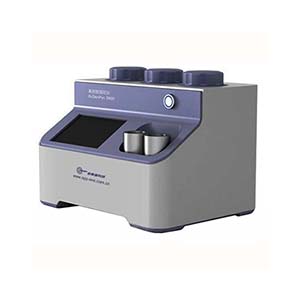
- PRODUCT DETAIL
G-DenPyc 2900 Fully Automatic Powder True Density Analyzer
Product Introduction
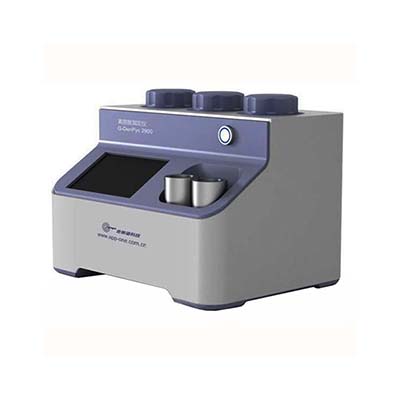
The G-DenPyc 2900 Fully Automatic Powder True Density Analyzer is designed for precise measurement of the true density of powders and solid materials using gas expansion and volume displacement methods. It also supports the determination of open-cell and closed-cell ratios in rigid foams.
The analyzer integrates a high-precision pressure sensing system, programmable embedded control, touchscreen operation, and advanced gas density calculation. Its bidirectional heating and cooling system maintains a stable test temperature of 25°C, improving measurement consistency and repeatability. With the capacity to test three samples simultaneously, the G-DenPyc 2900 supports efficient quality control and materials research.
Performance Features
• High-precision density measurement: Advanced pressure, temperature, and gas density calculations help minimize measurement errors.
• Gas expansion technology: Enables accurate true density measurement through volume displacement and gas expansion.
• Thermostatic temperature control: Bidirectional heating and cooling maintain a target temperature of 25°C for improved stability.
• Multiple testing modes: Software-based configuration supports flexible testing according to sample characteristics.
• Automated operation: Programmable embedded control simplifies test procedures through the touchscreen interface.
• External control support: Compatible with USB keyboards and mice for convenient operation.
• Three-sample capacity: Allows simultaneous measurement of up to three samples, improving laboratory throughput.
• High-precision pressure sensing: Imported pressure sensors provide a specified accuracy of 0.04% FS.
• Flexible pressure configuration: Optional vacuum pump and pressure modes accommodate different testing requirements.
• Multiple gas options: Supports high-purity helium, air, or nitrogen, with 99.999% purity recommended for suitable applications.
Working Principle
The G-DenPyc 2900 uses gas expansion and volume displacement to determine the true density of solid and powder samples.
1. Sample loading: A known quantity of sample is placed in the measurement chamber.
2. Gas introduction: A selected test gas, such as helium or nitrogen, is introduced into the chamber under controlled pressure conditions.
3. Gas expansion: The gas expands between calibrated volumes, and the instrument measures the resulting pressure changes.
4. Volume calculation: Using gas behavior, calibrated chamber volumes, and pressure measurements, the system calculates the volume occupied by the solid material.
5. Density determination: The true density is calculated from the sample mass and measured solid volume.
6. Result processing: The integrated software processes the measurements and displays the results automatically.
For suitable rigid foam samples, gas-accessible pore volume measurements can also support the evaluation of open-cell and closed-cell characteristics, depending on the configured test method.
Technical Parameters
|
Parameter |
Specification |
|
Model |
G-DenPyc 2900 |
|
Product Type |
Fully automatic true density analyzer |
|
Measurement Methods |
Volume displacement and gas expansion |
|
Main Functions |
True density, rigid foam open-cell ratio and closed-cell ratio (porosity) |
|
Measurement Accuracy |
±0.02% |
|
Repeatability |
±0.01% |
|
Test Resolution |
0.0001 g/cc |
|
Sample Capacity |
Up to 3 samples simultaneously |
|
Pressure Measurement Accuracy |
0.04% FS |
|
Long-Term Pressure Sensor Stability |
0.025% FS |
|
Test Temperature |
25°C, maintained by bidirectional temperature control |
|
Pressure Modes |
Optional vacuum mode (specified as 0 and 1 bar) or positive-pressure mode (1–2 bar) |
|
Vacuum Pump |
Optional external vacuum pump |
|
Test Gases |
High-purity helium, air, or nitrogen |
|
Recommended Gas Purity |
99.999% |
|
Control System |
Programmable embedded system |
|
User Interface |
Touchscreen |
|
External Controls |
USB keyboard and mouse |
Note: The original specifications do not clarify whether the stated accuracy and repeatability are relative percentages or absolute values, or fully define the pressure reference conditions. Confirm these details, along with the foam porosity test configuration, with the manufacturer before procurement.
Application Scenarios
• Powder materials: True density measurement of metal powders, ceramic powders, mineral powders, and other particulate materials.
• Battery materials: Density characterization of suitable electrode powders and related materials.
• Pharmaceutical research: Density analysis of powdered raw materials and excipients.
• Chemical industry: Characterization of catalysts, pigments, fillers, and functional powders.
• Advanced materials research: Evaluation of material density for formulation development and quality control.
• Rigid foam testing: Analysis of open-cell and closed-cell characteristics in suitable rigid foam materials.
• Quality assurance laboratories: Repeatable density testing for production inspection and incoming material verification.
G-DenPyc 2900 Comparison
|
Feature |
G-DenPyc 2900 |
Conventional Manual Density Tester |
|
Measurement Principle |
Gas expansion and volume displacement |
Depends on method |
|
Automation |
Fully automatic measurement and calculation |
Often requires manual operation |
|
Specified Measurement Accuracy |
±0.02% |
Model-dependent |
|
Specified Repeatability |
±0.01% |
Model-dependent |
|
Sample Throughput |
Up to 3 samples simultaneously |
Depends on instrument |
|
Temperature Control |
Bidirectional heating and cooling |
May require external control |
|
Pressure Measurement |
High-precision pressure sensor |
Depends on instrument |
|
Control Interface |
Touchscreen with USB keyboard and mouse support |
Varies by model |
|
Material Applications |
Powders, solids, and suitable rigid foam samples |
Depends on measurement method |
The G-DenPyc 2900 is suited to laboratories requiring automated gas-based density measurement, controlled testing conditions, and higher sample throughput. Its performance should be evaluated against the required sample type, measurement range, and test method.
Frequently Asked Questions (FAQ)
Q1: What is the G-DenPyc 2900 used for?
It measures the true density of powders and solid materials and supports open-cell and closed-cell ratio testing for suitable rigid foam samples.
Q2: How does the analyzer measure true density?
It uses gas expansion and volume displacement to determine the solid sample volume, then calculates density from the sample mass and measured volume.
Q3: Which test gases can be used?
The specified gases are helium, air, and nitrogen. High-purity gas with 99.999% purity is recommended, particularly when high measurement accuracy is required.
Q4: How many samples can be tested simultaneously?
The analyzer can measure up to three samples simultaneously.
Q5: Does the G-DenPyc 2900 control the test temperature?
Yes. Its bidirectional heating and cooling system is designed to maintain a test temperature of 25°C.
Q6: What is the specified measurement accuracy?
The supplied specification states ±0.02% measurement accuracy and ±0.01% repeatability. Confirm the calculation basis and test conditions with the manufacturer.
Q7: Can the analyzer test rigid foam porosity?
Yes. Its listed functions include open-cell and closed-cell ratio determination for rigid foam, subject to the applicable test configuration and method.
Q8: Is an external vacuum pump required?
An external vacuum pump is optional and can be used for the specified vacuum measurement mode. The appropriate configuration depends on the sample and test requirements.
Q9: Which industries can use this instrument?
Applications include powder metallurgy, battery materials research, pharmaceuticals, chemicals, ceramics, advanced materials, and rigid foam manufacturing.