DZDR-S Thermal Conductivity Meter for Materials
- PRODUCT DETAIL
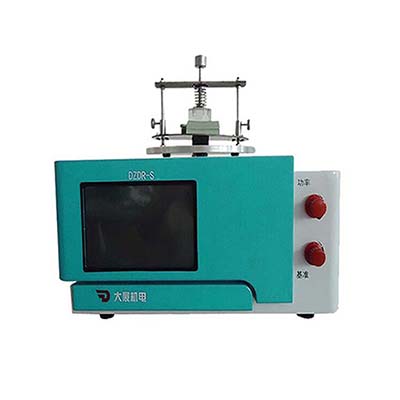
DZDR-S Thermal Conductivity Meter for Materials
Product Introduction
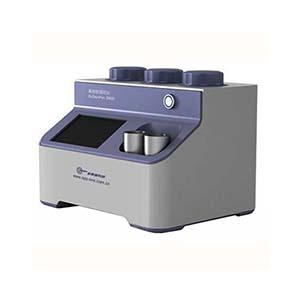
The DZDR-S Thermal Conductivity Meter is a material thermal conductivity testing instrument based on the transient plane heat source (TPS) method. Developed through independent research and development, it combines stable measurement performance with intelligent data processing to evaluate the heat-transfer properties of a wide range of materials.
With a measurement range of 0.005–300 W/(m·K), the DZDR-S is suitable for testing metals, ceramics, polymers, composite materials, mineral-based materials, insulation products, and building materials. Its color LCD interface, automated data analysis, and report-generation functions help simplify laboratory testing and improve workflow efficiency.
The instrument supports measurements at temperatures from room temperature to 130°C and offers a configurable measurement duration of 5–160 seconds, making it suitable for material research, quality control, and thermal performance evaluation.
Performance Features
1. Wide Measurement Range: Measures thermal conductivity from 0.005 to 300 W/(m·K), covering materials with a broad range of heat-transfer properties.
2. Transient Plane Heat Source Technology: Uses the TPS method to determine material thermal conductivity.
3. Intelligent User Interface: Features a color LCD screen for convenient instrument operation and result viewing.
4. Fast Testing: Measurement times range from 5 to 160 seconds, depending on the test setup and material.
5. Automated Data Processing: Built-in software supports test-record management, data processing, and report formatting.
6. Automatic Report Generation: Generates test reports and supports printing when connected to a compatible printer.
7. Broad Material Compatibility: Suitable for various metals, ceramics, polymers, composites, insulation materials, and construction products.
Working Principle
The DZDR-S thermal conductivity meter uses the Transient Plane Heat Source (TPS) method to characterize a material's thermal transport properties.
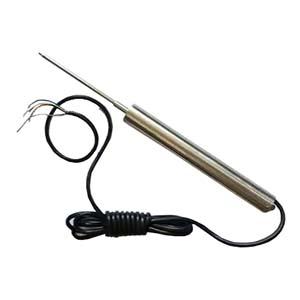
A plane heat-source probe is brought into contact with the test material. During measurement, the probe provides a controlled thermal stimulus and records the resulting temperature response over time. The instrument processes this response using the TPS measurement model to calculate thermal conductivity.
The measurement duration can be set within the specified range of 5–160 seconds. Actual testing conditions depend on the material properties, sample configuration, probe contact, and test procedure.
Technical Parameters
|
Parameter |
Specification |
|
Model |
DZDR-S |
|
Measurement Method |
Transient Plane Heat Source (TPS) |
|
Thermal Conductivity Range |
0.005–300 W/(m·K) |
|
Measuring Temperature Range |
Room temperature to 130°C |
|
Working Environment Temperature |
0–40°C |
|
Probe Diameter |
15 mm |
|
Accuracy |
±3% |
|
Repeatability Error |
≤3% |
|
Measurement Time |
5–160 seconds |
|
Power Supply |
AC 220 V |
|
Instrument Power |
500 W |
|
Display |
Color LCD |
|
Data Processing |
Built-in software for test records, data processing, and report generation |
|
Report Output |
Supports printing through a connected compatible printer |
Note: Confirm the applicable test method, sample requirements, and operating conditions with the manufacturer before testing specific materials.
Application Scenarios
The DZDR-S thermal conductivity meter can be used to evaluate thermal transport properties in material research, manufacturing, and quality inspection.
• Metals and Ceramics: Thermal conductivity testing of metallic materials, ceramic products, and mineral specimens.
• Polymers and Composites: Testing polymer materials, composite materials, and glass-fiber-reinforced panels.
• Thermal Insulation: Evaluation of foam plastics, polyurethane, phenolic foam, urea-formaldehyde materials, mineral wool, glass wool, and rock wool.
• Construction Materials: Thermal performance assessment of cement walls, cement-polystyrene boards, composite sandwich concrete, and other building products.
• Panel and Lightweight Materials: Testing paper, textiles, paper honeycomb boards, and other suitable sheet or panel materials.
• Research and Quality Control: Supporting laboratory characterization, material comparison, product development, and incoming-material inspection.
DZDR-S vs. Conventional Thermal Conductivity Testing Methods
|
Comparison Item |
DZDR-S Thermal Conductivity Meter |
Conventional Testing Approaches |
|
Measurement Technology |
Transient Plane Heat Source (TPS) |
Depends on the selected method |
|
Thermal Conductivity Range |
0.005–300 W/(m·K) |
Varies by instrument and method |
|
Measurement Duration |
5–160 seconds |
May require longer stabilization or testing |
|
Operation |
Color LCD interface |
Depends on instrument design |
|
Data Processing |
Built-in automated processing |
May require additional manual processing |
|
Reporting |
Automatic report generation and printer support |
Depends on software and configuration |
|
Material Applications |
Metals, ceramics, polymers, composites, insulation, and construction materials |
Depends on the method, fixtures, and sample requirements |
The comparison is general. Actual performance depends on the testing method, material type, sample geometry, and instrument configuration.
Frequently Asked Questions (FAQ)
1. What is the DZDR-S thermal conductivity meter used for?
It measures the thermal conductivity of suitable materials, including metals, ceramics, polymers, composites, insulation products, and construction materials.
2. What is the measurement range of the DZDR-S?
Its specified thermal conductivity measurement range is 0.005–300 W/(m·K).
3. What measurement method does the instrument use?
The DZDR-S uses the Transient Plane Heat Source (TPS) method to determine thermal conductivity from a material's thermal response.
4. What is the accuracy of the DZDR-S thermal conductivity meter?
The specified accuracy is ±3%, with a repeatability error of 3% or less.
5. How long does a measurement take?
The specified measurement time is 5–160 seconds. The appropriate duration depends on the material and test conditions.
6. Can the DZDR-S test thermal insulation materials?
Yes. Listed materials include polyurethane, foam plastics, mineral wool, glass wool, and rock wool. Suitability depends on sample condition and the applicable test procedure.
7. Can it be used for building material testing?
Yes. Potential applications include cement walls, cement-polystyrene boards, composite sandwich concrete, glass-fiber-reinforced panels, and paper honeycomb boards, subject to sample and method requirements.
8. Does the instrument support automatic test reports?
Yes. Its built-in software supports test-record storage, data processing, and automatic report generation. A compatible printer can be connected for printing reports.
9. What are the operating temperature and power requirements?
The specified working environment is 0–40°C. The instrument operates on AC 220 V and has a rated power of 500 W. Its measuring temperature range extends from room temperature to 130°C.
NEXT:ZR-1 intelligent burning Oxygen index Analyzer