DMWY Strain Displacement Sensor
- PRODUCT DETAIL
DMWY Strain Displacement Sensor
Product Introduction
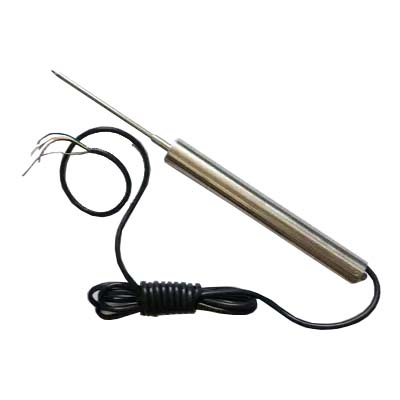
The DMWY Strain Displacement Sensor is an electrical displacement transducer that converts linear displacement, or a physical quantity associated with displacement, into an electrical signal. Designed for use with static or dynamic strain measurement systems, it supports static, quasi-static, and low-frequency dynamic displacement testing.
With high sensitivity, a stainless steel housing, and multiple measurement ranges from 5 mm to 200 mm, the DMWY sensor is suitable for experimental research and structural monitoring in water conservancy, hydropower, material mechanics, bridges, tunnels, aviation, and civil engineering. An optional wireless transmitter enables wireless data transmission for applications where wired connections are inconvenient.
Performance Features
• High measurement sensitivity: Can distinguish displacement changes smaller than 0.005 mm.
• Multiple measurement ranges: Available in full-scale ranges of 5, 10, 20, 30, 50, 100, and 200 mm.
• High accuracy: Specified accuracy of ≤0.2% F.S.
• Stable output: Designed for low drift and stable measurement performance.
• Durable construction: Stainless steel full-bridge housing offers corrosion resistance and pressure resistance.
• Flexible bridge configuration: Full-bridge and optional half-bridge configurations.
• Wireless transmission option: Can be equipped with a wireless transmitter module for remote data transmission.
• Flexible installation: Bottom or side cable outlets are available, with accessories suitable for embedded installation applications.
• Wide temperature range: Operates from −35°C to +80°C.
Working Principle
The DMWY strain displacement sensor uses a strain-gauge measurement mechanism to convert mechanical displacement into a measurable electrical signal. When the sensor's measuring element experiences displacement, the resulting deformation changes the resistance of the strain gauges. The bridge circuit converts this resistance change into an electrical output proportional to the measured displacement within the sensor's operating range.
The output can be collected by a compatible static or dynamic strain measurement system for data recording and analysis. When the optional wireless transmitter is installed, the measurement signal can be transmitted wirelessly to a compatible receiving system.
Technical Parameters
|
Parameter |
Specification |
|
Model |
DMWY |
|
Product Type |
Strain Gauge Displacement Sensor |
|
Outer Diameter |
28 mm |
|
Fixed Shaft Diameter |
8 mm |
|
Measurement Ranges |
5, 10, 20, 30, 50, 100, 200 mm |
|
Accuracy |
≤0.2% F.S. |
|
Specified Error |
≤0.01 mm |
|
Bridge Configuration |
Full bridge; half bridge optional |
|
Supply Voltage |
≤10 V |
|
Full-Scale Output |
Approximately 8,000 με |
|
Displacement Resolution |
Can distinguish changes smaller than 0.005 mm |
|
Operating Temperature |
−35°C to +80°C |
|
Measurement Modes |
Static, quasi-static, and low-frequency dynamic |
|
Signal Collection |
Compatible static or dynamic strain collector |
|
Wireless Transmission |
Optional wireless transmitter module |
|
Cable Connection |
Red, green, white, and black wires correspond to A, B, C, and D |
|
Cable Outlet |
Bottom or side outlet |
|
Theoretical Service Life |
10 million cycles, depending on actual test conditions |
Note: F.S. means full scale. Confirm the selected range, bridge wiring, excitation requirements, and compatible data acquisition equipment before installation. The stated theoretical service life depends on operating and test conditions.
Application Scenarios
• Water conservancy and hydropower: Monitoring structural displacement and deformation in hydraulic structures.
• Bridge and tunnel engineering: Measuring displacement during structural testing and long-term monitoring.
• Material mechanics laboratories: Conducting static, quasi-static, and low-frequency dynamic displacement experiments.
• Civil engineering: Monitoring deformation in structural components and engineering materials.
• Aerospace testing: Measuring linear displacement in applicable structural test setups.
• Embedded monitoring: Using suitable accessories for displacement measurements in soil or other engineering environments.
• Wireless structural monitoring: Transmitting measurement data wirelessly when equipped with the optional transmitter.
DMWY vs. Conventional Displacement Sensors
|
Feature |
DMWY Strain Displacement Sensor |
Conventional Displacement Sensor |
|
Measurement Principle |
Strain-gauge electrical conversion |
Depends on sensor technology |
|
Available Range |
5–200 mm |
Varies by model |
|
Sensitivity |
Detects changes smaller than 0.005 mm |
Depends on model |
|
Accuracy |
≤0.2% F.S. |
Depends on model |
|
Bridge Configuration |
Full bridge; optional half bridge |
Depends on sensor design |
|
Housing |
Stainless steel |
Depends on materials |
|
Temperature Range |
−35°C to +80°C |
Depends on model |
|
Data Transmission |
Wired; optional wireless transmitter |
Depends on interface and accessories |
|
Typical Applications |
Structural testing, engineering experiments, displacement monitoring |
General-purpose displacement measurement |
Frequently Asked Questions
1. What is the DMWY strain displacement sensor used for?
It measures linear displacement in static, quasi-static, and low-frequency dynamic tests, including structural monitoring and material mechanics experiments.
2. What measurement ranges are available?
The sensor is available in 5, 10, 20, 30, 50, 100, and 200 mm ranges.
3. What is its measurement accuracy?
The specified accuracy is ≤0.2% F.S., with a stated error of ≤0.01 mm. Actual measurement performance depends on the selected range and installation conditions.
4. Can it detect very small displacement changes?
Yes. The supplied specifications state that it can distinguish displacement changes smaller than 0.005 mm. This sensitivity should not be interpreted as guaranteed overall measurement accuracy or resolution under all conditions.
5. Does the sensor support dynamic measurements?
Yes. It can be used with compatible static or dynamic strain measurement systems for static, quasi-static, and low-frequency dynamic displacement testing.
6. Can the DMWY sensor transmit data wirelessly?
Yes. An optional wireless transmitter module can be connected for wireless signal transmission. Compatibility with the receiver and data acquisition system should be confirmed.
7. What is the operating temperature range?
The specified operating temperature range is −35°C to +80°C.
8. How is the sensor connected?
The supplied wire-color mapping is red, green, white, and black corresponding to terminals A, B, C, and D. Verify the manufacturer's wiring diagram and the selected bridge configuration before connecting the sensor.
NEXT:TR-9300D Chimney Flue Gas Continuous Emissions Monitoring System (CEMS)