YM-200 Portable ATP Bacteria Detector
- PRODUCT DETAIL
YM-200 Portable ATP Bacteria Detector
Product Introduction
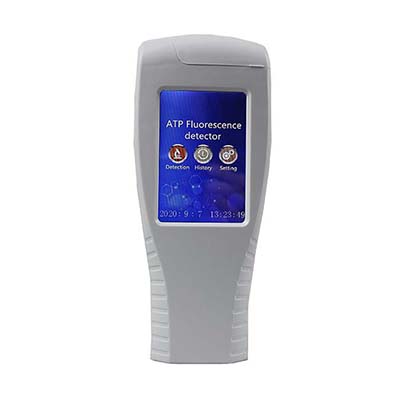
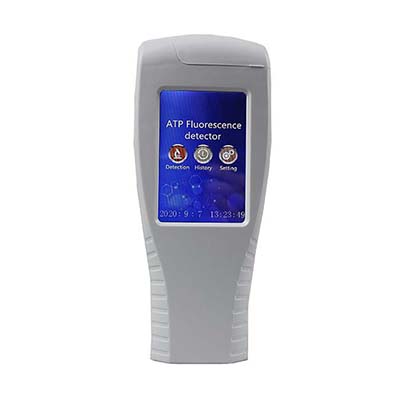
The YM-200 Portable ATP Bacteria Detector is a handheld hygiene monitoring instrument designed for rapid, on-site cleanliness assessment and microbial contamination screening. Using ATP bioluminescence technology, it provides quantitative results in approximately 10 seconds, helping users evaluate surface cleanliness and monitor hygiene conditions.
Featuring a lightweight design, automatic calibration, Bluetooth connectivity, and comprehensive data management, the YM-200 ATP hygiene monitoring system is suitable for food processing, catering, healthcare, pharmaceutical-related hygiene monitoring, water treatment, environmental protection, and other industries requiring rapid cleanliness assessment.
Performance Features
• Portable Design: Compact handheld construction weighing only 280 g for convenient one-handed operation.
• Rapid Testing: Delivers test results in approximately 10 seconds for efficient on-site hygiene screening.
• High Sensitivity: ATP detection sensitivity reaches 1 × 10⁻¹⁸ mol ATP, supporting trace-level ATP detection.
• User-Friendly Interface: 3.5-inch color display with graphical interface and simple controls.
• Automatic Calibration: Built-in light source calibration and temperature detection systems help maintain measurement stability.
• Tilt Protection: Automatically stops testing when the instrument tilt exceeds 30°, reducing errors caused by improper positioning.
• Wireless Printing: Bluetooth connectivity supports compatible printers for real-time result printing.
• Flexible Data Connectivity: USB and Bluetooth communication enable data transfer to PCs and compatible mobile devices.
• Large Data Storage: Stores up to 256 users, 256 plans, 2,000 programs, and 10,000 test records.
• Intelligent Data Analysis: Dedicated PC software supports result storage, historical tracking, and hygiene trend analysis.
• Long Battery Life: A 2,500 mAh rechargeable lithium battery provides up to 10 hours of operation and 600 hours of standby.
• Flexible Reagent Compatibility: Supports ATP test reagents from multiple manufacturers; supplied consumables are recommended for optimal measurement reliability.
Working Principle
The YM-200 ATP bacteria detector uses the ATP bioluminescence method to assess hygiene conditions. Adenosine triphosphate (ATP), present in living cells and biological residues, reacts with luciferin and luciferase in the presence of suitable reagents to produce light.
The instrument detects the emitted light and reports the signal as relative light units (RLU). Higher readings generally indicate greater ATP contamination, while lower readings generally indicate cleaner tested surfaces.
ATP testing provides rapid hygiene screening rather than direct bacterial identification or a definitive viable bacterial count. Results should be interpreted according to the sampling method, application requirements, and established hygiene limits.
Technical Parameters
|
Parameter |
Specification |
|
Model |
YM-200 |
|
Instrument Type |
Portable ATP Bacteria Detector |
|
Dimensions |
189 × 70 × 35 mm |
|
Weight |
280 g |
|
Display |
3.5-inch color screen with graphical HMI |
|
Startup Time |
15 s or 60 s, selectable |
|
Test Time |
Approximately 10 s |
|
Test Range |
0–999,999 RLU |
|
ATP Detection Sensitivity |
1 × 10⁻¹⁸ mol ATP |
|
Test Error |
±5% or ±5 RLU |
|
Repeatability |
8%–20% |
|
Correlation Coefficient |
≥0.995 |
|
Data Storage |
256 users, 256 plans, 2,000 programs, 10,000 results |
|
Battery Type |
3.7 V rechargeable lithium battery |
|
Battery Capacity |
2,500 mAh |
|
Maximum Charging Voltage |
4.2 V ± 0.05 V |
|
Operating Time |
Up to 10 hours |
|
Standby Time |
Up to 600 hours |
|
Communication |
USB and Bluetooth |
|
Real-Time Printing |
Supported via compatible Bluetooth printer |
|
Tilt Detection |
Test stops when tilt exceeds 30° |
|
Calibration |
Automatic light source calibration and temperature detection |
|
Operating Temperature |
5°C–40°C |
|
Operating Humidity |
20%–80% |
|
Storage Temperature |
−10°C–40°C |
Application Scenarios
• Food Processing and Catering: Rapid hygiene checks on food-contact surfaces, utensils, production equipment, and work areas.
• Healthcare and Medical Sanitation: Routine cleanliness screening of medical equipment and environmental surfaces.
• Pharmaceutical and Daily Chemical Industries: Hygiene monitoring during production, cleaning, and sanitation procedures.
• Water Treatment: ATP-based screening of relevant water-treatment process surfaces and sampling points.
• Environmental Monitoring: Rapid cleanliness assessment in laboratories, public facilities, and industrial environments.
• Quality Control and Sanitation Management: Routine inspection, cleaning verification, and trend analysis across multiple monitoring locations.
YM-200 ATP Detector Comparison
|
Feature |
YM-200 ATP Detector |
Conventional Microbiological Testing |
Basic ATP Cleanliness Tester |
|
Detection Method |
ATP bioluminescence |
Culture-based microbial analysis |
ATP bioluminescence |
|
Typical Testing Speed |
Approximately 10 seconds |
Usually hours to days |
Depends on model |
|
On-Site Testing |
Yes |
Possible, but requires suitable procedures and facilities |
Yes |
|
Quantitative Output |
0–999,999 RLU |
Colony counts or other microbiological results |
Usually RLU |
|
Data Management |
Extensive storage and PC software |
Depends on laboratory system |
Depends on model |
|
Wireless Printing |
Supported |
Depends on equipment |
Depends on model |
|
Automatic Tilt Protection |
Yes |
Not typically applicable |
Depends on model |
|
Primary Advantage |
Rapid screening and integrated data management |
Microbial enumeration and, where applicable, identification |
Fast routine hygiene screening |
Note: This table compares general testing approaches. Actual capabilities vary by instrument and microbiological method. ATP results are not directly interchangeable with colony-forming unit (CFU) counts.
Frequently Asked Questions (FAQ)
1. What is the YM-200 ATP bacteria detector used for?
It is used for rapid, on-site hygiene monitoring and cleanliness screening in food production, catering, healthcare, water treatment, and other industrial environments.
2. How long does one ATP test take?
The measurement takes approximately 10 seconds, enabling rapid inspection of multiple sampling locations.
3. What does the RLU result mean?
RLU stands for relative light units, which represent the detected bioluminescence signal. Higher readings generally indicate more ATP residue, but interpretation depends on the sampling procedure and established cleanliness thresholds.
4. Can the YM-200 directly identify specific bacteria?
No. ATP bioluminescence measures ATP-related light signals and does not identify bacterial species or directly establish a viable bacterial count.
5. Can test results be printed or transferred to a computer?
Yes. The instrument supports USB connection to a PC and Bluetooth communication with compatible devices and printers. Bluetooth printing enables real-time reporting.
6. How many test records can the instrument store?
The YM-200 can store up to 10,000 test results, along with 256 users, 256 plans, and 2,000 programs.
7. Does the detector require regular calibration?
It features automatic light source calibration and temperature detection. Users should also follow the manufacturer's maintenance and verification recommendations.
8. Which ATP reagents can be used?
The instrument is designed to accommodate ATP test reagents from multiple manufacturers. Using the supplied consumables is recommended to support reliable and consistent results.
9. What is the battery life of the YM-200?
Its 2,500 mAh rechargeable lithium battery provides up to 10 hours of operation or 600 hours of standby under specified conditions.