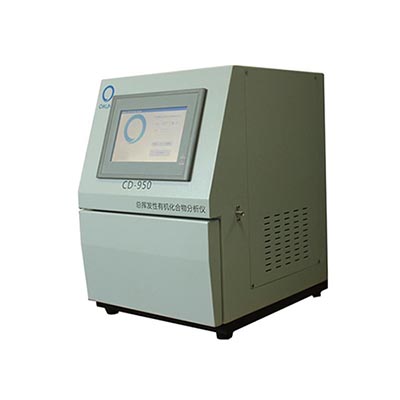
CD-950 TVOC Analyzer
- PRODUCT DETAIL
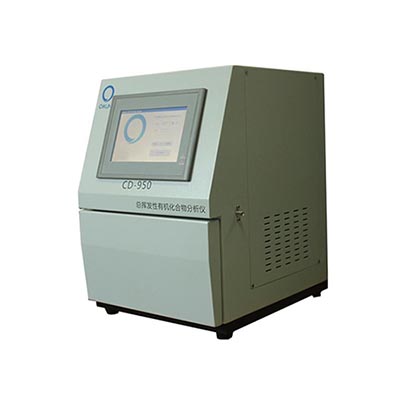
CD-950 TVOC Analyzer
Product Introduction
The CD-950 TVOC Analyzer is an industrial gas analysis instrument designed to measure total volatile organic compounds (TVOCs) in exhaust gases and environmental gas samples. It combines catalytic oxidation with non-dispersive infrared (NDIR) technology to provide reliable, high-precision measurements of VOC concentrations.
The analyzer first measures the carbon dioxide (CO₂) concentration in the original gas sample. It then catalytically oxidizes the VOC components into CO₂ and measures the resulting CO₂ concentration. The difference between the two measurements is used to determine the TVOC concentration.
With selectable detection ranges of 0–1,000 ppm, 0–5,000 ppm, and 0–10,000 ppm, the CD-950 is suitable for industrial emission analysis, painting exhaust monitoring, hydrocarbon detection, and continuous exhaust gas monitoring.
Performance Features
• Catalytic Oxidation–NDIR Technology: Combines catalytic conversion and infrared absorption measurement to determine TVOC concentrations.
• Broad VOC Response: Designed to provide relatively stable sensitivity across different VOC components, subject to the instrument's calibration and operating conditions.
• Multiple Detection Ranges: Offers three optional full-scale ranges to accommodate different gas concentration levels.
• High Measurement Accuracy: Indication error of ≤ ±2% full scale, according to the supplied specifications.
• Good Measurement Repeatability: Repeatability error of ≤3% supports consistent measurements under specified conditions.
• Efficient Analysis: Completes an analysis within 120 seconds.
• Industrial Monitoring Capability: Suitable for exhaust gas analysis and environmental hydrocarbon monitoring applications.
• Standard AC Power Supply: Operates on 220 V AC, 50 Hz, with a permitted voltage variation of ±10%.
Working Principle
The CD-950 TVOC Analyzer operates using the catalytic oxidation–NDIR measurement principle.
1. Initial CO₂ Measurement: The analyzer measures the carbon dioxide concentration in the untreated gas sample.
2. Catalytic Oxidation: The sample passes through a catalytic oxidation process, converting oxidizable VOC components into carbon dioxide.
3.Post-Oxidation Measurement: The analyzer measures the CO₂ concentration after catalytic conversion.
4. TVOC Calculation: The increase in CO₂ concentration is used to calculate the TVOC concentration.
The measurement principle helps distinguish VOC-derived CO₂ from the CO₂ already present in the original sample. Reliable results depend on appropriate calibration, effective oxidation, and control of potential interfering compounds.
Technical Parameters
|
Parameter |
Specification |
|
Product Model |
CD-950 |
|
Product Type |
Total Volatile Organic Compound (TVOC) Analyzer |
|
Measurement Principle |
Catalytic oxidation–NDIR |
|
Detection Range |
0–1,000 ppm, 0–5,000 ppm, or 0–10,000 ppm (optional) |
|
Analysis Time |
≤120 s |
|
Indication Error |
≤ ±2% F.S. |
|
Repeatability Error |
≤3% |
|
Ambient Temperature |
10–40°C |
|
Relative Humidity |
≤85% |
|
Power Supply |
220 V AC, 50 Hz |
|
Permitted Voltage Variation |
±10% |
Application Scenarios
• Painting and Coating Exhaust Monitoring: Measures TVOC concentrations in exhaust gases generated during painting, coating, and related production processes.
• Environmental Hydrocarbon Detection: Supports monitoring of VOC-related hydrocarbons in environmental gas samples.
• Industrial Smoke and Exhaust Emission Analysis: Helps assess VOC concentrations in industrial exhaust streams.
• Continuous Exhaust Gas Monitoring: Supports routine and ongoing evaluation of VOC emissions in suitable monitoring systems.
• Industrial Environmental Compliance: Provides measurement data for environmental management, process evaluation, and emission-control assessment.
CD-950 TVOC Analyzer Comparison
|
Feature |
CD-950 TVOC Analyzer |
Conventional Single-Component VOC Detector |
Laboratory VOC Analysis |
|
Measurement Approach |
Catalytic oxidation–NDIR |
Sensor-dependent; often target-specific |
Method-dependent analytical techniques |
|
Measurement Objective |
Aggregate TVOC measurement based on VOC oxidation |
Detection of selected VOCs or gas components |
Identification and/or quantification of individual compounds |
|
Detection Range |
Up to 10,000 ppm, optional |
Depends on sensor and model |
Depends on analytical method |
|
Analysis Time |
≤120 s |
Often rapid; model-dependent |
Generally requires sample preparation and laboratory analysis |
|
Measurement Repeatability |
≤3% |
Model-dependent |
Method-dependent |
|
Typical Applications |
Industrial exhaust and hydrocarbon monitoring |
Gas leak screening and target-gas monitoring |
Detailed VOC characterization and compound identification |
Note: These are general comparisons. Actual performance depends on the instrument configuration, calibration, sampling conditions, and analytical method. The CD-950 measures aggregate VOC-related response and does not independently identify individual VOC compounds.
Frequently Asked Questions (FAQ)
1. What is the CD-950 TVOC Analyzer used for?
The CD-950 is designed to measure total volatile organic compound concentrations in industrial exhaust gases and environmental gas samples, including emissions from painting and coating operations.
2. What measurement principle does the CD-950 use?
It uses catalytic oxidation combined with non-dispersive infrared (NDIR) technology. VOC components are oxidized into CO₂, and the difference between the initial and post-oxidation CO₂ measurements is used to determine TVOC concentration.
3. What detection ranges are available?
Three optional full-scale ranges are available: 0–1,000 ppm, 0–5,000 ppm, and 0–10,000 ppm.
4. How long does one analysis take?
The specified analysis time is no more than 120 seconds.
5. What are the accuracy and repeatability specifications?
The indication error is specified as ≤ ±2% of full scale, and the repeatability error is ≤3%.
6. Can the CD-950 detect different VOC components?
The analyzer is designed to provide relatively stable sensitivity to different VOC components through catalytic oxidation and NDIR measurement. Actual response can vary with compound composition, oxidation efficiency, and calibration conditions.
7. What environmental conditions are required for operation?
The specified ambient operating temperature is 10–40°C, with relative humidity of no more than 85%.
8. What power supply does the analyzer require?
The CD-950 requires a 220 V AC, 50 Hz power supply and supports voltage variations of ±10%.
9. Can the CD-950 identify individual VOC compounds?
No. It is intended for aggregate TVOC measurement rather than compound-specific identification. Individual VOC identification generally requires a suitable analytical method, such as gas chromatography.