TD-220 True Density Analyzer Based on Vacuum Helium Pycnometry
- PRODUCT DETAIL
TD-220 True Density Analyzer Based on Vacuum Helium Pycnometry
Product Introduction
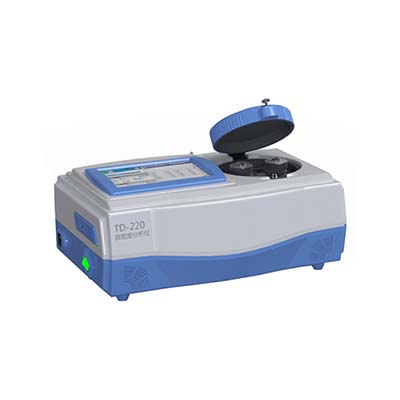
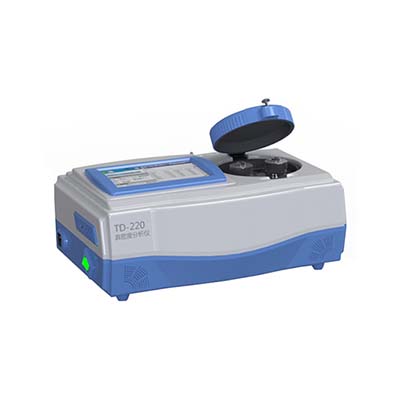
The TD-220 True Density Analyzer is a high-precision instrument designed to measure the true density of solid materials, powders, and porous samples using vacuum-assisted gas displacement technology. Based on a proprietary vacuum helium pycnometry method, the analyzer combines vacuum pretreatment, constant-temperature control, and precise gas-volume measurement to deliver reliable and repeatable test results.
Unlike conventional pressure-injection methods, the TD-220 uses static vacuum extraction and controlled gas analysis to help reduce measurement errors and improve reproducibility. Its constant-temperature test system minimizes the influence of ambient temperature fluctuations, while the dual-chamber design supports precise volume determination. With an analysis accuracy of 0.0001 g/cm³, volume measurement accuracy of 0.0001 mL, and a typical analysis time of less than 8 minutes, the TD-220 is suitable for laboratories requiring efficient and accurate true density testing.
Equipped with a 10-inch LCD touchscreen, automatic calibration, pneumatic self-diagnostics, and multiple analysis modes, the TD-220 true density analyzer offers convenient operation for routine material characterization and quality control.
Performance Features
1.Constant-Temperature Measurement System: Maintains stable testing conditions to minimize environmental temperature effects and improve measurement consistency.
2. Vacuum Pretreatment Technology: Removes gas from accessible pores and sample spaces before measurement, helping improve the reliability of true density analysis.
3. Vacuum Helium Pycnometry: Uses controlled gas displacement to determine sample volume and calculate true density.
4. High-Precision Dual-Chamber Design: Features two quantitative chambers engineered for precise volume measurement.
5. High Measurement Accuracy: Provides a stated density analysis accuracy of 0.0001 g/cm³ and volume measurement accuracy of 0.0001 mL.
6. Automatic Calibration: Built-in calibration technology helps maintain measurement accuracy and simplify routine instrument operation.
7. Multiple Analysis Modes: Supports different analytical configurations to accommodate varied sample testing requirements.
8. Flexible Gas Selection: Uses high-purity helium or nitrogen as the analytical gas, depending on the material and measurement requirements.
9. Intelligent Touchscreen Control: A 10-inch high-resolution LCD touchscreen provides convenient parameter setting, test operation, and result viewing.
10. Pneumatic Self-Diagnostic Function: Automatically checks the pneumatic control system to assist with instrument status monitoring.
11. Remote Software Control: Supports internet-based remote control for convenient instrument operation and management.
12. Fast Analysis: Completes a sample analysis in less than 8 minutes under specified operating conditions.
Working Principle
The TD-220 true density analyzer operates on the principle of gas displacement, commonly known as gas pycnometry. It measures the volume of a solid sample by determining how the gas occupies the available reference and sample chamber volumes.
1. Sample Loading: A prepared sample is placed in the sample chamber, and the chamber is sealed for testing.
2. Vacuum Pretreatment: The instrument evacuates the chamber to remove air and other gases from accessible pores and spaces, improving the conditions for subsequent gas measurement.
3. Gas Introduction: High-purity helium or nitrogen is introduced into the measurement system under controlled conditions.
4. Gas Expansion and Volume Measurement: The gas is allowed to occupy the available chamber volume. Pressure and chamber-volume relationships are used to determine the volume displaced by the sample.
5. True Density Calculation: The instrument combines the measured sample volume with the sample mass to calculate true density.
6. Result Output: The system displays the calculated results and supports subsequent analysis through its touchscreen control software.
Helium is commonly selected because of its small atomic size and chemical inertness, allowing it to access many open pores in solid materials. The measured true density generally excludes accessible pore volume but includes closed pores that the gas cannot enter. Actual results depend on sample characteristics, preparation, and the selected measurement gas.
Technical Parameters
|
Parameter |
Specification |
|
Model |
TD-220 |
|
Measurement Principle |
Vacuum-assisted gas displacement / helium pycnometry |
|
Sample Volume Measurement Range |
0.01–25 cm³ |
|
Quantitative Chambers |
2 |
|
Accuracy |
Better than 0.02% |
|
Repeatability |
Better than 0.02% |
|
Density Analysis Resolution/Accuracy |
0.0001 g/cm³ (as specified) |
|
Volume Measurement Accuracy |
0.0001 mL (as specified) |
|
Pneumatic Control System |
Six-solenoid-valve control module |
|
Software Control |
Internet-based remote control |
|
Analysis Gas |
High-purity helium or nitrogen |
|
Sample Analysis Time |
Less than 8 minutes |
|
User Interface |
10-inch high-resolution LCD touchscreen |
|
Instrument Dimensions |
680 × 360 × 290 mm |
Note: The source lists both “accuracy better than 0.02%” and density/volume accuracy values. Confirm the definitions and test conditions for these specifications with the manufacturer before publication.
Application Scenarios
• Powder Material Analysis: True density measurement of industrial powders and fine particulate materials.
• Porous Material Characterization: Evaluation of true density in porous solids and materials with gas-accessible pore structures.
• Ceramics and Refractory Materials: Density characterization of ceramic powders, refractory compounds, and related materials.
• Battery Materials Research: Density testing of electrode powders and other materials used in battery development.
• Pharmaceutical Research: Characterization of pharmaceutical powders and raw materials.
• Catalyst and Adsorbent Analysis: True density testing of catalyst particles and selected porous adsorbent materials.
• Polymer and Composite Materials: Density characterization of solid polymers, fillers, and composite material samples.
• Quality Control and Materials Research: Routine density measurements for production inspection, laboratory testing, and research and development.
TD-220 vs. Conventional True Density Measurement Methods
|
Comparison Factor |
TD-220 Vacuum True Density Analyzer |
Conventional Gas Displacement Instruments |
|
Measurement Principle |
Vacuum-assisted gas displacement |
Depends on instrument design |
|
Sample Pretreatment |
Integrated vacuum pretreatment |
May use separate or integrated evacuation |
|
Temperature Control |
Constant-temperature test system |
Varies by model |
|
Measurement Chambers |
Dual quantitative chambers |
Varies by model |
|
Analytical Gas |
Helium or nitrogen |
Depends on instrument configuration |
|
Calibration |
Automatic calibration technology |
Manual or automatic, depending on model |
|
Pneumatic Diagnostics |
Built-in pneumatic self-test |
Depends on model |
|
Operation |
10-inch touchscreen and remote software control |
Varies by model |
|
Analysis Time |
Less than 8 minutes, as specified |
Depends on sample and instrument |
|
Suitable Samples |
Powders, solids, and selected porous materials |
Depends on measurement principle and gas accessibility |
Frequently Asked Questions
1. What is the TD-220 True Density Analyzer used for?
The TD-220 measures the true density of solid materials, powders, and suitable porous samples using vacuum-assisted gas displacement technology.
2. What is the measurement principle of the TD-220?
It uses gas pycnometry. By introducing a known gas into a controlled chamber system and measuring the resulting pressure-volume relationship, the instrument determines sample volume and calculates true density from sample mass.
3. Why does the TD-220 use vacuum pretreatment?
Vacuum pretreatment removes air and other gases from accessible pores and sample spaces. This helps the measurement gas access the sample's open pore structure and improves measurement reliability.
4. Which gases can be used with the TD-220?
The instrument supports high-purity helium or nitrogen. Gas selection should consider the sample's pore structure, chemical compatibility, and the requirements of the test method.
5. How long does one measurement take?
The specified analysis time is less than 8 minutes per sample. Actual testing time may vary with sample properties, pretreatment requirements, and operating conditions.
6. What is the measurement range of the TD-220?
The specified sample-volume measurement range is 0.01–25 cm³. Suitable sample mass depends on the material's density and the chamber's measurement requirements.
7. What is the difference between true density and bulk density?
True density is calculated using the volume occupied by the solid material, excluding pores accessible to the measurement gas. Bulk density includes the spaces between particles and may also reflect internal pore volume, depending on the measurement method.
8. Can the TD-220 measure porous materials?
Yes. It is suitable for many porous materials because vacuum pretreatment and gas displacement help measure the volume inaccessible to the gas. Closed pores that the gas cannot enter remain included in the measured sample volume.
9. What features help improve measurement reliability?
The TD-220 incorporates constant-temperature control, vacuum pretreatment, dual quantitative chambers, automatic calibration, and pneumatic self-diagnostics to support stable and repeatable measurements.