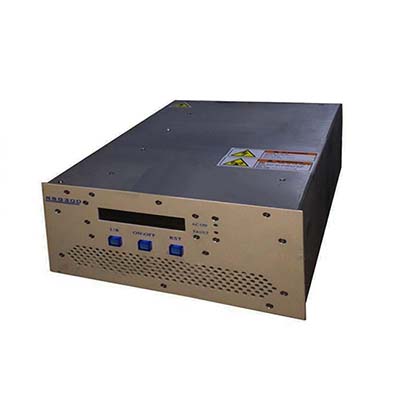
RSG300A Professional RF Power Supply
- PRODUCT DETAIL
RSG300A Professional RF Power Supply
Product Introduction
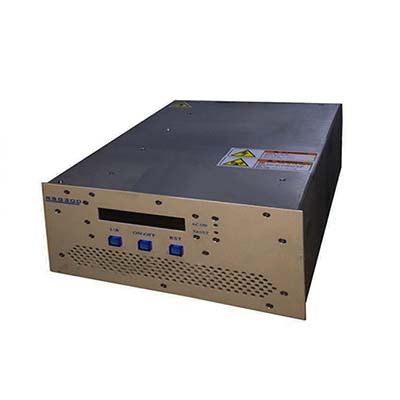
The RSG300A Professional RF Power Supply is a radio frequency power source designed for laboratory experiments, scientific research, product development, and automated industrial applications. It provides continuously adjustable output power, stable RF signal generation, and multiple control options to support a variety of RF-powered systems.
Operating at selectable industrial frequencies, including 13.56 MHz, 27.12 MHz, 40.68 MHz, 81.36 MHz, and 100 MHz, the RSG300A supports continuous-wave and rectangular square-wave output modes. Its specified power stability of ±0.5% and frequency stability of ±0.005% help maintain consistent operating conditions during experiments and production processes.
With analog control and optional RS485 or RS232 communication, the RSG300A can be operated manually from the front panel or integrated into remote computer systems. These features make it suitable for research laboratories, university facilities, R&D departments, and automated production lines requiring controllable RF power.
Performance Features
• Continuously Adjustable Output: Supports adjustable output power across the specified rated-power range.
• Stable RF Power Output: Provides specified power stability of ±0.5% at rated output.
• High Frequency Stability: Frequency stability is specified at ±0.005%.
• Multiple Industrial Frequencies: Supports 13.56 MHz, 27.12 MHz, 40.68 MHz, 81.36 MHz, 100 MHz, or other specified industrial frequencies.
• Flexible Signal Modes: Supports continuous-wave and rectangular square-wave output.
• Fast Power Response: Rated output startup response is specified at 10 ms.
• Low Harmonic Distortion: The second harmonic is specified below −50 dB, with third and higher harmonics below −55 dB.
• Standard RF Interface: Features a 50 Ω output impedance and a standard coaxial output connector.
• Remote Communication: Supports an analog control interface or optional RS485/RS232 communication.
• Manual and Automated Operation: Enables front-panel operation and remote computer control for laboratory or production-line integration.
• Forced-Air Cooling: Uses forced-air cooling to support continuous operation under suitable conditions.
• Compact System Integration: Uses a DC 24 V power supply for integration into compatible equipment systems.
Working Principle
The RSG300A generates an RF signal using a frequency source based on an imported quartz crystal excitation reference, as specified by the manufacturer. The generated signal is processed and amplified to provide the required RF output power at the selected operating frequency.
Output power can be adjusted through the control panel or a compatible external control interface. The unit supports continuous-wave and rectangular square-wave signal modes, allowing users to select the appropriate output configuration for their application.
Its 50 Ω output interface is designed for connection to compatible RF loads and systems. Power stability, frequency stability, and harmonic suppression specifications support controlled RF operation in laboratory and industrial environments.
Technical Parameters
|
Parameter |
Specification |
|
Product Model |
RSG300A |
|
Product Name |
Professional RF Power Supply |
|
Output Power Adjustment |
Continuously adjustable; source lists 1–100% and 2–100% in different sections |
|
Power Stability |
±0.5% at rated power output |
|
Frequency Stability |
±0.005% |
|
Rated Output Startup Response |
10 ms |
|
Signal Waveform |
Standard sine-wave RF signal; continuous-wave and rectangular square-wave output modes |
|
Available Frequencies |
13.56 MHz, 27.12 MHz, 40.68 MHz, 81.36 MHz, 100 MHz, or other specified industrial frequencies |
|
Output Impedance |
50 Ω |
|
Withstand VSWR |
VSWR ≤ 2.0 |
|
Second Harmonic |
Below −50 dB |
|
Third and Higher Harmonics |
Below −55 dB |
|
Power Supply |
DC 24 V |
|
Unit Efficiency |
70% at 50 W output |
|
Cooling Method |
Forced air |
|
Operating Temperature |
0–40°C |
|
Relative Humidity |
≤85%, as specified; confirm whether non-condensing |
|
Control Interface |
Analog interface or RS485/RS232 communication |
|
RF Output Interface |
Standard coaxial connector |
|
Operation |
Front-panel manual control and remote computer control |
|
Display |
Front-panel LCD or LED display, depending on configuration |
Note: The source does not specify the rated maximum output power, dimensions, weight, or exact connector type. Confirm these details and the intended output-power range with the manufacturer before purchasing.
Application Scenarios
• University Laboratories: RF power supply for teaching experiments and applied research.
• Scientific Research Institutes: Controlled RF signal generation for experimental systems and equipment development.
• R&D Applications: RF power source for developing and evaluating RF-powered devices and processes.
• Automated Production Lines: Remote control and system integration through analog, RS485, or RS232 interfaces.
• Industrial RF Systems: Integration into compatible RF equipment requiring stable power and selectable operating frequencies.
• Closed-Loop Control Systems: Support for automated processes that adjust RF output through an external control system, subject to the available interface and feedback capabilities.
Comparison: RSG300A vs. Basic RF Power Supplies
|
Feature |
RSG300A Professional RF Power Supply |
Basic RF Power Supply |
|
Output Power Adjustment |
Continuously adjustable over the specified range |
Model-dependent |
|
Power Stability |
±0.5% at rated output |
Model-dependent |
|
Frequency Stability |
±0.005% |
Model-dependent |
|
Frequency Selection |
Multiple industrial frequency options |
Depends on model |
|
Output Modes |
Continuous wave and rectangular square wave |
Model-dependent |
|
Harmonic Suppression |
Specified second and higher harmonic limits |
Model-dependent |
|
Remote Control |
Analog, optional RS485/RS232 |
Model-dependent |
|
Output Impedance |
50 Ω |
Depends on model |
|
Cooling |
Forced air |
Model-dependent |
|
Applications |
Laboratory research, R&D, and automation |
Depends on design and configuration |
Frequently Asked Questions
1. What is the RSG300A Professional RF Power Supply used for?
It is designed to provide controlled RF power for laboratory experiments, scientific research, product development, and compatible automated industrial systems.
2. Which operating frequencies are available?
The listed frequencies are 13.56 MHz, 27.12 MHz, 40.68 MHz, 81.36 MHz, and 100 MHz. Other industrial frequencies may be available by specification.
3. Is the RSG300A output power adjustable?
Yes. Output power is continuously adjustable. However, the source lists both 1–100% and 2–100% as adjustment ranges, so the applicable range should be confirmed for the selected configuration.
4. What is the power stability of the RSG300A?
The specified power stability is ±0.5% at rated power output.
5. Which signal output modes does it support?
The unit is specified to support continuous-wave and rectangular square-wave output modes. Confirm the available waveform settings and duty-cycle controls with the manufacturer.
6. Can the RSG300A be controlled remotely?
Yes. It supports an analog control interface or RS485/RS232 communication, depending on the selected configuration, for integration with compatible computer systems and automation equipment.
7. What is the output impedance?
The specified output impedance is 50 Ω. The connected cable, load, and RF system should be compatible with this impedance.
8. What cooling and power supply does the RSG300A require?
The unit uses a DC 24 V power supply and forced-air cooling. The specified operating temperature range is 0–40°C.
9. What information should be confirmed before ordering?
Confirm the rated output power, selected operating frequency, power-adjustment range, connector type, control-interface configuration, and RF load requirements to ensure compatibility with the intended application.