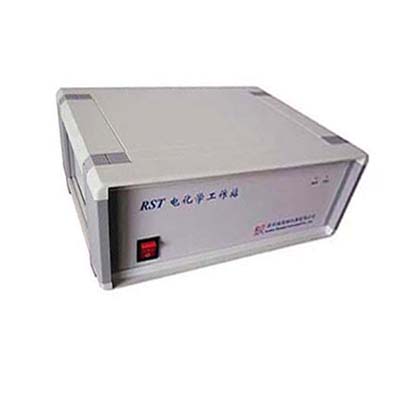
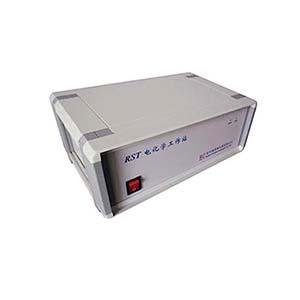
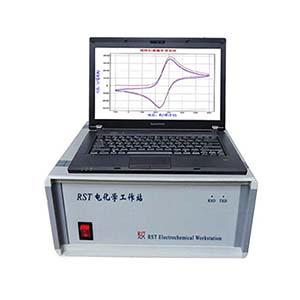
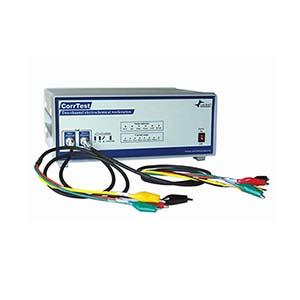
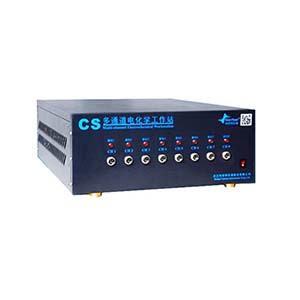
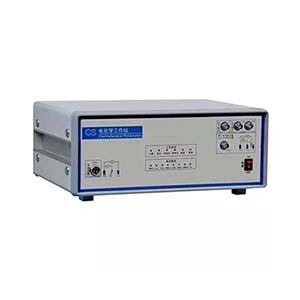
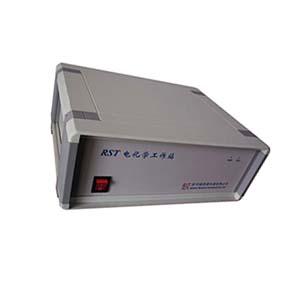
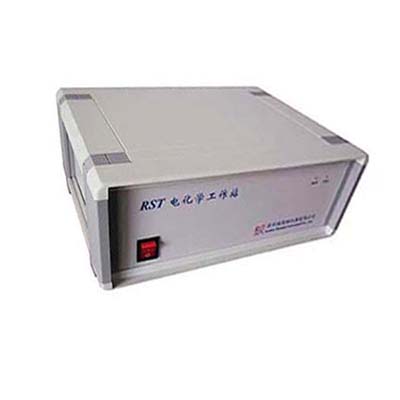
RST5202F High Current Electrochemical Workstation
- PRODUCT DETAIL
RST5202F High Current Electrochemical Workstation
Product Introduction
The
RST5202F High Current Electrochemical Workstation is a versatile
electrochemical analysis and testing instrument designed for scientific
research, industrial development, and laboratory applications. It integrates a
broad range of electrochemical techniques, including cyclic voltammetry, linear
sweep voltammetry, pulse voltammetry, square wave voltammetry, electrochemical
impedance spectroscopy (EIS), polarization analysis, and battery
charge-discharge testing.
Building
on the RST3100 electrochemical workstation platform, the RST5202F incorporates
AC impedance measurement and additional AC testing methods, with enhanced
output current, increased scanning speed, and improved potential and current
resolution. With more than 60 electrochemical test functions, it supports
research involving electrode reactions, corrosion mechanisms, battery
materials, supercapacitors, electroplating, and electrochemical sensors.
Its
Windows-compatible software provides experimental control, data acquisition,
graphical analysis, peak identification, curve overlay, data export, and
multiple data-processing functions. The Chinese-language interface and flexible
visualization tools make the workstation suitable for electrochemistry
teaching, laboratory research, and electrochemical process development.
Performance Features
• High-Current
Electrochemical Testing: Enhanced output-current capability supports a
broad range of electrochemical experiments. Confirm the rated current range
with the manufacturer.
• Comprehensive
Measurement Methods: Supports cyclic voltammetry, linear sweep
voltammetry, differential pulse voltammetry, square wave voltammetry,
chronopotentiometry, chronoamperometry, and other techniques.
• AC Impedance Analysis: Provides
electrochemical impedance spectroscopy, impedance-potential measurements,
impedance-time analysis, and related impedance characterization methods.
• Enhanced
Measurement Performance: Compared with the referenced RST3100 platform,
the RST5202F features increased scanning speed and improved potential and
current resolution.
• Electrochemical
Polarization Analysis: Supports constant-potential and
constant-current polarization, Tafel analysis, pitting potential measurements,
and galvanic corrosion studies.
• Battery
Testing Functions: Supports constant-current charging and
discharging, cycle testing, segmented charging and discharging, and capacity
analysis.
• Supercapacitor
Characterization: Provides dedicated charge-discharge testing
functions for supercapacitor performance evaluation.
• Electroplating and
Electrosynthesis: Supports pulse plating, plating potential
monitoring, and controlled-potential electrolysis.
• Electrochemical Data
Processing: Offers peak identification, curve overlay, graphical
scaling, data processing, and bitmap or data export.
• Windows-Compatible
Software: Provides integrated experiment control, data acquisition, file management, and
graphical display.
• Research
and Teaching Applications: Supports laboratory experiments,
electrochemical analysis, material characterization, and educational
demonstrations.
Working Principle
The
RST5202F controls the potential or current applied to an electrochemical cell
and measures the resulting electrical response. Depending on the selected
method, the instrument applies voltage sweeps, potential steps, current steps,
pulses, or alternating signals to investigate electrochemical reactions at the
electrode-electrolyte interface.
In
cyclic voltammetry and related sweep techniques, the workstation records
current as a function of applied potential to characterize redox reactions and
reaction kinetics. In chronoamperometry and chronopotentiometry, it measures
current or potential over time following controlled electrical changes.
For
electrochemical impedance spectroscopy, the instrument applies a small
alternating perturbation over a range of frequencies and analyzes the response
to characterize interfacial resistance, capacitance, charge-transfer behavior,
and other electrochemical properties. Battery and supercapacitor modes support
controlled charging, discharging, cycling, and capacity analysis.
The
integrated software manages experimental parameters, collects measurement data,
and presents results through graphs and data-processing tools.
Technical Parameters
Parameter
Specification
Product
Model
RST5202F
Product
Name
High
Current Electrochemical Workstation
Instrument
Type
Electrochemical
analysis and testing system
Measurement
Functions
More
than 60 electrochemical test functions, as specified
Voltammetry
Methods
LSV,
LCV, SV, SCV, SWV, SWCV, DPV, NPV, DNPV, ACV, and related techniques
Stripping
Analysis
Linear
sweep, stepped, square wave, differential pulse, and AC stripping voltammetry
Pulse
Techniques
Single,
double differential, three-pulse, and integral pulse current detection
Chrono
Methods
Chronoamperometry
(CA), chronocoulometry (CC), and chronopotentiometry (CP)
Electrochemical
Impedance
AC
impedance spectroscopy (EIS), impedance-potential, impedance-time, and
related analysis
Polarization
Analysis
Constant-potential
and constant-current polarization
Corrosion
Analysis
Tafel
plots, pitting potential, galvanic corrosion, and electrochemical noise
Electrolysis
Controlled-potential
electrolysis, current-time and charge-time recording
Electroplating
Pulse
plating and plating potential monitoring
Battery
Testing
Constant-current
charging, discharging, cycling, and segmented charge-discharge
Supercapacitor
Testing
Constant-current
limit-voltage fast-cycle charge-discharge analysis
Additional
Functions
Open-circuit
potential monitoring, differential capacitance analysis, high-resistance
potentiometry, zero-resistance ammeter
Output
Current
Enhanced
relative to the referenced RST3100 platform; numerical range not supplied
Scanning
Speed
Increased
relative to the referenced RST3100 platform; numerical range not supplied
Potential
and Current Resolution
Improved
relative to the referenced RST3100 platform; numerical values not supplied
Software
Platform
Windows-compatible
data acquisition and analysis software
Data
Management
File
management, graph display, peak identification, curve overlay, data
processing, and export
User
Interface
Chinese-language
menus
Typical
Applications
Electrochemical
research, corrosion, electroplating, battery materials, supercapacitors,
sensors, and teaching
Note: Exact current range, potential range, resolution,
impedance frequency range, scan-rate range, compliance voltage, and
communication interfaces were not provided in the source material. Please
obtain these values from the manufacturer's official datasheet before
specifying the workstation for a particular experiment.
Application Scenarios
• Electrochemistry
Teaching: Demonstrating voltammetry, impedance, polarization, and electrochemical
reaction principles.
• Electrochemical
Analysis: Characterizing redox reactions, electrode kinetics, and electroactive
substances.
• Trace Element
Detection: Supporting electrochemical detection and stripping analysis methods for
suitable target elements.
• Electroplating
Development: Optimizing plating conditions and studying pulse-plating
behavior.
• Battery Material
Research: Evaluating electrode materials, charge-discharge performance, cycle behavior,
and electrochemical stability.
• Supercapacitor
Testing: Analyzing charge-discharge behavior and electrochemical characteristics of
supercapacitor materials.
• Corrosion Research: Investigating corrosion mechanisms, pitting potential, galvanic corrosion, and
electrochemical noise.
• Environmental
Monitoring: Supporting electrochemical sensors and suitable
electrochemical methods for environmental analysis.
• Nanomaterial
Development: Studying the electrochemical properties of nanomaterials
and modified electrodes.
• Electrochemical
Synthesis and Metallurgy: Investigating electrolysis, electrode
reactions, and electrochemical process conditions.
• Pharmaceutical
and Biosensor Research: Supporting electrochemical sensor development
and relevant analytical investigations.
Comparison: RST5202F vs. Basic Electrochemical Workstations
Feature
RST5202F High Current Workstation
Basic Electrochemical Workstation
Voltammetry
Methods
Broad
range of sweep, pulse, square wave, and AC methods
Depends
on model
Electrochemical
Impedance Spectroscopy
Supported
Model-dependent
Output
Current
Enhanced
relative to the referenced RST3100 platform
Depends
on model
Scanning
Speed
Improved
relative to the referenced RST3100 platform
Depends
on model
Corrosion
Analysis
Tafel,
pitting, galvanic corrosion, electrochemical noise
May
offer a subset of methods
Pulse
Plating
Supported
Model-dependent
Battery
Charge-Discharge
Multiple
constant-current and cycling functions
Model-dependent
Supercapacitor
Analysis
Dedicated
charge-discharge functions
Model-dependent
Data
Processing
Peak
identification, curve overlay, graph scaling, and export
Depends
on software
Research
Applications
Electrochemistry,
corrosion, batteries, supercapacitors, sensors, and electroplating
Depends
on configuration
Frequently Asked Questions
1. What is the RST5202F High Current Electrochemical
Workstation used for?
It
is designed for electrochemical analysis, material characterization, corrosion
research, electroplating development, battery testing, supercapacitor analysis,
and electrochemical sensor research.
2. Which electrochemical techniques does the RST5202F
support?
The
listed techniques include linear sweep voltammetry, cyclic voltammetry,
differential pulse voltammetry, square wave voltammetry, chronoamperometry,
chronocoulometry, chronopotentiometry, and AC impedance spectroscopy, among
others.
3. Does the RST5202F support electrochemical impedance
spectroscopy?
Yes.
EIS and related measurements, including impedance-potential and impedance-time
analysis, are included in the supplied specifications. Confirm the available
frequency range and measurement accuracy with the manufacturer.
4. Can the workstation be used for battery testing?
Yes.
Its listed functions include constant-current charging and discharging,
charge-discharge cycling, segmented charging and discharging, and battery
capacity analysis.
5. Is the RST5202F suitable for supercapacitor research?
Yes.
It includes dedicated constant-current, limit-voltage, and fast-cycle
charge-discharge functions for supercapacitor testing and analysis.
6. Can it be used for electrochemical corrosion studies?
Yes.
The listed functions include Tafel analysis, pitting potential measurement,
galvanic corrosion testing, electrochemical noise measurement, and several
polarization methods.
7. What software features are available?
The
software provides experiment control, data acquisition, file management,
graphical display, peak identification, curve overlay, graph scaling, data
processing, and export functions through a Windows-compatible interface.
8. What does high-current capability mean for
electrochemical testing?
Higher
output-current capability can support experiments that require larger electrode
currents, including certain electroplating, electrolysis, and battery-related
tests. The required current range should be matched to the experimental setup
and verified against the instrument's rated specifications.
9. What technical information should be confirmed before
purchasing?
Confirm
the rated output-current range, potential range, potential and current
resolution, scan-rate range, EIS frequency range, compliance voltage, supported
cell configurations, and communication interfaces to ensure compatibility with
the intended experiments.