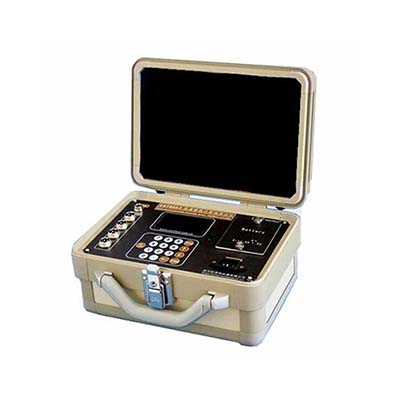
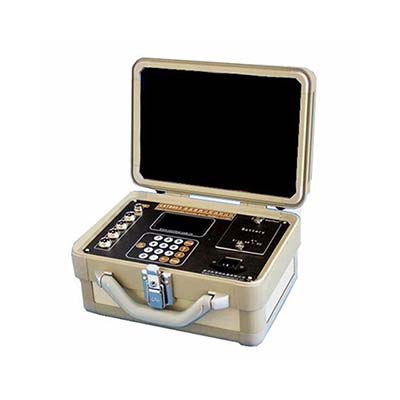
CST800E Fast Multi-Channel Corrosion Tester Analyzer
- PRODUCT DETAIL
CST800E Fast Multi-Channel Corrosion Tester Analyzer
Product Introduction
The CST800E Fast Multi-Channel Corrosion Tester Analyzer is an electrochemical corrosion monitoring instrument based on electrochemical impedance spectroscopy (EIS). It measures corrosion-related parameters, including polarization resistance, solution resistance, corrosion potential, and corrosion rate.
Designed for both laboratory testing and field monitoring, the CST800E features four measurement channels, automatic timed measurement, and built-in data storage for up to 500,000 sets of records. Its automatic compensation for solution resistance improves corrosion rate measurement accuracy, especially in high-resistivity environments such as soil, oily wastewater, and reinforced concrete.
With AC/DC power compatibility, an optional rechargeable battery, and USB data transfer, the CST800E supports continuous corrosion monitoring and long-term corrosion trend analysis.
Performance Features
• Four Measurement Channels: Supports multi-point corrosion monitoring for efficient field testing.
• EIS-Based Measurement: Uses AC impedance measurement to determine polarization resistance and solution resistance.
• Automatic Solution Resistance Compensation: Automatically subtracts solution resistance from polarization resistance to improve corrosion rate calculations.
• Wide Corrosion Rate Range: Measures corrosion rates from 1 × 10⁻⁴ to 50 mm/year.
• Scheduled Automatic Monitoring: Configurable measurement intervals from 1 to 255 hours, with automatic timed wake-up.
• Large Data Storage: Built-in 16 MB flash memory stores up to 500,000 measurement records.
• USB Data Transfer: Transfers test data to a PC for analysis, archiving, and corrosion trend visualization.
• Portable Field Operation: Compact design with AC/DC power supply and optional rechargeable batteries.
• Corrosion Trend Analysis: Software can display polarization resistance, solution resistance, and corrosion rate versus time.
Working Principle
The CST800E uses electrochemical impedance spectroscopy (EIS) to evaluate corrosion behavior. A small sinusoidal AC signal is applied to the electrochemical system, and the instrument measures the resulting electrical response over a specified frequency range.
The instrument determines polarization resistance and solution resistance, then compensates for the solution resistance to obtain a more accurate polarization resistance value. This information is used to calculate the corrosion rate and assess corrosion development over time.
This method is particularly useful in environments where solution resistance may affect conventional corrosion measurements, including soil, oily wastewater, and reinforced concrete systems.
Technical Parameters
|
Parameter |
Specification |
|
Measurement Channels |
4 |
|
Input Impedance |
1 × 10¹² Ω |
|
Corrosion Rate Measurement Range |
1 × 10⁻⁴ to 50 mm/year |
|
Polarization Resistance Range |
5 Ω to 10 MΩ |
|
Solution Resistance Range |
10 Ω to 500 kΩ |
|
Corrosion Potential (Ecorr) Range |
±2500 mV |
|
Impedance Measurement Frequency |
10 kHz to 0.001 Hz |
|
Sine Wave Amplitude |
5–100 mV |
|
Absolute Accuracy |
Source specifies “< (1%”; confirm the complete accuracy specification with the manufacturer |
|
Automatic Measurement Interval |
1–255 hours |
|
Clock Accuracy |
±1 minute/year |
|
Data Storage |
Up to 500,000 sets |
|
Memory |
16 MB flash memory |
|
Data Interface |
USB |
|
Power Supply |
AC/DC power supply; 4 rechargeable batteries (as specified in the source) |
|
Dimensions |
260 × 165 × 155 mm (W × D × H) |
|
Weight |
3.5 kg |
|
Operating Temperature |
−10°C to 50°C |
|
Relative Humidity |
≤80% RH |
Application Scenarios
• Petroleum and Chemical Industries: Corrosion monitoring of process equipment, storage systems, and pipelines.
• Underground Pipeline Monitoring: Evaluation of corrosion rates and corrosion protection performance.
• Soil Corrosion Testing: Assessment of corrosion behavior in soil and buried metal structures.
• Oily Wastewater Systems: Monitoring corrosion in high-resistivity industrial wastewater environments.
• Reinforced Concrete: Evaluation of corrosion risks affecting embedded steel reinforcement.
• Atmospheric Corrosion Monitoring: Measurement of corrosion behavior under atmospheric exposure conditions.
• Corrosion Inhibitor Evaluation: Screening and assessing the effectiveness of corrosion inhibitors and protection strategies.
• Long-Term Field Monitoring: Automated measurements and data logging for corrosion trend analysis.
CST800E vs. Conventional Corrosion Measurement Methods
|
Comparison Item |
CST800E EIS Corrosion Tester |
Conventional Coupon-Based Testing |
|
Measurement Method |
Electrochemical impedance spectroscopy |
Typically based on metal mass loss over an exposure period |
|
Measurement Speed |
Rapid electrochemical measurement |
Requires exposure and subsequent sample evaluation |
|
Corrosion Parameters |
Corrosion rate, polarization resistance, solution resistance, and corrosion potential |
Primarily average corrosion rate based on mass loss |
|
Automatic Monitoring |
Supports scheduled automatic measurements |
Usually requires coupon retrieval and manual analysis |
|
Data Recording |
Stores up to 500,000 sets of data |
Often requires separate recording and analysis |
|
Trend Analysis |
PC software supports time-based curve visualization |
Depends on sampling frequency and data processing |
|
Field Applications |
Suitable for multiple corrosion monitoring environments |
Useful for evaluating cumulative corrosion over a defined period |
Note: Coupon testing and electrochemical monitoring provide complementary information. The appropriate method depends on the material, environment, and monitoring objectives.
Frequently Asked Questions (FAQ)
1. What is the CST800E Fast Multi-Channel Corrosion Tester used for?
It measures corrosion-related parameters and supports corrosion rate monitoring, corrosion protection evaluation, and corrosion inhibitor screening in industrial and infrastructure environments.
2. How many measurement channels does the CST800E have?
The CST800E has four measurement channels for multi-point corrosion monitoring.
3. What measurement principle does the CST800E use?
It uses electrochemical impedance spectroscopy (EIS) to measure electrochemical response and determine parameters such as polarization resistance and solution resistance.
4. What is the corrosion rate measurement range?
The specified corrosion rate range is 1 × 10⁻⁴ to 50 mm/year.
5. Can the CST800E perform automatic measurements?
Yes. It supports scheduled automatic measurements at intervals from 1 to 255 hours and can automatically wake up for measurements.
6. How much test data can the instrument store?
Its built-in 16 MB flash memory can store up to 500,000 sets of measurement data. Records remain stored when the instrument is switched off.
7. Can measurement data be analyzed on a computer?
Yes. Test data can be transferred to a PC through USB using the CST800E control software for data processing, archiving, and time-based curve analysis.
8. Is the CST800E suitable for field use?
Yes. Its portable design, AC/DC power compatibility, automatic measurement functions, and optional rechargeable battery support field corrosion monitoring. The source specifies up to 60 hours of continuous measurement under a fully charged battery condition; confirm battery configuration and operating conditions with the manufacturer.
9. Which environments are suitable for CST800E corrosion monitoring?
Typical applications include soil, oily wastewater, atmospheric environments, reinforced concrete, petroleum facilities, chemical plants, and underground pipelines.