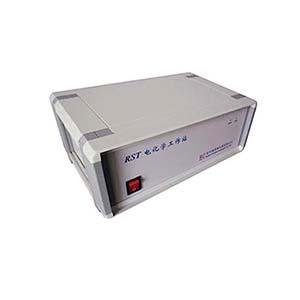
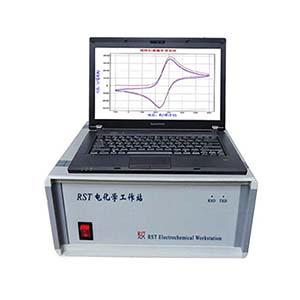
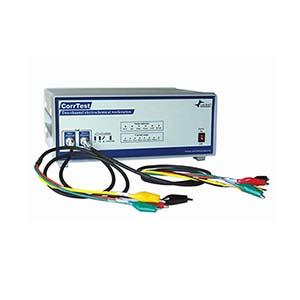
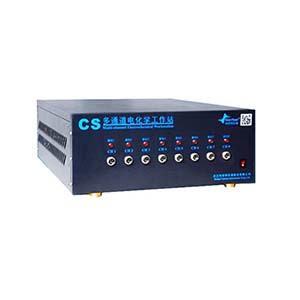
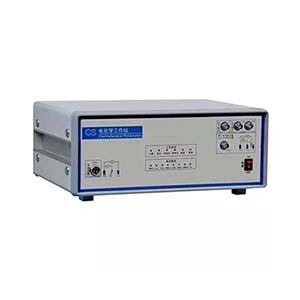
CS310X Series Multi-Channel Electrochemical Workstation
- PRODUCT DETAIL
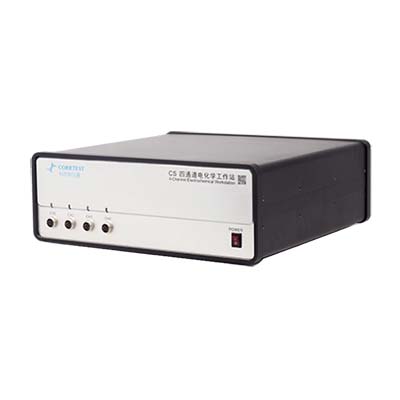
CS310X Series Multi-Channel Electrochemical Workstation
Product Introduction
The
CS310X Series Multi-Channel Electrochemical Workstation is designed for
simultaneous electrochemical measurements across multiple independent channels.
Developed from the CS350 conventional single-channel platform, it supports
configurations with 2–8 measurement channels, improving experimental throughput
and enabling parallel testing.
Featuring
a fully floating design, high-precision potential and current control, advanced
data acquisition, and comprehensive electrochemical analysis software, the
CS310X supports research in energy storage, materials science, corrosion, life
sciences, and environmental chemistry.
Its
broad range of measurement methods includes cyclic voltammetry, linear sweep
voltammetry, polarization analysis, battery charge-discharge testing,
intermittent titration techniques, electrochemical noise analysis, and
controlled-potential electrolysis. The system is suitable for laboratories
requiring efficient parallel electrochemical characterization and reproducible
experimental control.
Performance Features
1. Multi-Channel
Measurement: Supports 2–8 channels for parallel electrochemical testing
and increased laboratory throughput.
2. Fully Floating
Design: Provides electrical isolation from earth ground to support stable measurements
in suitable experimental configurations.
3. High-Sensitivity Current Measurement: Offers a
specified current sensitivity of 1 pA for low-current electrochemical research.
4. Precise Potential
Control: Features a ±10 V potential control range and potential sensitivity down to 3 μV
under the specified low-frequency conditions.
5. Flexible Current
Output: Provides up to ±500 mA per channel for 2–4-channel configurations and ±200 mA
for 5–8-channel configurations.
6. High-Speed Data
Acquisition: Supports 16-bit acquisition at 1 MHz and 20-bit
acquisition at 1 kHz.
7. Extensive
Voltammetry Methods: Supports cyclic voltammetry, linear sweep
voltammetry, dynamic polarization, and programmable potential or current steps.
8.Battery Testing
Capabilities: Supports charge-discharge testing, galvanostatic and
potentiostatic charge-discharge, GITT, and PITT.
9. Advanced Corrosion
Analysis: Includes Tafel analysis, cyclic polarization, electrochemical noise,
electrochemical dissolution/deposition, and potentiodynamic reactivation.
10.Network
Communication: Uses a network interface for instrument communication and
integration with compatible computer systems.
11. Automatic Range
Selection: Automatically configures current and potential ranges to accommodate different
experimental signal levels.
12. Programmable
Filtering: Features an eight-segment programmable low-pass filter for measurement signal
conditioning.
Working Principle
The
CS310X controls the potential or current applied to an electrochemical cell and
records the resulting electrical response. Each configured measurement channel
supports electrochemical experiments according to its operating mode and
connected cell.
By
applying controlled voltage sweeps, current sweeps, potential steps, or current
steps, the workstation measures current, potential, and related electrochemical
responses. These measurements help researchers evaluate reaction kinetics,
electrode performance, corrosion behavior, charge-transfer processes, and
energy-storage characteristics.
For
battery testing, the system supports constant-current and constant-potential
charge-discharge methods, along with intermittent titration techniques for
studying electrode behavior. For corrosion research, polarization curves and
electrochemical noise measurements can be used to investigate corrosion
mechanisms and protective performance.
The
multi-channel architecture allows several compatible experiments to run
simultaneously, reducing sequential testing time and supporting comparative
studies under controlled conditions.
Technical Parameters
1. General and Potential-Control Specifications
Parameter
Specification
Model
CS310X
Series
Product
Type
Multi-Channel
Electrochemical Workstation
Measurement
Channels
2–8
Design
Fully
floating
Constant
Potential Control Range
±10
V
Potential
Control Accuracy
0.1%
× full-scale reading ±1 mV
Potential
Sensitivity
10
μV above 100 Hz; 3 μV below 10 Hz
Potential
Rise Time
Less
than 1 μs below 10 mA; less than 10 μs below 2 A
Reference
Electrode Input Impedance
10¹²
Ω in parallel with 20 pF
Cell/Control
Output
±12
V
CV
and LSV Scan Rate
0.001
mV/s–10,000 V/s
CA
and CC Pulse Width
0.0001–65,000
s
SWV
Frequency
0.001–100
kHz
DPV
and NPV Pulse Width
0.0001–1,000
s
AD
Data Acquisition
16
bit at 1 MHz; 20 bit at 1 kHz
DA
Resolution
16
bit
DA
Setup Time
1
μs
Minimum
Potential Increment in CV
0.075
mV
Potential
Increment During Scanning
0.076
mV at 1 V/ms
Current
Increment During Scanning
1
mA at 1 A/ms
Current
and Potential Ranging
Automatic
Low-Pass
Filter
Eight-segment
programmable
Communication
Interface
Network
port
2. Current-Control Specifications
Parameter
2–4 Channels
5–8 Channels
Constant
Current Control Range
±500
mA
±200
mA
Maximum
Output Current
±500
mA
±200
mA
Current
Sensitivity
1
pA
1
pA
Current
Ranges
2
nA–500 mA, 10 ranges
2
nA–200 mA, 9 ranges
Current
Control Accuracy
0.1%
× full-scale reading
0.1%
× full-scale reading
Note: Confirm whether current sensitivity and current-range
specifications apply identically to every channel configuration when selecting
the final instrument.
Function Methods
1. Steady-State Polarization
• Open-circuit potential
measurement (OCP)
• Potentiostatic
polarization and current-time curves (I-t)
• Galvanostatic
polarization
• Dynamic potential
scanning and Tafel curve analysis
• Dynamic current
scanning (DGP)
• Potential scanning and
step methods
2. Transient Polarization
• Arbitrary
constant-potential step waveforms
• Arbitrary
constant-current step waveforms
• Constant-potential
steps
• Constant-current steps
3. Voltammetry Analysis
• Cyclic voltammetry (CV)
• Linear sweep
voltammetry (LSV)
4. Battery Charge-Discharge Testing
• Battery
charge-discharge testing (CD)
• Galvanostatic
charge-discharge (GCD)
• Potentiostatic
charge-discharge (PCD)
• Potentiostatic
intermittent titration technique (PITT)
• Galvanostatic
intermittent titration technique (GITT)
5. Specialized and Extended Measurements
• Hydrogen diffusion
testing
• Rotating disk electrode
(RDE) and rotating ring-disk electrode (RRDE) testing, subject to compatible
equipment
• Electrochemical noise
analysis (EN)
• Digital recording
• Electrochemical
dissolution and deposition
• Bulk electrolysis (BE)
• Electrochemical
potentiokinetic reactivation (EPR)
• Solution resistance
measurement
• Cyclic polarization
curves
Application Scenarios
• Battery
and Energy Storage Research: Evaluating lithium-ion batteries, electrode
materials, charge-discharge behavior, and electrochemical kinetics.
• Corrosion Science: Investigating corrosion mechanisms, polarization behavior, coating performance,
and corrosion protection.
• Materials
Science: Characterizing electrochemical properties of functional materials, electrode
surfaces, and conductive coatings.
• Electrochemical
Catalysis: Studying electrode reactions, reaction kinetics, and catalytic performance.
• Electrodeposition
and Electrochemical Processing: Investigating metal deposition,
dissolution, and electrochemical surface treatments.
• Environmental
Chemistry: Supporting electrochemical research involving environmental samples and related
analytical methods.
• Life
Science Research: Facilitating suitable electrochemical
measurements involving biological interfaces and electrochemical sensors.
• Parallel Comparative
Experiments: Comparing multiple electrodes, materials, formulations, or
experimental conditions simultaneously.
CS310X vs. Conventional Single-Channel Electrochemical
Workstations
Comparison Factor
CS310X Multi-Channel System
Conventional Single-Channel System
Measurement
Channels
2–8
Typically
1
Parallel
Testing
Supports
multiple simultaneous measurements
Usually
sequential unless multiple instruments are used
Potential
Control Range
±10
V
Depends
on model
Current
Sensitivity
1
pA specified
Depends
on model
Maximum
Current Output
±500
mA for 2–4 channels; ±200 mA for 5–8 channels
Depends
on model
Battery
Testing
CD,
GCD, PCD, GITT, PITT
Depends
on model
Corrosion
Analysis
Tafel,
cyclic polarization, EN, EPR
Depends
on model
Data
Acquisition
16
bit at 1 MHz; 20 bit at 1 kHz
Depends
on model
Communication
Network
port
Depends
on model
Experimental
Throughput
Higher
for compatible parallel experiments
Lower
for sequential testing
Frequently Asked Questions (FAQ)
1. What is the CS310X Series Multi-Channel Electrochemical
Workstation used for?
It
is designed for parallel electrochemical measurements in battery research,
corrosion science, materials characterization, electrochemical catalysis, and
sensor development.
2. How many channels does the CS310X support?
The
series supports configurations with 2–8 measurement channels, allowing
researchers to perform multiple compatible experiments simultaneously.
3. What is the potential control range?
The
specified constant-potential control range is ±10 V.
4. What is the maximum current output?
The
maximum output is ±500 mA for 2–4-channel configurations and ±200 mA for
5–8-channel configurations.
5. What is the current sensitivity of the CS310X?
The
supplied specifications state a current sensitivity of 1 pA. Actual measurement
performance depends on the selected current range, operating conditions, and
channel configuration.
6. Does the workstation support battery testing?
Yes.
Supported methods include CD, GCD, PCD, GITT, and PITT for battery and
electrode-material characterization.
7. Can the CS310X be used for corrosion testing?
Yes.
It supports Tafel analysis, cyclic polarization, electrochemical noise,
potentiodynamic reactivation, and other electrochemical methods relevant to
corrosion research.
8. What communication interface does the system use?
The
CS310X uses a network port for communication with a compatible computer system.
9. What is the main advantage of a multi-channel
workstation?
It
enables multiple electrochemical experiments to run in parallel, improving
throughput and facilitating comparative testing without requiring a separate
single-channel instrument for each experiment.
NEXT:CST800E Fast Multi-Channel Corrosion Tester Analyzer