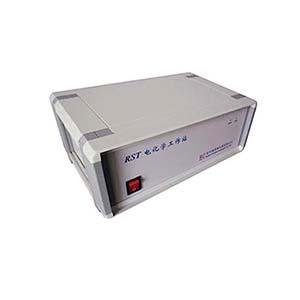
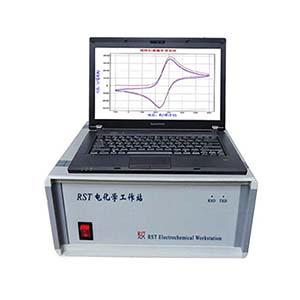
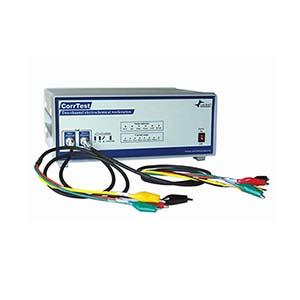
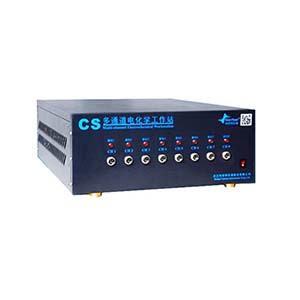
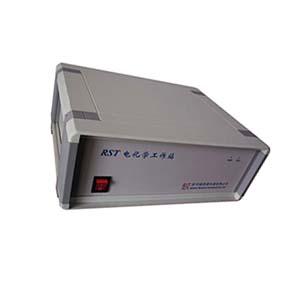
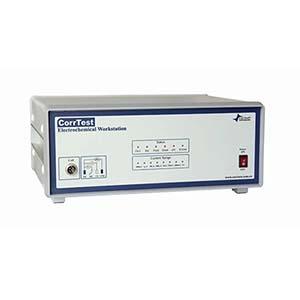
CS350 Electrochemical Workstation
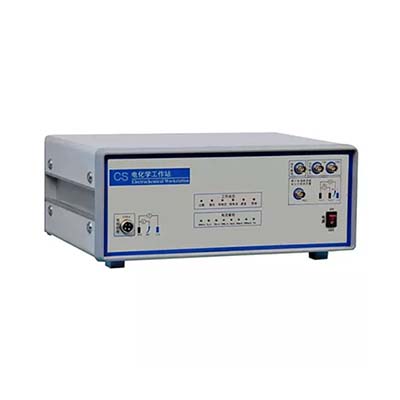
- PRODUCT DETAIL
CS350 Electrochemical Workstation
Product Introduction
The CS350 Electrochemical Workstation is a versatile electrochemical testing instrument designed for scientific research, materials characterization, corrosion analysis, and electrochemical performance evaluation. It integrates a high-speed microcontroller, precision analog circuitry, a built-in direct digital synthesis (DDS) signal generator, a high-power potentiostat/galvanostat, and high-speed data acquisition.
Supporting a broad range of electrochemical techniques, including cyclic voltammetry (CV), linear sweep voltammetry (LSV), differential pulse voltammetry (DPV), square wave voltammetry (SWV), and electrochemical impedance spectroscopy (EIS), the CS350 provides a flexible platform for investigating electrochemical mechanisms, analyzing substances, evaluating electrode materials, and studying corrosion behavior.
With a USB 2.0 interface and automated measurement functions, the workstation supports convenient computer-based operation and unattended testing sequences.
Performance Features
1. Advanced Electronic Architecture: Combines a high-speed MCU, precision FET integrated circuits, and a built-in DDS signal generator for controlled electrochemical measurements.
2. Potentiostat/Galvanostat Functionality: Supports potential-controlled and current-controlled experiments.
3. Multiple Voltammetric Techniques: Performs CV, LSV, SCV, SWV, DPV, NPV, and DNPV measurements.
4.Electrochemical Impedance Spectroscopy: Supports EIS measurements for investigating interfacial processes, electrode behavior, and electrochemical systems.
5.Corrosion Analysis: Enables electrochemical corrosion testing, electrochemical noise monitoring, and zero-resistance ammeter measurements.
6. Automated Testing: Supports timed measurements and automatic test sequences for unattended operation.
7. USB 2.0 Connectivity: Provides a convenient connection to a computer for instrument control, data acquisition, and analysis.
8.Floating Measurement Mode: Supports selected electrochemical measurements on grounded systems, including certain autoclave and corrosion-monitoring applications, when properly configured.
9.Broad Research Compatibility: Suitable for battery materials, supercapacitors, nanomaterials, biosensors, coatings, electrodeposition, and corrosion research.
Working Principle
The CS350 controls the potential applied to an electrochemical cell or regulates the current flowing through it, depending on the selected measurement mode. The potentiostat/galvanostat circuitry establishes the required electrical conditions, while the signal-generation system produces controlled excitation signals for the selected experiment.
The workstation measures the resulting current, potential, or impedance response and converts the signals into digital data using its analog-to-digital conversion system. Dedicated testing and analysis software processes the acquired data to characterize electrochemical reactions, electrode kinetics, material properties, and corrosion behavior.
Different measurement techniques provide different types of information:
•Cyclic Voltammetry (CV): Investigates redox behavior and
electrochemical reaction mechanisms.
• Linear Sweep Voltammetry (LSV): Evaluates current response as the potential changes.
•Differential Pulse Voltammetry (DPV): Supports sensitive electrochemical analysis and substance quantification.
•Square Wave Voltammetry (SWV): Enables rapid voltammetric measurements.
•Electrochemical Impedance Spectroscopy (EIS): Examines impedance characteristics and interfacial electrochemical processes.
• Electrochemical Noise Analysis: Monitors spontaneous electrochemical fluctuations associated with corrosion and other processes.
Technical Parameters
|
Parameter |
Specification |
|
Model |
CS350 |
|
Instrument Type |
Electrochemical Workstation |
|
Main Control Unit |
High-speed MCU |
|
Analog Circuitry |
Precision FET integrated circuits |
|
Signal Generator |
Built-in DDS synthesizer |
|
Electrochemical Control |
Potentiostat / Galvanostat |
|
Analog-to-Digital Conversion |
16-bit / 24-bit ADC architecture, as specified |
|
Communication Interface |
USB 2.0 |
|
Voltammetric Techniques |
LSV, CV, SCV, SWV, DPV, NPV, DNPV |
|
Additional Techniques |
Constant-current polarization, potentiodynamic scanning, square-wave and multistep current methods |
|
Other Measurement Functions |
Zero-resistance ammeter, electrochemical noise, EIS |
|
Automated Measurement |
Timed and unattended measurement sequences |
|
Dimensions (W × D × H) |
36.5 × 30.5 × 16 cm |
|
Instrument Weight |
6.5 kg |
|
Operating Software |
CorrTest testing and analysis software |
Note: The source specifications do not provide detailed potential/current ranges, scan-rate limits, impedance frequency range, or accuracy figures. Confirm these values with the manufacturer before selecting the workstation for a specific experiment.
Application Scenarios
• Electrochemical Mechanism Research: Investigating redox reactions, reaction kinetics, and electrode processes.
• Chemical Analysis: Supporting qualitative identification and quantitative analysis of electroactive substances.
• Battery and Supercapacitor Research: Evaluating energy-storage materials, electrode performance, and electrochemical behavior.
• Nanomaterials and Biosensors: Characterizing functional materials and electrochemical sensor systems.
• Electrodeposition and Electrochemical Synthesis: Studying deposition behavior, synthesis conditions, and coating performance.
• Corrosion Testing: Evaluating corrosion behavior in metals exposed to water, concrete, soil, and other environments.
• Coatings and Corrosion Inhibitors: Assessing protective coatings, corrosion inhibitors, and water-treatment stabilizers.
• Hydrogen Permeation Research: Supporting electrochemical evaluation of hydrogen permeation behavior.
• Online Corrosion Monitoring: Supporting selected monitoring configurations for metal structures, bridges, reinforced concrete, and grounded systems.
CS350 vs. Conventional Electrochemical Testing Equipment
|
Comparison Factor |
CS350 Electrochemical Workstation |
Single-Function Electrochemical Instrument |
|
Measurement Techniques |
Multiple voltammetric, impedance, and corrosion methods |
Usually focused on specific techniques |
|
Potential and Current Control |
Potentiostat/galvanostat functionality |
Depends on instrument type |
|
Voltammetry |
CV, LSV, DPV, SWV, and other methods |
May support only selected methods |
|
Impedance Analysis |
EIS supported |
Requires dedicated EIS capability |
|
Corrosion Research |
Noise analysis, zero-resistance ammeter, and polarization methods |
Depends on the instrument |
|
Automation |
Timed and unattended measurements |
Depends on the system |
|
Computer Interface |
USB 2.0 |
Depends on the system |
|
Typical Applications |
Materials research, energy storage, chemical analysis, and corrosion |
More specialized testing tasks |
Standard Instrument Configuration
|
Component |
Quantity / Status |
|
Instrument Host |
1 unit |
|
CorrTest Testing and Analysis Software |
1 set |
|
Special Electrolytic Cell with Salt Bridge and Exhaust Pipe |
1 set |
|
Auxiliary Electrode |
1 |
|
Reference Electrode |
1 |
|
Working Electrode |
1 |
|
Analog Electrolytic Cell |
1 |
|
Power Cable, USB Data Cable, and Electrode Cable |
1 set |
|
Electrode Holder |
Optional |
|
Shielding Box |
Optional |
Frequently Asked Questions (FAQ)
1. What is the CS350 Electrochemical Workstation used for?
It is used for electrochemical research, voltammetric analysis, impedance measurements, corrosion testing, electrode characterization, and energy-materials evaluation.
2. Which electrochemical techniques does the CS350 support?
Supported techniques include CV, LSV, SCV, SWV, DPV, NPV, DNPV, polarization measurements, EIS, electrochemical noise analysis, and zero-resistance ammeter measurements.
3. Can the CS350 perform electrochemical impedance spectroscopy?
Yes. EIS functionality supports the study of electrochemical impedance, interfacial processes, and material behavior. Confirm the available frequency range and measurement specifications for your application.
4. Is the CS350 suitable for corrosion testing?
Yes. It supports electrochemical corrosion investigations involving metals, coatings, corrosion inhibitors, and selected environmental exposure systems.
5. Can the workstation operate automatically?
Yes. It supports timed measurements and automated testing sequences, allowing configured experiments to run unattended.
6. Can the CS350 be used for battery and supercapacitor research?
Yes. It can be used to characterize electrode materials and investigate electrochemical behavior relevant to batteries, supercapacitors, and other energy-storage systems.
7. How does the CS350 connect to a computer?
The workstation uses a USB 2.0 interface for computer communication, instrument control, and data handling through the supplied software.
8. What accessories are included?
The listed standard configuration includes the instrument host, testing and analysis software, a special electrolytic cell, auxiliary/reference/working electrodes, an analog electrolytic cell, and the required cables. The electrode holder and shielding box are optional.
9. What should be considered when selecting an electrochemical workstation?
Consider the required measurement techniques, potential and current ranges, scan-rate requirements, EIS frequency range, accuracy, electrode configuration, automation needs, and compatibility with the experimental environment.
NEXT:YMJN-O-11 High Standard Exhaust Gas Oxygen Analyzer