CS300X Multi-Channel Electrochemical Workstation
- PRODUCT DETAIL
CS300X Multi-Channel Electrochemical Workstation
Product Introduction
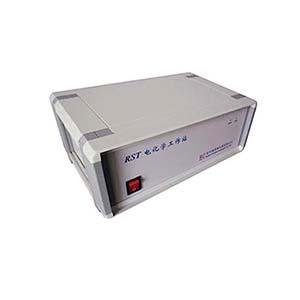
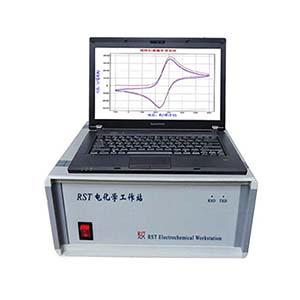
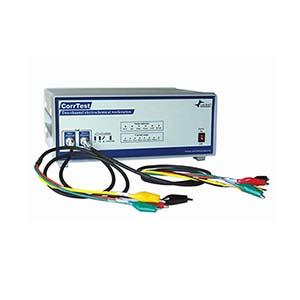
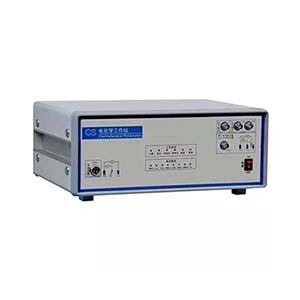
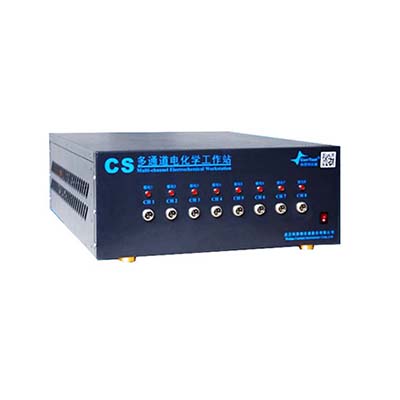
The CS300X Multi-Channel Electrochemical Workstation is a high-performance electrochemical analysis system designed for parallel experiments in energy research, materials science, life sciences, and environmental protection. Based on the CS350 single-channel electrochemical workstation platform, it integrates multiple measurement channels to improve experimental efficiency and enable simultaneous electrochemical testing.
The CS300X series supports customizable configurations from 2 to 8 channels. Each channel features comprehensive electrochemical measurement functions and electrochemical impedance spectroscopy (EIS), allowing researchers to perform multiple experiments concurrently while maintaining flexible test configurations.
The product family also includes the CS310X series, which provides EIS functionality on one channel while retaining electrochemical measurement capabilities across the configured channels. This offers a cost-effective option for laboratories that require multi-channel testing but do not need impedance measurements on every channel.
With a floating design, high-resolution signal acquisition, automatic current and potential range selection, and network-port communication, the CS300X provides a versatile platform for electrochemical analysis, battery research, electrocatalysis, corrosion evaluation, and advanced materials characterization.
Performance Features
• Customizable Multi-Channel Configuration: Supports 2–8 measurement channels to accommodate different experimental requirements.
• Simultaneous Electrochemical Testing: Enables parallel measurements across multiple channels, improving laboratory throughput and experimental efficiency.
• Full EIS Functionality: Every channel in the CS300X series supports electrochemical impedance spectroscopy.
• Cost-Effective Alternative: The CS310X series provides EIS on one channel, offering a more economical solution for selected testing applications.
• Full Floating Design: Designed to support stable and precise electrochemical measurements.
• High-Resolution Data Acquisition: Supports 16-bit acquisition at 1 MHz and 20-bit acquisition at 1 kHz.
• Wide Potential Control Range: Provides constant-potential control from −10 V to +10 V.
• Picoampere-Level Current Sensitivity: Offers a specified current sensitivity of 1 pA for low-current electrochemical measurements.
• Flexible Measurement Methods: Supports common voltammetric, chronoamperometric, chronocoulometric, and impedance techniques.
• Automatic Range Selection: Automatically selects current and potential ranges to simplify test setup.
• Network Communication: Uses a network-port interface for communication with the control computer.
• Broad Research Applications: Suitable for energy materials, electrochemical sensors, corrosion studies, electrosynthesis, and electrochemical analysis.
Working Principle
The CS300X multi-channel electrochemical workstation controls electrode potential or current and measures the resulting electrochemical response through multiple measurement channels. Each channel operates as an electrochemical measurement unit, enabling parallel experiments under independently configured test conditions, subject to the system's software and channel-control capabilities.
1. Multi-Channel Electrochemical Measurement
The workstation applies controlled electrical signals to connected electrode systems and records the resulting current or potential response. Multiple channels allow researchers to test different samples, electrode materials, or experimental conditions simultaneously.
2. Voltammetric Analysis
Methods such as cyclic voltammetry (CV), linear sweep voltammetry (LSV), differential pulse voltammetry (DPV), and square wave voltammetry (SWV) apply controlled potential waveforms and measure current responses. These measurements help characterize redox reactions, electrode activity, reaction kinetics, and electroactive substances.
3. Chronoamperometry and Chronocoulometry
Chronoamperometry (CA) measures current as a function of time under controlled potential conditions, while chronocoulometry (CC) records charge over time. These techniques are useful for studying electrode reaction kinetics, diffusion behavior, and electrochemical processes.
4. Electrochemical Impedance Spectroscopy
The CS300X series supports EIS on every channel. By applying an alternating electrical perturbation and analyzing the response over a range of frequencies, the workstation helps researchers investigate charge-transfer resistance, interfacial capacitance, diffusion processes, and other electrochemical properties.
For the CS310X series, EIS is available on one channel, while the other channels provide their supported electrochemical measurement functions.
Technical Parameters
|
Parameter |
Specification |
|
Model Series |
CS300X / CS310X |
|
Measurement Channels |
2–8 channels |
|
Constant Potential Control Range |
±10 V |
|
Potential Control Accuracy |
0.1% × full-scale reading ± 1 mV |
|
Potential Resolution / Sensitivity |
10 μV at frequencies above 100 Hz; 3 μV below 10 Hz |
|
Potential Rise Time |
Less than 1 μs below 10 mA; less than 10 μs below 2 A |
|
Reference Electrode Input Impedance |
10¹² Ω in parallel with 20 pF |
|
Compliance Voltage |
±12 V |
|
CV and LSV Scan Rate |
0.001 mV/s to 10,000 V/s |
|
CA and CC Pulse Width |
0.0001 to 65,000 s |
|
SWV Frequency |
0.001 to 100 kHz |
|
DPV and NPV Pulse Width |
0.0001 to 1,000 s |
|
AD Data Acquisition |
16-bit at 1 MHz; 20-bit at 1 kHz |
|
DA Resolution |
16-bit |
|
DA Setup Time |
1 μs |
|
Constant Current Control Range, 2–4 Channels |
±500 mA |
|
Constant Current Control Range, 5–8 Channels |
±200 mA |
|
Current Control Accuracy |
0.1% × full-scale reading |
|
Current Sensitivity |
1 pA |
|
Current Range, 2–4 Channels |
2 nA to 500 mA; 10 ranges |
|
Current Range, 5–8 Channels |
2 nA to 200 mA; 9 ranges |
|
Maximum Output Current, 2–4 Channels |
±500 mA |
|
Maximum Output Current, 5–8 Channels |
±200 mA |
|
Current Scan Increment |
1 mA at 1 A/ms |
|
Potential Scan Increment |
0.076 mV at 1 V/ms |
|
Minimum Potential Increment in CV |
0.075 mV |
|
Range Selection |
Automatic current and potential range setting |
|
Low-Pass Filter |
8-segment programmable filter |
|
Communication Interface |
Network port |
Note: Confirm channel-specific specifications, EIS configuration, and compatibility with the selected software version with the manufacturer before ordering.
CS300X vs. CS310X Multi-Channel Electrochemical Workstation
|
Feature |
CS300X Series |
CS310X Series |
|
Available Channels |
2–8, customizable |
2–8, customizable |
|
Electrochemical Measurements |
Supported on each configured channel |
Supported on each configured channel |
|
EIS Functionality |
Available on every channel |
Available on one channel |
|
Parallel Experiments |
Supports multi-channel testing |
Supports multi-channel testing |
|
Configuration Flexibility |
Full EIS capability across channels |
Cost-effective configuration for selective EIS testing |
|
Recommended Use |
Research requiring impedance analysis across multiple samples |
Routine parallel testing with impedance analysis on one channel |
Application Scenarios
• Electrosynthesis and Electrodeposition: Studies electrodeposition, electroplating, anodizing, electrolysis, and electrochemical synthesis mechanisms.
• Electrochemical Analysis: Performs parallel electrochemical measurements for analytical research and method development.
• Battery and Energy Storage Research: Supports studies of lithium-ion batteries, supercapacitors, fuel cells, and related energy materials.
• Solar Cell Research: Facilitates electrochemical characterization of materials and components used in solar energy technologies.
• Advanced Functional Materials: Evaluates the electrochemical properties of functional materials, electrode materials, and sensors.
• Corrosion Research: Investigates metal corrosion behavior and evaluates the corrosion resistance of materials.
• Corrosion Inhibitor Evaluation: Supports comparative testing of corrosion inhibitors and water-quality stabilizers.
• Coating and Cathodic Protection Studies: Assesses protective coatings and cathodic protection performance using appropriate electrochemical methods.
• Environmental Research: Supports electrochemical studies relevant to environmental monitoring and protection.
• High-Throughput Laboratory Testing: Enables parallel experiments across multiple samples to improve research efficiency and experimental consistency.
Frequently Asked Questions
1. What is the CS300X multi-channel electrochemical workstation?
The CS300X is a multi-channel electrochemical analysis instrument designed for simultaneous electrochemical experiments. It is available with 2–8 customizable channels and supports EIS on every channel.
2. How many channels can the CS300X support?
The standard configurable range is 2–8 channels. Custom channel configurations may be available upon consultation with the manufacturer.
3. What is the difference between the CS300X and CS310X series?
The CS300X provides EIS functionality on every channel, whereas the CS310X provides EIS on one channel. The CS310X is designed as a cost-effective alternative when impedance measurements are not required on every channel.
4. Can multiple samples be tested simultaneously?
Yes. The multi-channel architecture supports parallel electrochemical measurements, helping laboratories compare different samples or experimental conditions within the same testing session.
5. What electrochemical techniques does the CS300X support?
Its specified capabilities include CV, LSV, CA, CC, SWV, DPV, and NPV, together with other supported methods available through the configured software.
6. What is the potential control range?
The specified constant-potential control range is ±10 V, with a potential control accuracy of 0.1% of the full-scale reading plus or minus 1 mV.
7. What is the maximum current output?
The maximum output current depends on the number of channels: ±500 mA for 2–4 channels and ±200 mA for 5–8 channels.
8. Does the CS300X support electrochemical impedance spectroscopy?
Yes. EIS is available on every channel of the CS300X series. In the CS310X series, impedance functionality is available on one channel.
9. Which industries and research fields can use the CS300X?
Applications include energy storage, battery development, electrocatalysis, materials science, corrosion engineering, electrochemical sensors, electrosynthesis, and environmental research.
10. How does multi-channel testing improve research efficiency?
It allows researchers to conduct multiple measurements in parallel, reducing sequential testing time and facilitating comparative studies across different samples and experimental conditions.
NEXT:5B-1B Intelligent Dual-Temperature-Zone Digestion Device