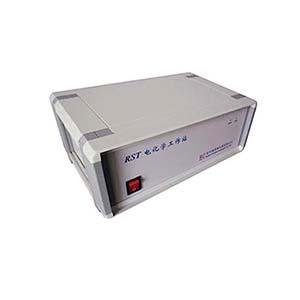
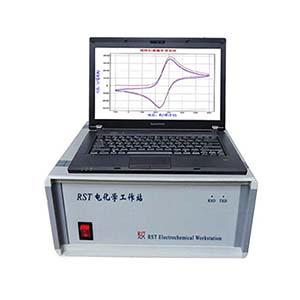
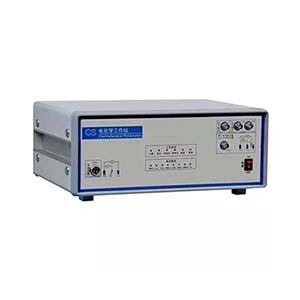
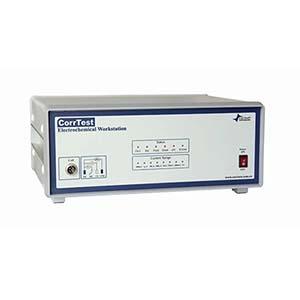
RST-5202 Laboratory Electrochemical Workstation
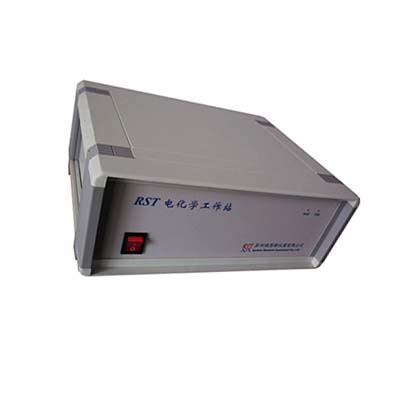
- PRODUCT DETAIL
RST-5202 Laboratory Electrochemical Workstation
Product Introduction
The
RST-5202 Laboratory Electrochemical Workstation is a multifunctional
electrochemical analyzer designed for laboratory research, electrochemical
characterization, and electrode reaction studies. It supports a wide range of
electrochemical techniques, including cyclic voltammetry (CV), linear sweep
voltammetry (LSV), chronoamperometry (CA), differential pulse voltammetry
(DPV), square wave voltammetry (SWV), and bulk electrolysis.
With
a broad scanning-speed range, programmable pulse parameters, rotating disk
electrode (RDE) control output, and selectable data acquisition lengths, the
RST-5202 provides flexibility for investigating electrode kinetics, redox
reactions, electrochemical reaction mechanisms, and analytical detection
methods.
Performance Features
1. Multiple
Electrochemical Techniques: Supports more than 10 analysis methods for
electrochemical measurement and characterization.
2. Cyclic and Linear Sweep Voltammetry: Provides CV
and LSV for studying redox behavior and electrode reaction characteristics.
3. Pulse Voltammetry: Supports
differential pulse, normal pulse, and square wave voltammetry for
electrochemical analysis.
4.Time-Dependent
Measurements: Includes chronoamperometry, chronocoulometry, and
current-time curve analysis.
5.Advanced Amperometric
Detection: Supports differential pulse amperometric detection, double differential pulse
amperometric detection, and three-pulse amperometric detection.
6. Bulk Electrolysis: Supports
electrochemical experiments involving controlled bulk electrolysis.
7. RDE Control Output: Provides a
0–10 V output for rotating disk electrode control.
8.Flexible Pulse
Configuration: Offers adjustable pulse widths and programmable
measurement steps for different experimental protocols.
9. Extended Data
Acquisition: Supports selectable data lengths from 128,000 to 4,096,000
points.
10. Electrochemical
Cell Control: Provides control outputs for nitrogen, mixing, and
knocking functions, subject to the compatible cell configuration.
Working Principle
The
RST-5202 applies controlled electrical signals to an electrochemical cell and
measures the resulting current, charge, or potential response. By varying the
applied potential, pulse parameters, or measurement time, researchers can
investigate electrode reactions and electrochemical processes.
Different
techniques provide complementary information:
• Cyclic
Voltammetry (CV): Examines oxidation and reduction behavior
during forward and reverse potential sweeps.
• Linear Sweep
Voltammetry (LSV): Measures current as the applied potential
changes in one direction.
• Chronoamperometry
(CA): Records current over time following a potential step.
• Chronocoulometry (CC): Measures
accumulated charge over time.
• Differential Pulse
Voltammetry (DPV): Uses potential pulses to improve the
discrimination of electrochemical signals.
• Square Wave Voltammetry
(SWV): Applies square-wave potential modulation for sensitive electrochemical
measurements.
• Bulk Electrolysis (BE): Supports
electrochemical conversion of species in a sample under controlled conditions.
The
resulting data can be used to characterize electrode materials, reaction
kinetics, redox processes, and electrochemical analytical performance.
Technical Parameters
Parameter
Specification
Model
RST-5202
Product
Type
Laboratory
Electrochemical Workstation
Cyclic
Voltammetry (CV)
Supported
Linear
Sweep Voltammetry (LSV)
Supported
Chronoamperometry
(CA)
Supported
Chronocoulometry
(CC)
Supported
Differential
Pulse Voltammetry (DPV)
Supported
Normal
Pulse Voltammetry (NPV)
Supported
Square
Wave Voltammetry (SWV)
Supported
Current-Time
Curve (i-t)
Supported
Differential
Pulse Amperometric Detection (DPA)
Supported
Double
Differential Pulse Amperometric Detection (DDPA)
Supported
Three-Pulse
Amperometric Detection (TPA)
Supported
Bulk
Electrolysis (BE)
Supported
Open-Circuit
Potential-Time Curve (OCPT)
Supported
RDE
Control Output Voltage
0–10
V
CV
and LSV Scanning Speed
0.000001–5000
V/s
CA
and CC Pulse Width
0.0001–1,000
s
CA
and CC Step Times
320
DPV
and NPV Pulse Width
0.0001–10
s
SWV
Frequency
1–100,000
Hz
Maximum
Data Length
Selectable:
128,000–4,096,000 points
Electrochemical
Cell Control Outputs
Nitrogen,
mixing, and knocking
Application Scenarios
• Electrochemical
Research: Investigating electrode reactions, redox processes, and electrochemical
mechanisms.
• Battery
and Energy Materials Research: Characterizing electrode materials and
evaluating electrochemical behavior.
• Corrosion
Studies: Supporting electrochemical characterization of corrosion-related processes
using suitable methods.
• Electrochemical
Sensors: Evaluating sensor response and analytical detection performance.
• Electrocatalysis
Research: Studying catalytic electrode reactions and potential-dependent activity.
• Materials
Science: Characterizing conductive materials, electrode coatings, and functional
materials.
• Analytical
Chemistry: Applying pulse voltammetry and amperometric techniques to electrochemical
detection.
• Academic
and Industrial Laboratories: Supporting electrochemical experiments, method
development, and materials evaluation.
RST-5202 vs. Conventional Electrochemical Analyzers
Comparison Factor
RST-5202
Basic Electrochemical Analyzer
Electrochemical
Methods
More
than 10 methods
May
support fewer methods
Voltammetry
CV,
LSV, DPV, NPV, SWV
Depends
on model
Time-Based
Analysis
CA,
CC, i-t, OCPT
Depends
on model
Amperometric
Detection
DPA,
DDPA, TPA
Depends
on model
Bulk
Electrolysis
Supported
Depends
on model
RDE
Control Output
0–10
V
Depends
on model
SWV
Frequency
1–100,000
Hz
Depends
on model
Maximum
Data Length
Up
to 4,096,000 points
Depends
on model
Cell
Control Outputs
Nitrogen,
mixing, and knocking
Depends
on model
Frequently Asked Questions (FAQ)
1. What is the RST-5202 Laboratory Electrochemical
Workstation used for?
It
is used for electrochemical research, electrode characterization, redox
analysis, electrochemical sensor evaluation, and investigation of reaction
mechanisms.
2. Which electrochemical methods does the RST-5202 support?
Supported
methods include CV, LSV, CA, CC, DPV, NPV, SWV, i-t, DPA, DDPA, TPA, bulk
electrolysis, and open-circuit potential-time measurements.
3. What is the scanning-speed range for CV and LSV?
The
specified scanning-speed range is 0.000001–5000 V/s.
4. What pulse-width ranges are available?
The
specified pulse-width range is 0.0001–1,000 seconds for CA and CC, and
0.0001–10 seconds for DPV and NPV.
5. What is the supported square wave voltammetry frequency?
The
SWV frequency range is 1–100,000 Hz.
6. Does the RST-5202 support rotating disk electrode
experiments?
Yes.
It provides a 0–10 V RDE control output for compatible rotating disk electrode
equipment. Motor compatibility and control configuration should be confirmed
before integration.
7. What is the maximum data acquisition length?
The
maximum selectable data length is 4,096,000 points, with a lower selection of
128,000 points.
8. Can the workstation be used for electrochemical sensor
development?
Yes.
Its pulse voltammetry, amperometric detection, and time-dependent measurement
methods are useful for sensor response characterization and analytical method
development.
9. Does the workstation support electrochemical cell
control?
The
supplied specifications list control outputs for nitrogen, mixing, and
knocking. The compatible accessories and exact control functions should be
verified with the manufacturer.
NEXT:CS Potentiostat/Galvanostat for Heavy Metal Ion Detection