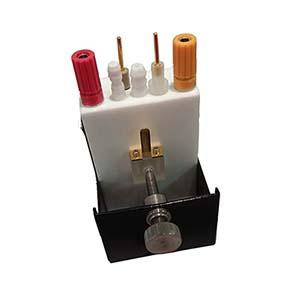
13378FD H Spectroelectrochemical Cell

- PRODUCT DETAIL
13378FD H Spectroelectrochemical Cell
Product Introduction
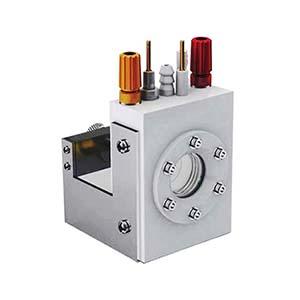
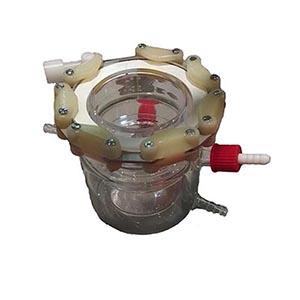
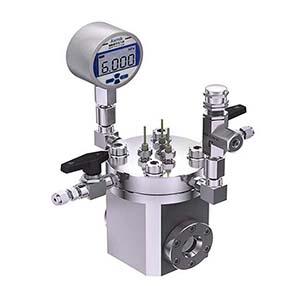
The 13378FD H Spectroelectrochemical Cell is designed for electrochemical research combining optical access with controlled electrode reactions. Featuring a chemically resistant PTFE body and a quartz optical window, it supports spectroelectrochemical measurements, catalyst evaluation, and oxygen reduction reaction (ORR) studies.
With a common volume range of 50–250 mL, the cell offers flexible experimental configurations, including gas introduction, proton exchange membrane separation, and customizable left- and right-side arrangements. Its external-thread sealing structure allows 360-degree rotation to align the electrode with the optical window, helping optimize the measurement position.
Performance Features
1. PTFE Cell Body: Provides chemical resistance for a wide range of laboratory electrochemical applications.
2. Quartz Optical Window: Enables optical access for spectroelectrochemical measurements and light-based analysis.
3. Flexible Volume Options: Common cell volumes range from 50 to 250 mL to accommodate different experimental requirements.
4.360-Degree Rotatable Sealing: External-thread sealing allows the cell to rotate for electrode-to-window alignment.
5. Reduced Solution Resistance Effects: The reference electrode and working electrode share the same chamber, helping reduce uncompensated solution resistance (iR drop) when appropriately positioned.
6. Proton Exchange Membrane Isolation: Separates the intermediate reaction compartments while permitting proton transport, depending on the membrane and electrolyte system.
7.Gas Introduction: Supports a single-layer configuration with gas inlet capability.
8.Customizable Configuration: Left- and right-side arrangements can be customized for specific experimental setups.
9.Optional Valve: A valve can be added for compatible experimental or chromatography-related configurations.
Working Principle
The 13378FD H Spectroelectrochemical Cell combines electrochemical measurement with optical observation. A potentiostat or electrochemical workstation controls the electrode potential and measures current, while the quartz window provides an optical path for monitoring changes associated with electrode reactions or reaction intermediates.
The working electrode performs the target electrochemical reaction, the counter electrode completes the electrical circuit, and the reference electrode provides a potential reference. Placing the working and reference electrodes in the same chamber can help reduce uncompensated solution resistance when the electrode spacing and electrolyte conductivity are appropriately controlled.
When a proton exchange membrane is installed, it separates the relevant compartments while allowing proton transport under suitable operating conditions. Optional gas introduction supports gas-involving reactions such as oxygen reduction reaction (ORR) research.
Technical Parameters
|
Parameter |
Specification |
|
Model |
13378FD H |
|
Product Type |
Spectroelectrochemical Cell |
|
Cell Body Material |
PTFE |
|
Optical Window Material |
Quartz |
|
Common Cell Volume |
50–250 mL |
|
Sealing Method |
External-thread sealing |
|
Rotation |
360-degree rotation |
|
Optical Alignment |
Adjustable electrode-to-window alignment |
|
Cell Configuration |
Single-layer configuration available |
|
Gas Introduction |
Available |
|
Electrode Arrangement |
Working and reference electrodes in the same chamber |
|
Compartment Isolation |
Proton exchange membrane |
|
Left/Right Configuration |
Customizable |
|
Additional Valve |
Optional |
Application Scenarios
• Oxygen Reduction Reaction (ORR) Research: Evaluating electrocatalysts for oxygen reduction and fuel-cell air cathode applications.
• Oxygen Evolution Reaction (OER) Studies: Investigating electrocatalyst activity and electrochemical reaction behavior.
• Hydrogen Evolution Research: Studying electrode materials and catalytic performance for hydrogen production.
• Spectroelectrochemical Analysis: Monitoring optical changes during electrochemical reactions.
• Electrocatalyst Development: Comparing catalyst performance under controlled electrochemical conditions.
• Membrane-Based Electrochemical Experiments: Investigating systems requiring proton exchange membrane separation.
• Gas-Involved Electrochemistry: Supporting experiments that require gas introduction into the electrolyte.
How to Select the Right Electrochemical Cell
Choosing an appropriate electrochemical cell is important for obtaining reliable and reproducible experimental results. For oxygen reduction reaction (ORR) testing and other electrochemical studies, consider the following factors.
1. Cell Volume
The electrolyte volume influences mass transfer, solution conditions, and the interaction between the electrode and cell geometry. For rotating disk electrode (RDE) experiments, a sufficiently large cell helps maintain appropriate hydrodynamic conditions and reduces interference from the cell walls.
A volume of approximately 150 mL is often suitable for particular ORR and RDE configurations. Smaller volumes, such as 50–100 mL, may also work, but suitability depends on electrode dimensions, rotation speed, electrolyte properties, and cell geometry.
2. Cell Geometry and Electrode Position
The distance between the working electrode and reference electrode affects uncompensated solution resistance and potential accuracy. A suitable arrangement helps minimize iR drop without disturbing the hydrodynamic conditions around a rotating electrode.
The 13378FD H provides adjustable alignment and a shared chamber for the working and reference electrodes. Electrode placement should be optimized for the specific experiment rather than relying on a universal distance.
3. Optical Window Alignment
For spectroelectrochemical measurements, the electrode and optical window must be aligned to provide a suitable optical path. The 360-degree rotation design helps adjust the relative positioning of the electrode and window.
4. Gas Introduction and Membrane Separation
For gas-involving reactions such as ORR, gas introduction can support controlled reactant delivery. A proton exchange membrane can separate reaction compartments while allowing proton transport. The choice of membrane, gas flow, and electrolyte should match the reaction system and experimental objectives.
13378FD H vs. Conventional Electrochemical Cells
|
Comparison Factor |
13378FD H Spectroelectrochemical Cell |
Conventional Electrochemical Cell |
|
Cell Body |
PTFE |
Depends on the model |
|
Optical Window |
Quartz |
May be absent or separately configured |
|
Cell Volume |
Commonly 50–250 mL |
Varies by design |
|
Optical Alignment |
360-degree rotational adjustment |
Depends on the structure |
|
Electrode Arrangement |
Working and reference electrodes in the same chamber |
Depends on the design |
|
Compartment Separation |
Proton exchange membrane |
Optional or model-dependent |
|
Gas Introduction |
Available |
Depends on the configuration |
|
Customization |
Left/right arrangements can be customized |
Depends on the supplier |
|
Typical Applications |
Spectroelectrochemistry, ORR, catalyst evaluation |
General electrochemical testing |
Frequently Asked Questions (FAQ)
1. What is the 13378FD H Spectroelectrochemical Cell used for?
It is designed for spectroelectrochemical research, electrocatalyst evaluation, oxygen reduction reaction studies, and other electrochemical experiments requiring optical access.
2. What materials are used in the cell?
The cell body is made of PTFE, and the optical window is made of quartz.
3. What is the available cell volume?
Common volumes range from 50 to 250 mL. The most suitable volume depends on the reaction, electrode dimensions, and experimental conditions.
4. Can the cell be used for ORR testing?
Yes. It is suitable for ORR research when configured with appropriate electrodes, electrolyte, and gas introduction. Cell volume and electrode geometry should be selected to suit the measurement method.
5. How does the 360-degree rotation feature help?
It allows adjustment of the electrode position relative to the quartz window, helping establish an appropriate optical path for spectroelectrochemical measurements.
6. What is the function of the proton exchange membrane?
It separates reaction compartments while permitting proton transport under suitable conditions, helping support experiments that require compartmentalization.
7. Does the cell support gas introduction?
Yes. Gas introduction is available for experiments involving gaseous reactants or controlled gas environments.
8. Can the cell configuration be customized?
Yes. The left- and right-side configurations can be customized, and an optional valve can be added where compatible with the intended setup.
9. How can solution resistance effects be minimized?
Appropriate reference electrode placement, sufficient electrolyte conductivity, suitable electrode geometry, and instrument-based iR compensation can help reduce errors caused by uncompensated solution resistance.