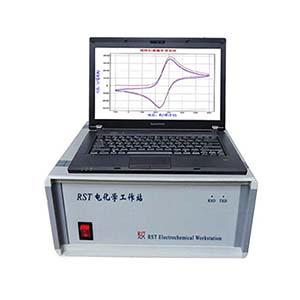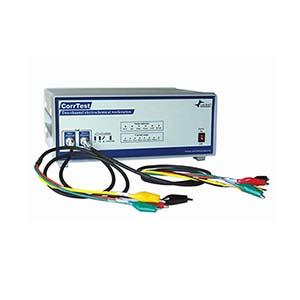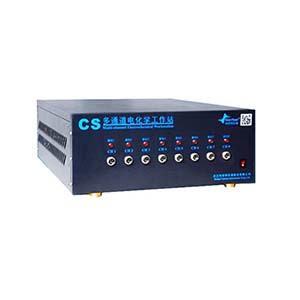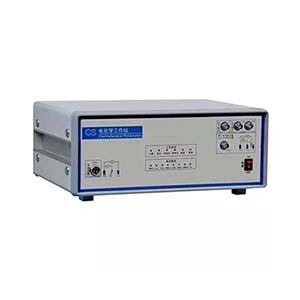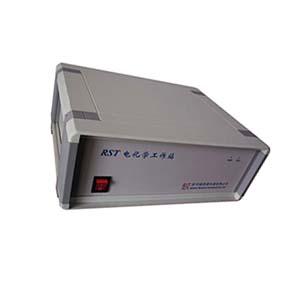
RST-5206 Laboratory Electrochemical Workstation
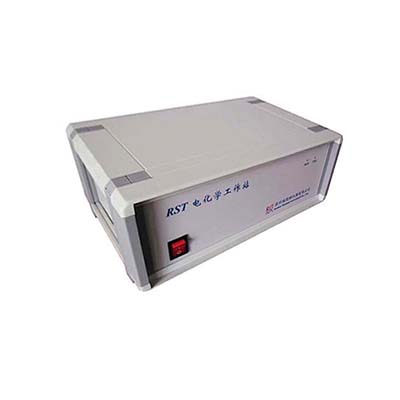
- PRODUCT DETAIL
RST-5206 Laboratory Electrochemical Workstation
Product Introduction
The
RST-5206 Laboratory Electrochemical Workstation is a multifunctional
electrochemical analyzer designed for laboratory testing, electrochemical
research, and material characterization. It supports more than 10
electrochemical analysis methods, including cyclic voltammetry (CV), linear
sweep voltammetry (LSV), chronoamperometry (CA), differential pulse voltammetry
(DPV), and square wave voltammetry (SWV).
With
a wide scanning-speed range, flexible pulse control, and selectable data
acquisition lengths, the RST-5206 electrochemical workstation supports a broad
range of electrochemical experiments and research applications.
Performance Features
• Multiple analysis
methods: Supports CV, LSV, CA, chronocoulometry, DPV, NPV, SWV, current-time analysis,
and additional electrochemical techniques.
• Flexible experimental
control: Provides configurable scanning speeds, pulse widths, and step times for
different experimental requirements.
• Extended
data acquisition: Selectable maximum data lengths from 128,000
to 4,096,000 points.
• RDE control: Provides a
0–10 V output for rotating disk electrode control.
• Electrochemical
cell control: Supports control outputs for nitrogen, mixing, and
knocking functions.
• Research-oriented
capabilities: Includes bulk electrolysis and CV simulation for studying
reaction mechanisms.
Working Principle
The
RST-5206 applies controlled electrical signals to an electrochemical cell and
records the resulting current, charge, or potential response. By varying the
applied potential or current over time, the workstation performs different
electrochemical measurement methods.
The
acquired data can be used to evaluate electrode reactions, redox behavior,
reaction kinetics, and electroactive material properties. Different measurement
modes provide complementary information for qualitative and quantitative
electrochemical analysis.
Technical Parameters
Parameter
Specification
Model
RST-5206
Instrument
Type
Laboratory
Electrochemical Workstation
CV
and LSV Scanning Speed
0.000001–5000
V/s
CA
and CC Pulse Width
0.0001–1,000
s
CA
and CC Step Times
320
DPV
and NPV Pulse Width
0.0001–10
s
SWV
Frequency
1–100,000
Hz
RDE
Control Output
0–10
V
Maximum
Data Length
Selectable
from 128,000 to 4,096,000 points
Electrochemical
Cell Control
Nitrogen,
mixing, and knocking control outputs
Note: Confirm the exact interpretation of “320 step times,”
the available control interfaces, and the specifications of each measurement
mode with the supplier.
Supported Electrochemical Methods
Method
Abbreviation
Typical Research Purpose
Cyclic
Voltammetry
CV
Investigating
redox behavior and reaction mechanisms
Linear
Sweep Voltammetry
LSV
Evaluating
electrochemical responses during potential scanning
Chronoamperometry
CA
Recording
current changes over time
Chronocoulometry
CC
Measuring
charge changes over time
Differential
Pulse Voltammetry
DPV
Sensitive
electrochemical analysis
Normal
Pulse Voltammetry
NPV
Studying
electrochemical responses to potential pulses
Square
Wave Voltammetry
SWV
Pulse-based
electrochemical analysis
Current-Time
Curve
i-t
Monitoring
current variation over time
Differential
Pulse Amperometry
DPA
Amperometric
detection
Double
Differential Pulse Amperometry
DDPA
Specialized
pulse-amperometric measurements
Three-Pulse
Amperometry
TPA
Multi-pulse
amperometric detection
Bulk
Electrolysis
BE
Electrochemical
conversion of bulk samples
Open-Circuit
Potential-Time Curve
OCPT
Monitoring
open-circuit potential over time
Rotating
Disk Electrode Control
RDE
Controlling
compatible rotating disk electrode systems
Application Scenarios
• Electrochemical
research laboratories: Fundamental studies of electrode reactions and
redox processes.
• Battery and energy
materials research: Electrochemical characterization of electrode
and energy-storage materials.
• Corrosion research: Investigation of electrochemical behavior associated with material corrosion.
• Sensors
and analytical chemistry: Development and evaluation of electrochemical
sensing methods.
• Catalyst research: Studying
electrocatalytic activity and reaction behavior.
• Materials
science: Characterization of conductive materials, coatings, and functional electrode
materials.
• Academic and industrial
R&D: Method development, electrochemical testing, and experimental data collection.
Comparison: RST-5206 vs. Basic Electrochemical Analyzers
Feature
RST-5206 Workstation
Basic Electrochemical Analyzer
Measurement
Methods
Supports
a broad range of electrochemical techniques
Often
supports a more limited set
Scanning
Speed
0.000001–5000
V/s for CV and LSV
Depends
on the model
Pulse
Techniques
Supports
multiple pulse-voltammetry and amperometry methods
May
offer fewer pulse methods
Data
Length
Up
to 4,096,000 selectable points
Depends
on the model
RDE
Control
0–10
V output
May
require separate control equipment
Application
Flexibility
Suitable
for varied laboratory research workflows
Often
designed for routine or specific tests
Comparison is general; actual capabilities depend on the
specifications of the instruments being compared.
Frequently Asked Questions
1. What is the RST-5206 electrochemical workstation used
for?
It
is used for laboratory electrochemical analysis, electrode characterization,
redox studies, and electrochemical method development.
2. Which electrochemical methods does the RST-5206 support?
Supported
methods include CV, LSV, CA, CC, DPV, NPV, SWV, i-t, DPA, DDPA, TPA, bulk
electrolysis, and open-circuit potential-time measurements.
3. What is the CV and LSV scanning-speed range?
The
specified scanning-speed range is 0.000001–5000 V/s.
4. What is the SWV frequency range?
The
specified square wave voltammetry frequency range is 1–100,000 Hz.
5. Can the RST-5206 be used for pulse-voltammetry
experiments?
Yes.
It supports differential pulse voltammetry, normal pulse voltammetry, and
square wave voltammetry, with the specified pulse-width ranges.
6. Does the workstation support rotating disk electrodes?
Yes.
It provides a 0–10 V RDE control output. Confirm compatibility with the
selected rotating disk electrode assembly before purchase.
7. How much electrochemical data can it record?
The
maximum data length is selectable from 128,000 to 4,096,000 points.
8. Can it be used for battery, catalyst, and corrosion
research?
It
can support relevant electrochemical characterization experiments in these
fields. Suitability for a specific test depends on the electrode setup,
experimental method, and required performance.
NEXT:YMJN-D-20 Industrial Natural Gas Dew Point Analyzer