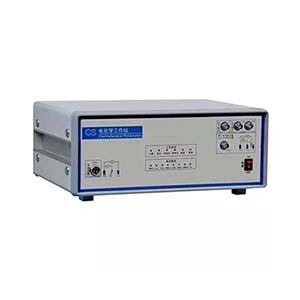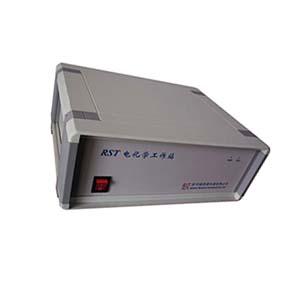
CS Potentiostat/Galvanostat for Heavy Metal Ion Detection
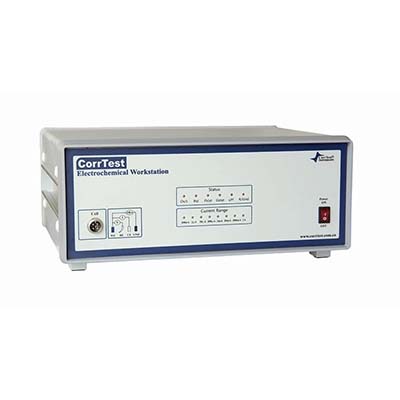
- PRODUCT DETAIL
CS Potentiostat/Galvanostat for Heavy Metal Ion Detection
Product Introduction
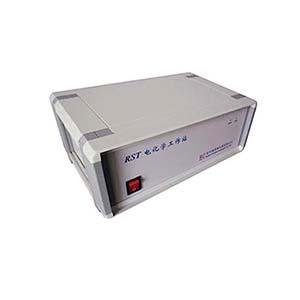
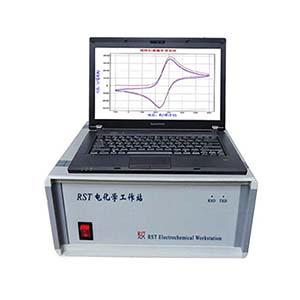
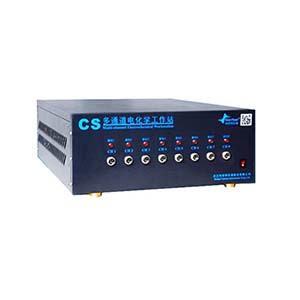
The CS Potentiostat/Galvanostat is a multifunctional electrochemical workstation designed for heavy metal ion detection, electrochemical analysis, corrosion research, battery testing, and materials characterization. Using anodic stripping voltammetry (ASV), the system supports electrochemical detection of trace metal ions in suitable sample matrices.
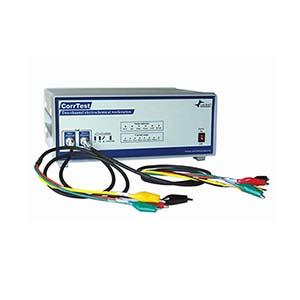
The instrument integrates a digital function generator, high-speed data acquisition circuitry, potentiostatic and galvanostatic control, and dedicated analysis software. It supports two-, three-, and four-electrode configurations, providing flexibility for different experimental setups.
With a potential control range of ±10 V, current control up to ±2 A, current sensitivity down to 10 pA, and electrochemical impedance measurement over a frequency range of 10 μHz to 1 MHz, the CS workstation supports a broad range of electrochemical research applications.
Performance Features
1. Heavy Metal Ion Detection: Supports anodic stripping voltammetry for trace metal analysis using suitable electrodes and validated analytical procedures.
2. Potentiostat and Galvanostat Modes: Enables controlled-potential and controlled-current electrochemical experiments.
3. Flexible Electrode Configuration: Supports two-, three-, and four-electrode systems.
4. High Current and Potential Capability: Provides a potential control range of ±10 V and a maximum current output of 2.0 A.
5. High Current Sensitivity: Offers a specified current sensitivity of 10 pA for low-current electrochemical measurements.
6.Electrochemical Impedance Spectroscopy: Supports impedance measurements from 10 μHz to 1 MHz for investigating interfaces, coatings, batteries, and electrochemical systems.
7.Multiple Waveform Outputs: Supports sine, triangular, and square waveforms for impedance and related experiments.
8. Advanced Data Acquisition: Features 16-bit acquisition at 1 MHz and 20-bit acquisition at 1 kHz, according to the supplied specifications.
9. Automatic Range Selection: Supports automatic potential and current range adjustment.
10.Broad Research Applications: Suitable for electrochemical sensors, corrosion studies, batteries, electrodeposition, electrosynthesis, and new-material development.
11. USB Connectivity: Uses an isolated USB 2.0 interface for communication with a compatible computer.
Working Principle
The CS Potentiostat/Galvanostat controls the electrical potential or current applied to an electrochemical cell and measures the resulting response. By recording current, potential, charge, or impedance, researchers can characterize electrochemical reactions and material properties.
For heavy metal ion detection, the instrument can be used with anodic stripping voltammetry (ASV). In a typical ASV procedure:
1. Deposition: Target metal ions are accumulated on a suitable working electrode under a controlled potential.
2. Stripping: The potential is swept or pulsed to oxidize the accumulated metals.
3. Signal Measurement: The resulting current peaks are recorded and analyzed.
4. Quantification: Peak characteristics are compared with calibration standards to determine metal concentrations.
The instrument's suitability for a particular metal depends on the electrode material, sample preparation, electrolyte, measurement protocol, and interference controls.
For other applications, the workstation supports electrochemical impedance spectroscopy, corrosion evaluation, battery characterization, and electrochemical sensor development through appropriate measurement configurations.
Technical Parameters
1. Hardware Specifications
|
Parameter |
Specification |
|
Product Type |
Electrochemical Potentiostat/Galvanostat |
|
Electrode Configuration |
2-, 3-, or 4-electrode |
|
Grounding |
Floating (earth-isolated) or earth-grounded |
|
Potential Control Range |
±10 V |
|
Current Control Range |
±2.0 A |
|
Potential Control Accuracy |
0.1% × full range ± 1 mV |
|
Current Control Accuracy |
0.1% × full range |
|
Potential Resolution |
10 μV above 100 Hz; 3 μV below 10 Hz |
|
Current Sensitivity |
10 pA |
|
Rise Time |
Less than 1 μs below 10 mA; less than 10 μs below 2 A |
|
Reference Electrode Input Impedance |
10¹² Ω in parallel with 20 pF |
|
Current Ranges |
2 A–200 nA, 8 ranges |
|
Compliance Voltage |
±21 V |
|
Maximum Current Output |
2.0 A |
|
CV and LSV Scan Rate |
0.001 mV/s–10,000 V/s |
|
CA and CC Pulse Width |
0.0001–65,000 s |
|
Current Increment During Scan |
1 mA at 1 A/ms |
|
Potential Increment During Scan |
0.076 mV at 1 V/ms |
|
SWV Frequency |
0.001–100 kHz |
|
DPV and NPV Pulse Width |
0.0001–1,000 s |
|
AD Data Acquisition |
16 bit at 1 MHz; 20 bit at 1 kHz |
|
DA Resolution |
16 bit |
|
DA Setup Time |
1 μs |
|
Minimum Potential Increment in CV |
0.075 mV |
|
Low-Pass Filters |
Covering 8 decades |
|
Potential and Current Ranging |
Automatic |
2. Electrochemical Impedance Specifications
|
Parameter |
Specification |
|
Impedance Frequency Range |
10 μHz–1 MHz |
|
Frequency Accuracy |
0.005% |
|
AC Signal Amplitude |
1–2,500 mV |
|
Signal Resolution |
0.1 mV RMS |
|
DC Bias |
−10 V to +10 V |
|
Output Impedance |
50 Ω |
|
Waveforms |
Sine, triangular, and square |
|
Wave Distortion |
Less than 1% |
|
Scanning Modes |
Logarithmic or linear; increasing or decreasing |
|
Minimum Integration Time |
10 ms or one cycle, whichever is longer |
|
Maximum Integration Time |
10⁶ cycles or 10⁵ s |
|
Measurement Delay |
0–10⁵ s |
|
Automatic Potential Compensation |
−10 V to +10 V |
|
Current Compensation |
−1 A to +1 A |
|
Bandwidth |
8-decade frequency range, automatic or manual setting |
3. Computer and Software Requirements
|
Parameter |
Specification |
|
Communication Interface |
Isolated USB 2.0 |
|
Listed Operating Systems |
Windows 2000, Windows XP, Windows 7, Windows 8 |
|
Control Platform |
Computer-based software |
|
Software Model/Version |
Not specified in the supplied information |
Note: The listed operating systems are those provided in the source specifications. Compatibility with current Windows versions should be confirmed with the manufacturer.
4. Dimensions and Weight
|
Parameter |
Specification |
|
Net Weight |
6.5 kg |
|
Gross Weight |
10 kg |
|
Instrument Dimensions |
365 × 305 × 160 mm |
|
Package Dimensions |
525 × 375 × 225 mm |
Application Scenarios
• Heavy Metal Ion Detection: Electrochemical analysis of target metals using anodic stripping voltammetry and suitable electrodes.
• Environmental Chemistry: Research on metal contaminants in water and other prepared environmental samples.
• Electrochemical Sensors: Development, calibration, and performance evaluation of electrochemical sensing systems.
• Corrosion Research: Investigation of metal corrosion mechanisms in water, concrete, and soil-related environments.
• Battery and Energy Storage Research: Characterization of lithium-ion batteries, fuel cells, supercapacitors, and related materials.
• Electrodeposition and Electroplating: Analysis of electrochemical deposition processes and electrode behavior.
• Electrosynthesis and Anodic Oxidation: Investigation of electrochemical reaction pathways and process parameters.
• Coating and Corrosion Protection: Evaluation of protective coatings, corrosion inhibitors, water stabilizers, and cathodic protection.
• New Materials Research: Electrochemical characterization of functional and optoelectronic materials.
CS Potentiostat/Galvanostat vs. Basic Electrochemical Workstations
|
Comparison Factor |
CS Potentiostat/Galvanostat |
Basic Electrochemical Workstation |
|
Operating Modes |
Potentiostat and galvanostat |
Depends on model |
|
Electrode Configuration |
2, 3, or 4 electrodes |
Depends on model |
|
Maximum Current Output |
2.0 A |
Depends on model |
|
Current Sensitivity |
10 pA specified |
Depends on model |
|
Potential Control Range |
±10 V |
Depends on model |
|
Impedance Frequency Range |
10 μHz–1 MHz |
Depends on model |
|
Waveform Selection |
Sine, triangular, and square |
Depends on model |
|
Heavy Metal Analysis |
Supports ASV-based workflows |
Depends on available methods |
|
Corrosion Research |
Supports electrochemical corrosion studies |
Depends on model |
|
Battery and Sensor Research |
Suitable for multiple research applications |
Depends on available functions |
Frequently Asked Questions (FAQ)
1. What is the CS Potentiostat/Galvanostat used for?
It is designed for electrochemical analysis, heavy metal ion detection, corrosion studies, battery research, electrochemical sensor development, and materials characterization.
2. Can the CS workstation detect heavy metal ions?
Yes. It can support anodic stripping voltammetry for detecting suitable metal ions when used with compatible electrodes, appropriate sample preparation, and validated calibration procedures.
3. What is anodic stripping voltammetry?
ASV is an electroanalytical technique in which target metals are first accumulated on a working electrode and then oxidized during a controlled potential scan. The resulting current peaks are used for identification and quantification.
4. What is the maximum current output?
The specified maximum current output is 2.0 A, with a current control range of ±2.0 A.
5. What is the potential control range?
The workstation provides a potential control range of ±10 V and a specified compliance voltage of ±21 V.
6. Does the system support electrochemical impedance spectroscopy?
Yes. It supports impedance measurements over a frequency range of 10 μHz to 1 MHz, with configurable AC signal amplitude and DC bias.
7. Which electrode configurations are supported?
The system supports two-, three-, and four-electrode configurations, allowing it to be adapted to different electrochemical experiments.
8. Can it be used for battery and corrosion research?
Yes. Its electrochemical control and impedance capabilities support research involving batteries, supercapacitors, corrosion mechanisms, protective coatings, and corrosion inhibitors.
9. Is the workstation compatible with modern computers?
The supplied specifications list Windows 2000, XP, Windows 7, and Windows 8. Confirm current operating system and driver compatibility with the manufacturer before purchasing.
NEXT:CS310X Series Multi-Channel Electrochemical Workstation