WZS-185 High Turbidity Meter
- PRODUCT DETAIL
WZS-185 High Turbidity Meter
Product Introduction
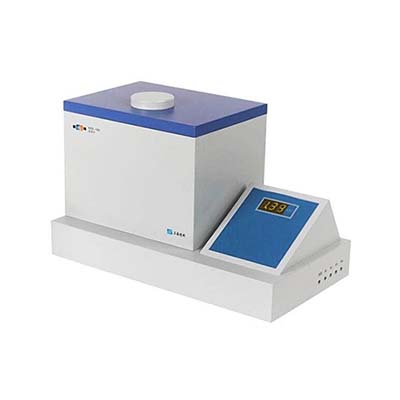
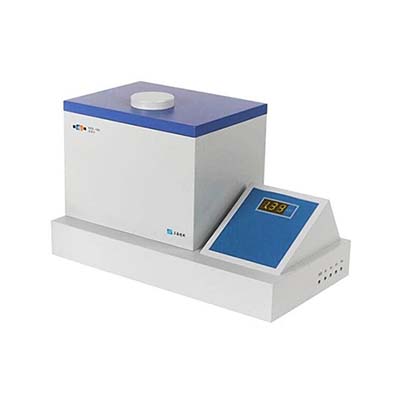
The WZS-185 High Turbidity Meter is a digital instrument designed to measure turbidity in water and other suitable liquid samples. Using a transmission and scattered-light measurement principle, it evaluates the optical effects of suspended particles and displays turbidity readings directly in NTU.
The instrument features a 3½-digit LED display, automatic chromatic compensation, and automatic range switching to simplify routine measurements across different turbidity levels. Its straightforward operation makes it suitable for laboratories, water treatment facilities, environmental monitoring, and industrial water quality testing.
With a compact benchtop design and a weight of approximately 3 kg, the WZS-185 can be integrated into routine water analysis workflows where reliable turbidity measurement is required.
Performance Features
1.Transmission and Scattered-Light Measurement: Uses an optical measurement principle to determine turbidity from the interaction of light with suspended particles.
2. Direct NTU Readout: Displays measured turbidity values directly, simplifying result interpretation.
3. Automatic Range Switching: Automatically switches between supported measurement ranges to improve operating convenience.
4. Automatic Chromatic Compensation: Includes chromatic compensation to help reduce the influence of sample color on turbidity measurement.
5. 3½-Digit LED Display: Provides a clear digital display for routine laboratory testing.
6. Simple Operation: Designed for straightforward measurement without unnecessarily complicated operating procedures.
7. Compact Benchtop Design: Its 380 × 210 × 250 mm dimensions and approximately 3 kg weight make it suitable for laboratory benches and testing stations.
Working Principle
The WZS-185 uses a transmission and scattered-light measurement principle to evaluate turbidity.
When light passes through a liquid sample, suspended particles interact with the light by scattering and reducing its transmission. The instrument detects the relevant optical response and converts it into a turbidity reading expressed in NTU (Nephelometric Turbidity Units).
Automatic chromatic compensation is designed to help account for the influence of sample color, while automatic range switching selects the appropriate measurement range. For reliable results, samples should be prepared and measured according to the manufacturer's operating instructions.
Technical Parameters
|
Parameter |
Specification |
|
Model |
WZS-185 |
|
Instrument Type |
High Turbidity Meter |
|
Measurement Principle |
Transmission and scattered-light measurement |
|
Display |
3½-digit LED |
|
Measurement Unit |
NTU |
|
Measurement Ranges |
High-turbidity ranges listed in the source include 0–100, 0–200, and 0–500 NTU, with reference ranges of 500–1,000 NTU |
|
Basic Error |
±2% FS |
|
Repeatability |
1% FS |
|
Stability |
±2% FS over 3 hours |
|
Automatic Functions |
Chromatic compensation and range switching |
|
Dimensions |
380 × 210 × 250 mm |
|
Instrument Weight |
Approximately 3 kg |
Important: The supplied range specifications combine information for the WZS-180 low-turbidity model and the WZS-185 high-turbidity model, and the range formatting is ambiguous. Confirm the exact measurement and reference ranges for the WZS-185 with the manufacturer before publication or purchase.
Application Scenarios
The WZS-185 high turbidity meter can support turbidity testing in a variety of water analysis and industrial applications.
• Water Treatment Plants: Monitoring turbidity during water treatment and process control.
• Environmental Water Testing: Measuring turbidity in suitable surface water and environmental water samples.
• Industrial Water Quality Control: Checking turbidity in process water and other industrial liquid samples.
• Wastewater Treatment: Supporting routine turbidity checks during wastewater treatment operations, subject to the instrument's confirmed measurement range.
• Laboratory Analysis: Providing direct NTU readings for routine testing and sample comparison.
• Research and Quality Assurance: Supporting turbidity-related experiments, product evaluation, and quality control workflows.
WZS-185 vs. WZS-180 Turbidity Meter
|
Comparison Item |
WZS-185 |
WZS-180 |
|
Instrument Type |
High turbidity meter |
Low turbidity meter |
|
Measurement Principle |
Transmission and scattered-light measurement, as described for the instrument series |
Listed under the same instrument-series specifications |
|
Display |
3½-digit LED |
Confirm exact configuration |
|
Measurement Range |
High-range configuration; exact model-specific ranges require confirmation |
Low-range values listed as 0–10 and 0–25 NTU |
|
Basic Error |
±2% FS, as listed in the shared specifications |
±2% FS, as listed in the shared specifications |
|
Repeatability |
1% FS, as listed in the shared specifications |
1% FS, as listed in the shared specifications |
|
Stability |
±2% FS over 3 hours, as listed in the shared specifications |
±2% FS over 3 hours, as listed in the shared specifications |
|
Typical Application |
Samples requiring high-range turbidity measurement |
Samples with relatively low turbidity |
The WZS-180 and WZS-185 ranges should be verified against the manufacturer's official model-specific specifications before selecting an instrument.
Frequently Asked Questions (FAQ)
1. What is the WZS-185 high turbidity meter used for?
It measures turbidity in water and other suitable liquid samples, providing direct readings in NTU for routine water quality testing.
2. What measurement principle does the WZS-185 use?
It uses a transmission and scattered-light measurement principle to evaluate the optical response of suspended particles in a sample.
3. Does the WZS-185 display turbidity directly in NTU?
Yes. The instrument provides direct digital turbidity readings in NTU.
4. Does the instrument support automatic range switching?
Yes. Automatic range switching is listed as a feature, allowing the instrument to select among its supported measurement ranges.
5. What are the basic error and repeatability specifications?
The supplied specifications list a basic error of ±2% FS and repeatability of 1% FS. Confirm the test conditions and model-specific specifications with the manufacturer.
6. What is the stability of the WZS-185?
The listed stability is ±2% FS over 3 hours.
7. What is the difference between the WZS-180 and WZS-185?
The WZS-180 is identified as a low turbidity meter, while the WZS-185 is the high turbidity version. The precise measurement ranges for each model should be confirmed before use.
8. What are the dimensions and weight of the instrument?
The listed dimensions are 380 × 210 × 250 mm, and the instrument weighs approximately 3 kg.