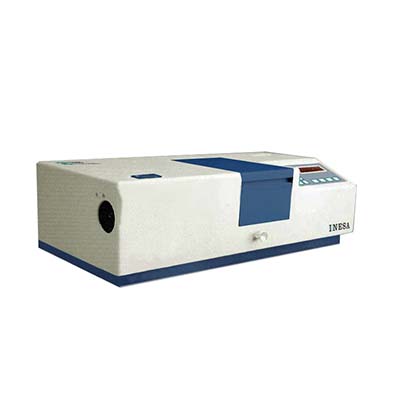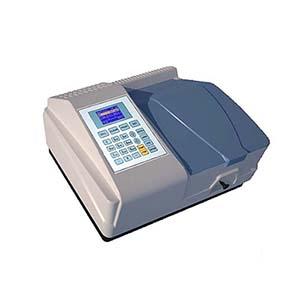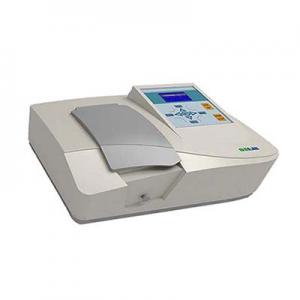
7230G Visible Spectrophotometer
- PRODUCT DETAIL
7230G Visible Spectrophotometer
Product Introduction
The
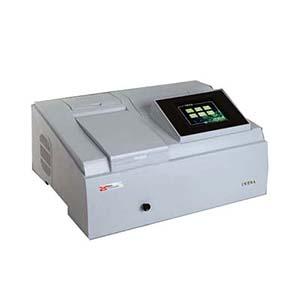
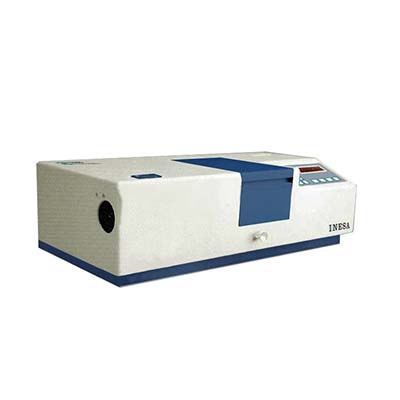
7230G Visible Spectrophotometer is a laboratory optical analysis instrument
designed for measuring transmittance, absorbance, and solution concentration in
the visible wavelength range. Featuring automatic zero adjustment, automatic
full-scale calibration, and automatic linear equation establishment, it
simplifies routine photometric measurements and quantitative analysis.
The
instrument supports automatic switching between transmittance (T), absorbance
(A), and concentration (C) modes, with direct concentration display for
efficient testing. Its convenient wavelength adjustment mechanism allows
operators to adjust the wavelength without opening the instrument housing.
Microcomputer-controlled sensitivity adjustment across the full wavelength
range helps support stable measurement performance.
With
a sample chamber compatible with 98 mm cuvettes when used with the required
bracket, the 7230G is suitable for routine laboratory testing, educational
experiments, and general-purpose visible spectrophotometry.
Performance Features
• Automatic zero
adjustment: Simplifies measurement preparation and routine operation.
• Automatic
full-scale adjustment: Helps establish the measurement scale
efficiently.
• Automatic
linear equation establishment: Supports quantitative concentration
analysis.
• Multiple measurement
modes: Automatically switches between transmittance (T), absorbance (A), and
concentration (C).
• Direct
concentration readings: Displays calculated concentration values
without requiring manual conversion.
• Convenient
wavelength adjustment: Allows wavelength selection without opening
the instrument housing.
• Microcomputer-controlled
sensitivity: Automatically adjusts sensitivity throughout the
wavelength range.
• Fixed-voltage light
source: Provides controlled lamp operation for routine photometric measurements.
• Extended cuvette
compatibility: Accommodates 98 mm cuvettes with a suitable bracket.
Working Principle
The
7230G Visible Spectrophotometer measures the interaction between visible light
and a sample solution. Light passes through the sample, and the instrument
detects the transmitted light intensity relative to the reference intensity.
The
measured optical response is expressed as transmittance or absorbance. For
quantitative analysis, the instrument can establish a linear calibration
equation and use it to display concentration directly. Automatic zero
adjustment, full-scale adjustment, and microcomputer-controlled sensitivity
help simplify operation and support consistent measurements.
Technical Parameters
Parameter
Specification
Model
7230G
Instrument
Type
Visible
Spectrophotometer
Wavelength
Range
330–900
nm
Wavelength
Accuracy
±1
nm
Wavelength
Repeatability
≤0.5
nm
Spectral
Bandwidth
5
nm
Transmittance
Range
0.0–100.0%
T
Transmittance
Accuracy
±0.8%
T
Transmittance
Repeatability
≤0.2%
T
Absorbance
Range
−0.043
to 1.999 A
Concentration
Display Range
0.000–9999
C
Dark
Current Drift
≤0.2%
T / 5 min
Bright
Current Drift
≤0.5%
T / 5 min
Transmittance–Absorbance
Conversion Error
±0.004
A
Stray
Light
≤0.6%
T at 360 nm, measured using NaNO₂
Automatic
Functions
Zero
adjustment, full-scale adjustment, linear equation establishment, T/A/C mode
switching
Sample
Cuvette Compatibility
98
mm cuvettes with required bracket
Ambient
Temperature
5–35°C
Relative
Humidity
≤85%
Power
Supply
220
V ±22 V, 50 Hz ±1 Hz
Dimensions
530
× 360 × 160 mm
Weight
20
kg
Note: The concentration display unit and the exact
configuration of the bracket for 98 mm cuvettes should be confirmed with the
manufacturer.
Application Scenarios
The
7230G Visible Spectrophotometer can be used for routine visible-light
photometric analysis in a range of laboratory environments.
• Chemical
laboratories: Absorbance and concentration measurements for prepared
solutions.
• Water
quality testing: Photometric analysis of samples using suitable
colorimetric methods and reagents.
• Educational
institutions: Demonstrations and experiments involving light absorption
and solution concentration.
• Quality control
laboratories: Routine comparison of sample measurements against
calibration standards.
• Research
laboratories: General visible-range optical measurements and
quantitative solution analysis.
• Industrial
laboratories: Photometric testing during process inspection and product
quality evaluation.
Application suitability depends on the analytical method,
reagents, sample characteristics, and required detection limits.
7230G vs. General Manual Visible Spectrophotometers
Feature
7230G Visible Spectrophotometer
General Manual Instruments
Zero
Adjustment
Automatic
May
require manual adjustment
Full-Scale
Adjustment
Automatic
Depends
on model
Calibration
Equation
Automatic
establishment
May
require manual setup
Measurement
Modes
Automatic
T/A/C switching
May
require manual mode selection
Concentration
Display
Direct
reading
May
require external calculation on some models
Wavelength
Adjustment
Accessible
without opening the housing
Design-dependent
Sensitivity
Control
Microcomputer-controlled
across the wavelength range
Depends
on model
Cuvette
Compatibility
98
mm cuvettes with required bracket
Depends
on sample compartment design
This comparison describes general instrument design
differences, not a verified comparison with a specific competing model.
Frequently Asked Questions
1. What is the wavelength range of the 7230G Visible
Spectrophotometer?
The
instrument operates over a wavelength range of 330–900 nm, making it suitable
for visible-range photometric analysis.
2. What parameters can the 7230G measure?
It
supports transmittance, absorbance, and concentration display modes.
3. Does the 7230G support automatic calibration functions?
Yes.
It features automatic zero adjustment, automatic full-scale adjustment, and
automatic establishment of linear equations.
4. Can the instrument display concentration directly?
Yes.
In concentration mode, the instrument displays values within the specified
range of 0.000–9999 C. The concentration unit and calibration configuration
should be confirmed for the intended method.
5. What is the spectral bandwidth?
The
specified spectral bandwidth is 5 nm.
6. What are the wavelength accuracy and repeatability?
Wavelength
accuracy is ±1 nm, and wavelength repeatability is ≤0.5 nm.
7. Can the 7230G accommodate long cuvettes?
Yes.
The sample chamber can accommodate 98 mm cuvettes when the required bracket is
installed.
8. Does wavelength adjustment require opening the
instrument?
No.
The instrument features an external wavelength adjustment mechanism that allows
adjustment without opening the housing.
9. What are the environmental requirements?
The
recommended operating environment is 5–35°C with relative humidity not
exceeding 85%.
10. What power supply does the instrument require?
The
specified power supply is 220 V ±22 V at 50 Hz ±1 Hz.