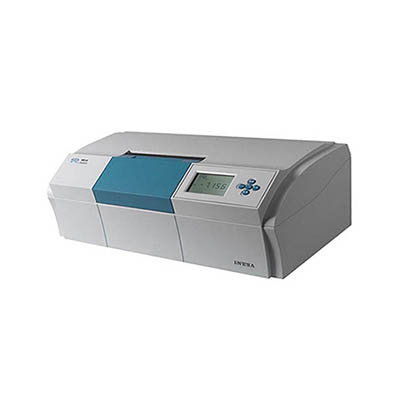
WZZ-2B Automatic Polarimeter
- PRODUCT DETAIL
WZZ-2B Automatic Polarimeter
Product Introduction
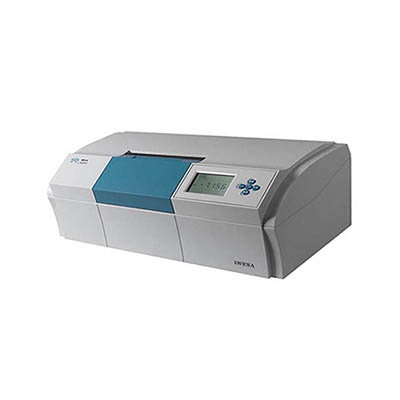
The WZZ-2B Automatic Polarimeter is a photoelectric instrument designed to measure the optical rotation of optically active substances. It combines photoelectric detection, automatic servo control, and an LCD display to provide clear measurement results for laboratory analysis and quality control.
With a minimum reading of 0.001°, the instrument supports repeatable optical rotation measurements and can save three repeat-test results and calculate their average. Its RS232 communication interface enables data transfer to a computer, helping laboratories manage measurement records and streamline analytical workflows.
The WZZ-2B is suitable for applications involving optically active compounds in chemical, pharmaceutical, food, and related testing laboratories.
Performance Features
• Photoelectric Detection: Uses photoelectric measurement technology for optical rotation analysis.
• Automatic Servo Control: Supports automated measurement and reduces the need for manual endpoint judgment.
• High-Resolution Readings: Provides a minimum reading of 0.001° for optical rotation measurements.
• Backlit LCD Display: Presents measurement results clearly for convenient operation and reading.
• Repeat-Test Averaging: Stores three repeat measurements and calculates their average to support result evaluation.
• RS232 Data Communication: Transfers measurement data to a computer for recording and further processing.
• 589.44 nm Measurement Wavelength: Uses a specified wavelength suitable for conventional optical rotation analysis.
• Multiple Sample Tube Options: Supports 100 mm and 200 mm sample tubes to accommodate different measurement requirements.
• Low-Transmittance Sample Capability: Can measure samples with a minimum transmittance of 10%, according to the supplied specifications.
Working Principle
The WZZ-2B Automatic Polarimeter measures the rotation of plane-polarized light as it passes through an optically active sample.
A light source and optical filter provide light at the specified wavelength of 589.44 nm. After passing through the sample tube, the polarized light undergoes rotation depending on the optical activity and concentration of the sample, as well as the optical path length and measurement conditions.
The instrument's photoelectric detection system identifies the optical signal, while automatic servo control determines the optical rotation angle. The result is displayed on the LCD and can be stored for repeat-test averaging or transmitted to a computer through the RS232 interface.
Technical Parameters
|
Parameter |
Specification |
|
Product Model |
WZZ-2B |
|
Instrument Type |
Automatic Polarimeter |
|
Measurement Mode |
Optical rotation |
|
Detection Method |
Photoelectric detection with automatic servo control |
|
Light Source |
Source listed as “Carolina luminosity” in the original specifications; confirm the official light-source type with the manufacturer |
|
Wavelength |
589.44 nm |
|
Measuring Range |
−45° to +45° optical rotation |
|
Minimum Reading |
0.001° |
|
Indication Error |
±0.02° for rotations from −15° to +15° |
|
Indication Error Outside ±15° |
±0.05° for rotations below −15° or above +15° |
|
Repeatability (Standard Deviation) |
≤0.01° |
|
Display |
5-digit LCD, as interpreted from the source specification |
|
Sample Tube Lengths |
100 mm and 200 mm |
|
Minimum Sample Transmittance |
10% |
|
Repeat-Test Storage |
Three measurements with average calculation |
|
Communication Interface |
RS232 |
|
Power Supply |
220 V AC ±22 V, 50 Hz ±1 Hz |
|
Overall Dimensions |
600 × 320 × 220 mm |
|
Instrument Weight |
28 kg |
Note: The original light-source description and display specification are ambiguous. Confirm the manufacturer's official terminology and display format before using the specifications in formal technical documentation.
Application Scenarios
• Pharmaceutical Laboratories: Optical rotation testing of optically active pharmaceutical ingredients and related materials.
• Chemical Analysis: Characterization and quality assessment of optically active chemical compounds.
• Food and Sugar Testing: Optical rotation analysis of sugar solutions and other optically active food ingredients where the method is applicable.
• Quality Control Laboratories: Routine optical rotation measurements for raw materials, intermediates, and finished products.
• Research Institutions: Optical activity studies and laboratory experiments involving optically active substances.
• Educational Laboratories: Demonstrations and experiments related to polarized light and optical rotation.
WZZ-2B vs. Manual Optical Rotation Measurement
|
Comparison Item |
WZZ-2B Automatic Polarimeter |
Manual Polarimeter |
|
Detection Method |
Photoelectric detection |
Depends on instrument design and operator observation |
|
Measurement Control |
Automatic servo control |
May require manual adjustment |
|
Minimum Reading |
0.001° |
Depends on model |
|
Repeat Measurements |
Stores three results and calculates the average |
May require manual recording and calculation |
|
Display |
Backlit LCD |
Depends on model |
|
Computer Connectivity |
RS232 interface |
Depends on model |
|
Sample Tube Options |
100 mm and 200 mm |
Depends on instrument |
|
Typical Application |
Routine laboratory measurement and data recording |
General optical rotation measurement |
Frequently Asked Questions
1. What is the WZZ-2B Automatic Polarimeter used for?
It measures optical rotation in optically active substances and supports laboratory analysis and quality control.
2. What is the optical rotation measurement range?
The specified measurement range is −45° to +45°.
3. What is the minimum reading of the WZZ-2B?
The minimum reading is 0.001°.
4. What wavelength does the instrument use?
The specified measurement wavelength is 589.44 nm.
5. How accurate is the optical rotation measurement?
The specified indication error is ±0.02° for rotations between −15° and +15°, and ±0.05° outside that range.
6. Can the WZZ-2B calculate the average of repeated measurements?
Yes. It can save three repeat-test results and calculate their average.
7. Can measurement data be transferred to a computer?
Yes. The instrument includes an RS232 communication interface for data transfer to a computer.
8. What sample tube lengths are supported?
The instrument supports 100 mm and 200 mm sample tubes.
9. What is the minimum sample transmittance?
The supplied specification lists a minimum measurable sample transmittance of 10%.
10. What power supply does the WZZ-2B require?
It requires a 220 V AC supply with a stated tolerance of ±22 V, at 50 Hz ±1 Hz.