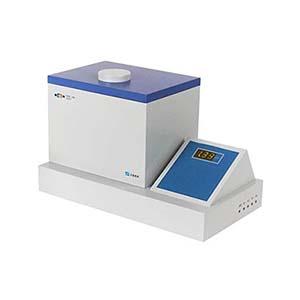
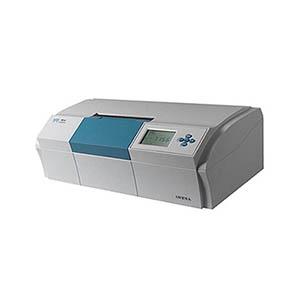
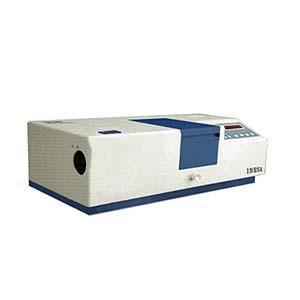
N2 Visible Spectrophotometer
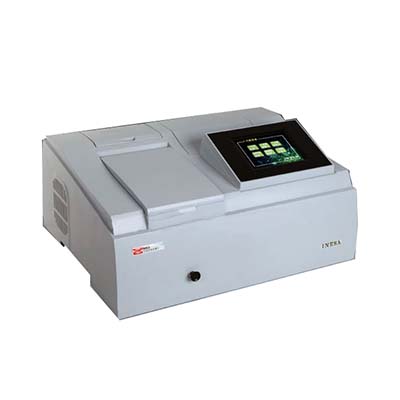
- PRODUCT DETAIL
N2 Visible Spectrophotometer
Product Introduction
The
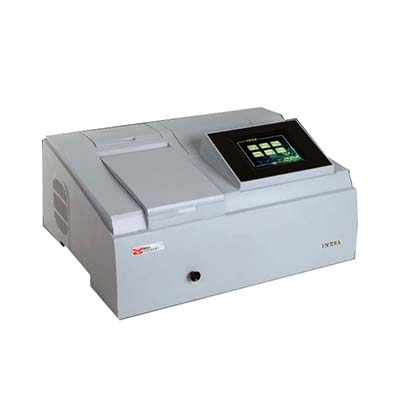
N2 Visible Spectrophotometer is a laboratory optical analysis instrument
designed for qualitative and quantitative measurements in the visible
wavelength range. Equipped with an ARM processing core, automatic wavelength
selection, and a 5.6-inch color touchscreen, it provides convenient operation
and efficient access to measurement functions.
The
instrument supports full-band scanning, sub-band scanning, dynamic time
scanning, linear regression, direct concentration reading, and peak and valley
detection. Its built-in thermal printer allows users to print measurement data
and time-scan results, while USB communication enables connection to a computer
for data transfer and further analysis.
With
power-off data protection and rapid initialization, the N2 is designed to
support routine laboratory analysis, educational experiments, and quality
control applications requiring spectrophotometric measurement.
Performance Features
• Class
II Instrument: Designed as a Class II spectrophotometric instrument,
according to the supplied product description.
• ARM
Processing Core: Provides instrument control and supports data processing
functions.
• Automatic
Wavelength Selection: Simplifies wavelength setup and helps
streamline routine measurements.
• 5.6-Inch
Color Touchscreen: Provides an intuitive interface for instrument
operation and result display.
• Comprehensive Analysis
Functions: Supports full-band scanning, sub-band scanning, dynamic time scanning, linear
regression, direct concentration reading, and peak and valley detection.
• Qualitative
and Quantitative Analysis: Supports spectral evaluation and concentration
measurement.
• Built-In
Thermal Printer: Prints detection data and fixed-wavelength time-scan
results.
• USB Computer
Connectivity: Enables direct communication with a PC for data transfer
and processing.
• Optional UV WIN8
Software: Supports data and spectral-curve processing, document storage, and potential
secondary-development workflows.
• Power-Off Data
Protection: Retains measurement data, scanning graphs, regression
equations, and instrument correction parameters after shutdown.
• Fast Startup: Supports
rapid initialization and quick entry into measurement mode.
• Lamp
Life Protection: Includes protection functions for the tungsten and
deuterium lamps to help manage their operating life.
Working Principle
The
N2 Visible Spectrophotometer operates on the principle of optical absorption.
Light from the instrument's source passes through a monochromator equipped with
a blazed holographic grating and a Czerny–Turner (C-T) optical configuration.
The monochromator selects the required wavelength before the light passes
through the sample.
The
sample absorbs part of the incident light according to its optical properties
and concentration. By comparing the transmitted light intensity with a
reference intensity, the instrument determines transmittance or absorbance.
These measurements can then be used for qualitative spectral evaluation or
quantitative concentration analysis based on a calibration relationship.
The
instrument's scanning functions enable users to examine spectral changes across
selected wavelength ranges or monitor changes over time at a fixed wavelength.
Linear regression and direct concentration reading further support routine
analytical workflows.
Technical Parameters
Parameter
Specification
Product
Model
N2
Instrument
Type
Visible
Spectrophotometer
Optical
System
Blazed
holographic grating, C-T monochromator
Wavelength
Range
325–1000
nm
Wavelength
Error
±1
nm
Wavelength
Repeatability
≤0.5
nm
Spectral
Bandwidth
4
nm
Stray
Light
0.1%
T, measured with NaNO₂ at 360
nm, as specified
Transmittance
Range
0.0%–200.0%
T
Transmittance
Accuracy
±0.5%
T
Transmittance
Repeatability
≤0.2%
T
Baseline
Flatness
±0.003
A over 335–990 nm
Noise
at 100% T
≤0.2%
T
Noise
at 0% T
≤0.1%
T
Drift
≤0.002
A/0.5 h, measured at 500 nm after a 2-hour warm-up
Processing
Core
ARM
Display
5.6-inch
color touchscreen
Scanning
Functions
Full-band
scanning, sub-band scanning, dynamic time scanning
Data
Analysis Functions
Linear
regression, direct concentration reading, peak and valley detection
Printer
Built-in
thermal printer
Communication
Interface
USB
Optional
Software
UV
WIN8 software
Data
Protection
Retains
measurement data, scan graphs, regression equations, and correction
parameters after power-off
Lamp
Protection
Tungsten
lamp and deuterium lamp life protection
Note: The supplied specifications list transmittance up to
200% T and describe stray light as 0.1% T. These values are reproduced from the
source and should be confirmed against the manufacturer's official datasheet
before technical or regulatory publication.
Application Scenarios
• Chemical
Laboratories: Qualitative spectral analysis and concentration
determination of suitable chemical solutions.
• Educational
Institutions: Spectrophotometry experiments, calibration exercises, and
analytical chemistry teaching.
• Quality
Control Laboratories: Routine absorbance and transmittance
measurements for raw materials and finished products.
• Environmental
Testing: Colorimetric analysis of suitable water and environmental samples using
validated methods.
• Pharmaceutical
Research: Spectrophotometric analysis of applicable compounds and prepared samples.
• Food
and Beverage Testing: Colorimetric determination of selected
components where the analytical method is appropriate.
• Research
and Development: Wavelength scanning, time-dependent absorbance monitoring,
and spectral data processing.
• Industrial
Laboratories: Concentration testing and routine optical analysis in
production and inspection workflows.
N2 Visible Spectrophotometer vs. Basic Spectrophotometers
Comparison Item
N2 Visible Spectrophotometer
Basic Spectrophotometer
Wavelength
Range
325–1000
nm
Depends
on model
Wavelength
Selection
Automatic
wavelength function
Depends
on model
Scanning
Modes
Full-band,
sub-band, and dynamic time scanning
May
offer fewer scanning modes
Quantitative
Analysis
Linear
regression and direct concentration reading
Depends
on model
Spectral
Evaluation
Peak
and valley detection
Depends
on model
User
Interface
5.6-inch
color touchscreen
Depends
on model
Printing
Built-in
thermal printer
May
require external printing
Computer
Connectivity
USB;
optional UV WIN8 software
Depends
on model
Data
Retention
Power-off
protection for data and correction parameters
Depends
on model
Typical
Application
Routine
qualitative and quantitative visible-light analysis
Basic
absorbance and transmittance measurement
Frequently Asked Questions
1. What is the N2 Visible Spectrophotometer used for?
It
is used for qualitative and quantitative optical analysis, including absorbance
and transmittance measurements, spectral scanning, and concentration
determination.
2. What is the wavelength range of the N2?
The
specified wavelength range is 325–1000 nm.
3. Does the instrument support automatic wavelength
selection?
Yes.
It includes an automatic wavelength function to simplify wavelength setup
during measurement.
4. What scanning functions are available?
The
instrument supports full-band scanning, sub-band scanning, and dynamic time
scanning, along with peak and valley detection.
5. Can the N2 measure concentration directly?
Yes.
It supports direct concentration reading and linear regression functions for
quantitative analysis.
6. Does the spectrophotometer have a built-in printer?
Yes.
Its thermal printer can print measurement data and fixed-wavelength time-scan
results.
7. Can measurement data be transferred to a computer?
Yes.
The instrument has a USB communication interface. Optional UV WIN8 software
provides additional data and spectral-curve processing functions.
8. Will measurement data be lost when the instrument is
switched off?
The
specified power-off protection function retains measurement data, scanning
graphs, regression equations, and instrument correction parameters.
9. What is the spectral bandwidth?
The
specified spectral bandwidth is 4 nm.
10. Does the N2 include lamp protection?
Yes.
It includes tungsten lamp and deuterium lamp life protection functions. Confirm
the exact lamp configuration with the manufacturer for the specific model
supplied.