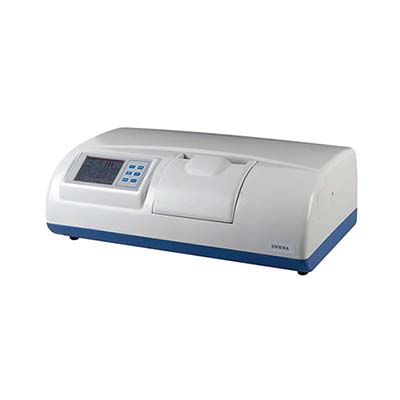
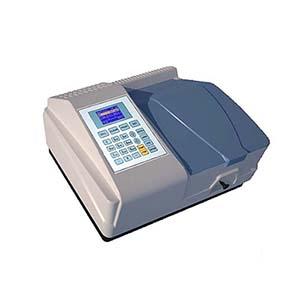
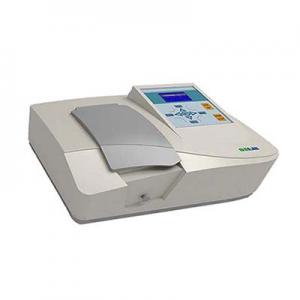
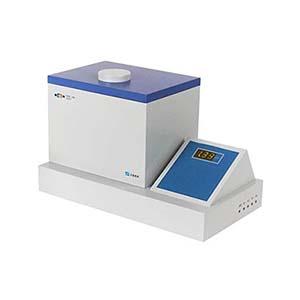
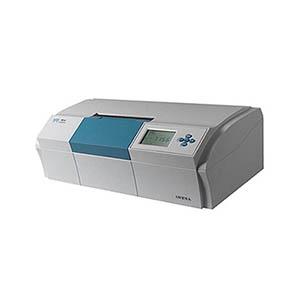
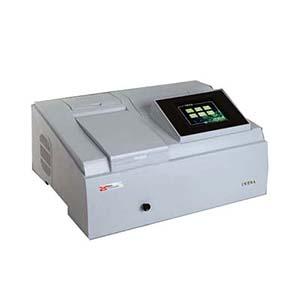
SGW-3 Automatic Polarimeter
- PRODUCT DETAIL
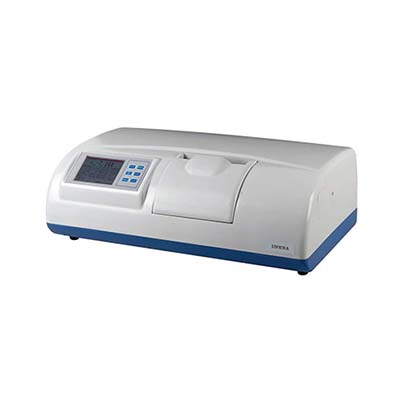
SGW-3 Automatic Polarimeter
Product Introduction
The SGW-3 Automatic Polarimeter is a laboratory optical instrument designed to measure the optical rotation of optically active substances. By determining the angle through which a sample rotates plane-polarized light, the instrument supports the analysis of substance concentration, content, and optical purity when used with appropriate analytical methods.
Featuring touchscreen operation, an LED light source, and a measurement wavelength of 589.3 nm, the SGW-3 provides convenient operation for routine laboratory testing and process quality control. Its measurement range of −89° to +89°, high-resolution indication, and temperature-controlled measurement capability make it suitable for a wide range of optical rotation applications.
The SGW-3 Automatic Polarimeter is widely applicable in pharmaceutical testing, food analysis, sugar production, chemical manufacturing, flavoring and spice industries, oil-related applications, scientific research, and educational laboratories.
Performance Features
1. Automatic Optical Rotation Measurement: Measures the optical rotation angle of optically active samples to support routine qualitative and quantitative analysis.
2. High-Resolution Indication: Provides a minimum indicating value of 0.001° for optical rotation measurements and 0.01°Z for the sugar scale.
3. Wide Measurement Range: Covers optical rotation angles from −89° to +89°, accommodating samples with different optical rotation characteristics.
4.Touchscreen Operation: Offers an intuitive touchscreen interface for convenient instrument operation and result viewing.
5. LED Light Source: Uses LED illumination for stable optical measurement and routine laboratory use.
6. Standard Measurement Wavelength: Operates at 589.3 nm, the sodium D-line wavelength commonly used in polarimetry.
7. Temperature Control: Supports temperature control from 15°C to 30°C, helping manage temperature-related variations in optical rotation.
8. Reliable Measurement Performance: Provides specified accuracy of ±0.01° within the −15° to +15° range and ±0.02° outside that range.
9. Repeatable Results: Offers a specified repeatability of ≤0.002° or ≤0.006°Z when sample transmittance is greater than 1%.
10. Flexible Sample Tube Configuration: Includes 100 mm and 200 mm test tubes for different measurement requirements, plus one constant-temperature test tube.
Working Principle
The SGW-3 Automatic Polarimeter operates on the principle of optical rotation. When plane-polarized light passes through an optically active substance, the plane of polarization rotates by a characteristic angle.
The instrument directs light from its LED source through an optical system and the sample contained in a test tube. It then measures the resulting optical rotation angle and displays the result on the touchscreen.
The measured optical rotation depends on factors such as the substance's identity, concentration, optical path length, solvent, wavelength, and temperature. When the relevant analytical relationship and reference conditions are known, the measurement can be used to calculate concentration, assess content, or evaluate optical purity.
At its operating wavelength of 589.3 nm, the SGW-3 supports conventional polarimetric measurements for suitable laboratory samples.
Technical Parameters
|
Parameter |
Specification |
|
Model |
SGW-3 |
|
Instrument Type |
Automatic Polarimeter |
|
Measurement Range |
−89° to +89° |
|
Accuracy, −15° to +15° |
±0.01° |
|
Accuracy, Below −15° or Above +15° |
±0.02° |
|
Minimum Indicating Value |
0.001°, 0.01°Z |
|
Repeatability |
≤0.002° or ≤0.006°Z |
|
Repeatability Test Condition |
Sample transmittance >1% |
|
Display |
Touchscreen |
|
Light Source |
LED |
|
Operating Wavelength |
589.3 nm |
|
Temperature Control Range |
15–30°C |
|
Temperature Control Accuracy |
±0.5°C |
|
100 mm Test Tube |
1 included |
|
200 mm Test Tube |
1 included |
|
Constant-Temperature Test Tube |
1 included |
Note: The supplied specifications do not state the measurement time, sample chamber dimensions, communication interfaces, or power requirements. Please confirm these details with the manufacturer if they are essential to your application.
Application Scenarios
The SGW-3 Automatic Polarimeter supports optical rotation testing and related quality control in multiple industries.
• Pharmaceutical Industry: Analysis of optically active pharmaceutical ingredients and suitable formulations, including concentration and optical purity assessment using validated methods.
• Sugar Industry: Polarimetric analysis of sugar solutions and related products for process monitoring and quality control.
• Food and Beverage Testing: Measurement of optical rotation in suitable food ingredients, sweeteners, and other optically active substances.
• Chemical Manufacturing: Testing of optically active chemicals, organic compounds, and chemical intermediates.
• Spice and Flavoring Industry: Analysis of suitable flavoring materials and optically active constituents.
• Oil and Related Industries: Application-specific optical rotation measurements where the sample and method are suitable.
• Scientific Research and Education: Laboratory experiments involving optical activity, stereochemistry, and polarimetric analysis.
• Quality Control Laboratories: Routine testing of raw materials, intermediate products, and finished products according to established specifications.
Comparison: SGW-3 Automatic Polarimeter vs. Conventional Manual Polarimeter
|
Feature |
SGW-3 Automatic Polarimeter |
Conventional Manual Polarimeter |
|
Measurement Operation |
Automatic optical rotation measurement |
Often requires manual optical adjustment or reading |
|
Display |
Touchscreen |
Depends on instrument design |
|
Light Source |
LED |
Depends on model |
|
Operating Wavelength |
589.3 nm |
Depends on model |
|
Measurement Range |
−89° to +89° |
Model-dependent |
|
Minimum Indicating Value |
0.001°, 0.01°Z |
Model-dependent |
|
Temperature Control |
15–30°C, ±0.5°C |
Depends on configuration |
|
Sample Tube Options |
100 mm and 200 mm |
Depends on configuration |
|
Routine Testing |
Designed for convenient laboratory measurements |
May involve additional manual operations |
|
Typical Applications |
Pharmaceutical, sugar, food, chemical, and research laboratories |
Depends on the instrument and analytical method |
This is a general functional comparison rather than a direct performance comparison with a specific competing model.
Frequently Asked Questions
Q1: What does the SGW-3 Automatic Polarimeter measure?
It measures the optical rotation angle of optically active substances. With appropriate methods, the result can be used to determine concentration, assess substance content, or evaluate optical purity.
Q2: What is the measurement range of the SGW-3?
The specified optical rotation range is −89° to +89°.
Q3: What is the minimum indicating value?
The instrument provides a minimum indicating value of 0.001° for optical rotation and 0.01°Z for the sugar scale.
Q4: What wavelength does the SGW-3 use?
It operates at 589.3 nm, corresponding to the commonly used sodium D-line wavelength for polarimetric analysis.
Q5: Does the SGW-3 support temperature control?
Yes. Its temperature control range is 15–30°C, with a specified temperature control accuracy of ±0.5°C.
Q6: Which test tubes are included with the instrument?
The supplied configuration includes one 100 mm test tube, one 200 mm test tube, and one constant-temperature test tube.
Q7: Which industries can use the SGW-3?
Potential users include pharmaceutical, sugar, food, chemical, flavoring, and research laboratories, as well as educational institutions and quality control departments.
Q8: Can the SGW-3 determine sample concentration directly?
The instrument measures optical rotation. Concentration can be determined when the relevant calibration curve, specific rotation, or other validated analytical relationship is available. Direct concentration calculation depends on the method and configuration.
Q9: Why is temperature control important in polarimetry?
Optical rotation can vary with temperature. Controlling sample temperature helps maintain consistent measurement conditions and improves the comparability of results.