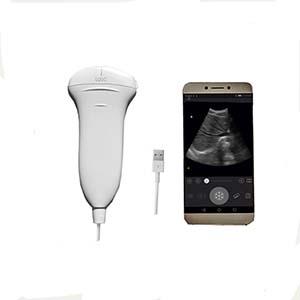
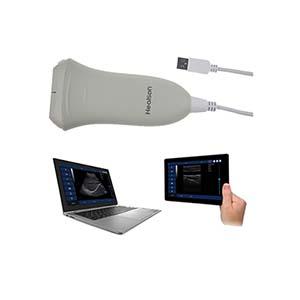
PBSV3.2 Bladder Scanner
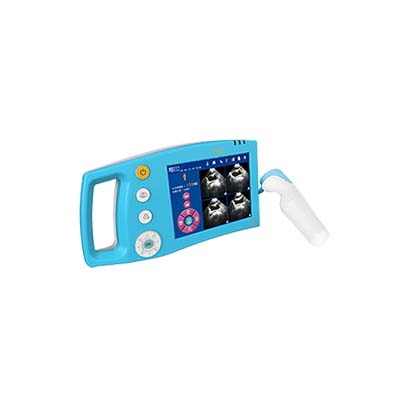
- PRODUCT DETAIL
PBSV3.2 Bladder Scanner
Product Introduction
The
PBSV3.2 Bladder Scanner is a portable, non-invasive ultrasound device designed
to measure bladder urine volume. Consisting of a host unit and an ultrasound
probe, the system scans the patient's bladder, identifies its position and
contour, and calculates urine volume without requiring catheterization.
Featuring
real-time bladder imaging, 24 scanning sections, and multiple measurement
modes, the PBSV3.2 supports rapid bedside bladder volume assessment. Its
8.4-inch color touchscreen, case management functions, and rechargeable battery
make it suitable for use in hospitals, clinics, and other healthcare settings.
The
bladder scanner is designed to assist with bladder assessment in patients with
urinary retention, prostatic hyperplasia, neurogenic bladder, and other
conditions requiring urine volume evaluation. It can also support bladder
function training, intermittent catheterization assessment, and residual urine
volume measurement alongside urine flow rate testing.
Performance Features
• Non-Invasive
Measurement: Measures bladder urine volume using ultrasound scanning
without catheterization.
• Rapid Bedside
Assessment: Provides a convenient way to evaluate bladder volume at
the patient's bedside.
• Real-Time Bladder
Imaging: Displays bladder shape, position, and scanned images during measurement.
• 24 Scanning Sections: Uses 24
scanning sections to support bladder contour identification and volume
calculation.
• Multiple Measurement
Modes: Includes male, female, pediatric, and phantom modes.
• Flexible Scanning
Options: Offers expert mode and simple mode for different operating requirements.
• Manual
Correction Function: Allows operators to manually correct the
identified bladder contour.
• Large Touchscreen
Display: Features an 8.4-inch TFT color touchscreen with dual keyboard operation.
• Case
and Image Storage: Stores up to 100 cases and 1,200 images, with
browsing and export functions.
• Multiple
Output Interfaces: Supports thermal printer, USB, and Bluetooth
communication interfaces.
• Portable
Rechargeable Design: Uses four rechargeable 18650 lithium batteries
for convenient mobile operation.
• Bionic Model Training: Supports
training with a bionic bladder model.
Working Principle
The
PBSV3.2 bladder scanner uses ultrasound technology to examine the patient's
bladder non-invasively. The probe emits ultrasound signals into the lower
abdominal region and receives the echoes reflected by internal tissue
structures.
The
host processes the acquired ultrasound signals to identify the bladder boundary
and generate real-time bladder images. By analyzing the bladder contour across
24 scanning sections, the system calculates the estimated urine volume and
displays the measurement result.
Operators
can review the bladder image and position prompts on the touchscreen and
manually correct the bladder contour when necessary. Measurement results and
images can then be stored, browsed, exported, or transmitted through the
available interfaces.
Technical Parameters
Parameter
Specification
Model
PBSV3.2
Product
type
Non-invasive
bladder scanner
System
composition
Host
unit and ultrasound probe
Volume
measurement range
0–999
mL
Volume
measurement accuracy
Allowable
error ≤±15%
Display
8.4-inch
TFT color LCD touchscreen
Scan
modes
Expert
mode, simple mode
Measurement
modes
Male,
female, pediatric, phantom
Scanning
sections
24
Operation
Dual
keyboard operation: touchscreen and physical keyboard
Display
content
Measurement
results, location prompts, B-mode image display
Correction
function
Manual
bladder contour correction
Image
processing
Real-time
scanned image boundary display
Image
display
Real-time
bladder shape imaging
Storage
capacity
100
cases, 1,200 images
Case
management
Case
storage, browsing, and export
Output
interfaces
Thermal
printer interface, USB, Bluetooth
Battery
management
Battery
capacity indicator and low-battery prompt
Power
supply
Internal
rechargeable battery
Battery
configuration
Four
general-purpose 18650 rechargeable lithium batteries
Rated
battery voltage
3.7
V
Training
accessory
Bionic
bladder model
Application Scenarios
The
PBSV3.2 bladder scanner is suitable for bladder volume assessment and related
clinical workflows in the following departments:
• Urology: Bladder
volume assessment and evaluation of urinary retention.
• Emergency Department: Rapid
bedside bladder volume measurement.
• Rehabilitation
Department: Support for bladder function training and urinary
management.
• Operating Room: Bladder
volume assessment during perioperative care.
• Internal Medicine: Non-invasive evaluation of bladder urine volume.
• Neurology: Assessment
support for patients with neurogenic bladder.
• Obstetrics and
Gynecology: Bladder volume assessment in relevant clinical settings.
• Male
Specialty Clinics: Evaluation support for patients with prostatic
hyperplasia and urinary difficulties.
• Anesthesiology: Bedside
bladder assessment during perioperative management.
• Geriatrics: Urine
volume evaluation in older patients.
• Intensive Care Unit
(ICU): Non-invasive bedside bladder volume monitoring.
Product Comparison
Feature
PBSV3.2 Bladder Scanner
Catheterization
Manual Percussion
Measurement
approach
Non-invasive
ultrasound
Invasive
catheter-based method
Physical
examination
Patient
comfort
No
catheter insertion required
Requires
catheter insertion
Non-invasive
Bladder
imaging
Real-time
bladder images
No
direct bladder imaging
No
imaging
Volume
measurement
0–999
mL
Direct
urine collection measurement
Indirect
estimation
Measurement
accuracy
Allowable
error ≤±15%
Depends
on collection procedure
Operator-dependent
Bladder
contour correction
Manual
correction supported
Not
applicable
Not
available
Data
storage
Up
to 100 cases and 1,200 images
Depends
on workflow
Usually
manual recording
Bedside
use
Portable
rechargeable design
Possible
with appropriate equipment
Portable
examination
Frequently Asked Questions (FAQ)
1. What is the PBSV3.2 bladder scanner used for?
The
PBSV3.2 is used to measure bladder urine volume non-invasively through
ultrasound scanning. It supports clinical assessment of urinary retention,
prostatic hyperplasia, neurogenic bladder, and other conditions requiring
bladder volume evaluation.
2. Is the PBSV3.2 bladder scanner non-invasive?
Yes.
It uses an external ultrasound probe to scan the bladder without requiring
catheter insertion.
3. What is the measurement range of the PBSV3.2?
The
bladder volume measurement range is 0–999 mL, with an allowable measurement
error of ≤±15%.
4. Which measurement modes are available?
The
scanner provides male, female, pediatric, and phantom measurement modes, as
well as expert and simple scanning modes.
5. Does the PBSV3.2 display real-time bladder images?
Yes.
It displays real-time bladder shape images, scanned image boundaries, and
bladder position prompts to assist the operator during measurement.
6. Can the bladder contour be adjusted manually?
Yes.
The device includes a manual correction function that allows operators to
adjust the identified bladder contour when necessary.
7. How many cases and images can the scanner store?
The
PBSV3.2 can store up to 100 cases and 1,200 images. It also supports case
browsing and export.
8. What communication and output interfaces are provided?
The
scanner provides a thermal printer interface, USB interface, and Bluetooth
communication interface.
9. What is the power supply configuration?
The
device uses an internal rechargeable battery system consisting of four
general-purpose 18650 lithium batteries, with a rated voltage of 3.7 V as
specified in the source information.
NEXT:TAILEIZI Vibrating Percussion Expectoration Machine