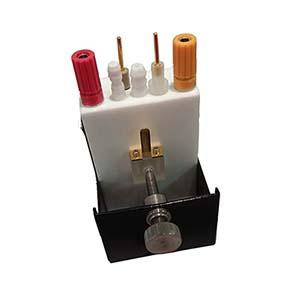
XAFS-2 Electrochemical In-Situ X-Ray Absorption Spectroscopy Reaction Cell

- PRODUCT DETAIL
XAFS-2 Electrochemical In-Situ X-Ray Absorption Spectroscopy Reaction Cell
Product Introduction
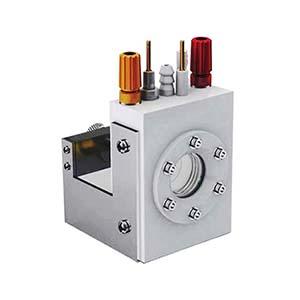
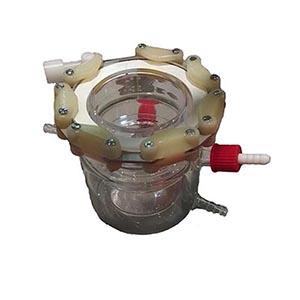
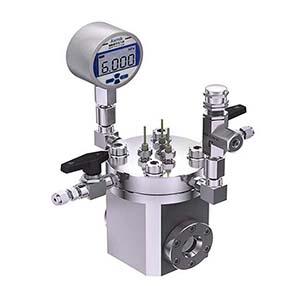
The XAFS-2 Electrochemical In-Situ X-Ray Absorption Spectroscopy Reaction Cell is designed for electrochemical experiments using synchrotron radiation X-ray absorption spectroscopy (XAFS). Its H-type structure and replaceable membrane separate the cathode and anode compartments, making it suitable for studies requiring controlled electrochemical environments.
Constructed with a PEEK main body and a Kapton film optical window, the XAFS-2 supports customizable electrode configurations, gas inlet and outlet connections, and adjustable cell volume. It is designed for researchers investigating electrochemical reaction mechanisms, catalyst behavior, and material structure under operating conditions.
Performance Features
1.H-Type Double-Cell Structure: Separates the cathode and anode compartments using a replaceable membrane.
2. In-Situ XAFS Compatibility: Designed for electrochemical measurements combined with synchrotron radiation X-ray absorption spectroscopy.
3. Gas Inlet and Outlet: Bottom-mounted connections support different reaction atmospheres and gas-handling requirements.
4. Flexible Electrode Configuration: Supports two-electrode or three-electrode operation.
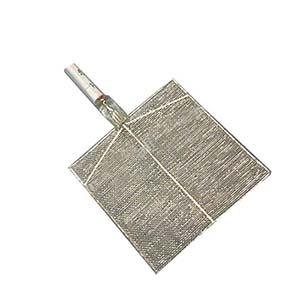
5. Customizable Electrodes: The working electrode is specially customized, and the other electrodes can be tailored to experimental requirements.
6. PEEK Main Body: Provides a configurable reaction chamber, with volume customized according to customer needs.
7.Kapton Film Optical Window: Provides an X-ray access window for spectroscopy experiments.
8.Convenient Assembly and Cleaning: Designed for straightforward installation and easy cleaning of individual components.
Working Principle
The XAFS-2 combines electrochemical control with X-ray absorption spectroscopy. A potential or current is applied to the electrodes to drive the reaction, while synchrotron X-rays interact with the target element through the Kapton film window.
The resulting X-ray absorption spectra provide information about the target element's oxidation state, local coordination environment, and electronic structure as the reaction proceeds. The H-type membrane separates the cathode and anode compartments, while gas inlet and outlet connections support experiments under selected atmospheric conditions.
Technical Parameters
|
Parameter |
Specification |
|
Model |
XAFS-2 |
|
Product Type |
Electrochemical in-situ XAFS reaction cell |
|
Primary Application |
Synchrotron radiation X-ray absorption spectroscopy |
|
Cell Structure |
H-type double cell |
|
Membrane |
Replaceable membrane for cathode–anode separation |
|
Electrode Configuration |
Two-electrode or three-electrode system |
|
Working Electrode |
Specially customized |
|
Other Electrodes |
Customizable |
|
Main Body Material |
PEEK |
|
Optical Window Material |
Kapton film |
|
Gas Connections |
Bottom-mounted inlet and outlet |
|
Cell Volume |
Customizable |
|
Assembly |
Simple installation |
|
Cleaning |
Individual components can be cleaned |
Note: Dimensions, membrane material, electrode specifications, allowable pressure, gas flow limits, and optical-window dimensions should be confirmed for the selected configuration.
Application Scenarios
• Electrocatalysis Research: Investigate oxidation-state and coordination changes in catalysts during electrochemical reactions.
• Battery Materials Research: Study structural changes in electrode materials during electrochemical operation, subject to sample and cell compatibility.
• Electrochemical Energy Conversion: Characterize materials involved in energy conversion and storage processes.
• Synchrotron Beamline Experiments: Integrate the cell into compatible XAFS setups for in-situ or operando measurements.
• Gas-Involved Electrochemical Reactions: Support experiments requiring controlled gas introduction and outlet connections.
• Fundamental Materials Research: Investigate local electronic structure and coordination environments under electrochemical conditions.
XAFS-2 vs. General Electrochemical In-Situ Reaction Cells
|
Comparison Item |
XAFS-2 Reaction Cell |
General Electrochemical Cell |
|
Primary Purpose |
Electrochemical testing combined with synchrotron XAFS |
General electrochemical experiments |
|
Cell Structure |
H-type double cell |
Varies by design |
|
Cathode–Anode Separation |
Replaceable membrane |
Depends on configuration |
|
X-Ray Window |
Kapton film |
Depends on design |
|
Electrode System |
Two-electrode or three-electrode |
Depends on model |
|
Gas Connections |
Bottom inlet and outlet |
Depends on configuration |
|
Cell Volume |
Customizable |
Depends on model |
|
Typical Application |
In-situ structural and electronic analysis during reactions |
Electrochemical testing and characterization |
Frequently Asked Questions
1. What is the XAFS-2 electrochemical reaction cell used for?
It is designed for electrochemical experiments combined with synchrotron radiation X-ray absorption spectroscopy to investigate material changes during reactions.
2. What is the purpose of the H-type structure?
The H-type design separates the cathode and anode compartments using a replaceable membrane, supporting experiments that require compartment separation.
3. Can the membrane be replaced?
Yes. The XAFS-2 features a replaceable membrane. Confirm compatible membrane materials and dimensions for the intended electrolyte and experiment.
4. Does the XAFS-2 support gas-atmosphere experiments?
Yes. The cell has bottom-mounted gas inlet and outlet connections. The allowable gases, pressure, flow rate, and sealing requirements should be verified before operation.
5. Can it be configured for two-electrode and three-electrode measurements?
Yes. The electrode arrangement can be configured for either system, with electrodes customized to suit the experiment.
6. Why does the cell use a Kapton film window?
The Kapton film window provides an X-ray access point for XAFS measurements. Its suitability should be checked against the beamline geometry and experimental conditions.
7. Can the cell volume be customized?
Yes. The cell volume can be customized according to customer requirements and the experimental setup.
8. What information should be provided when ordering?
Specify the electrode configuration, working electrode dimensions and material, membrane requirements, cell volume, electrolyte, gas atmosphere, operating pressure, and beamline geometry.