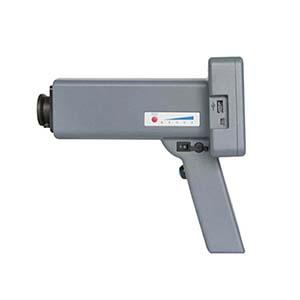
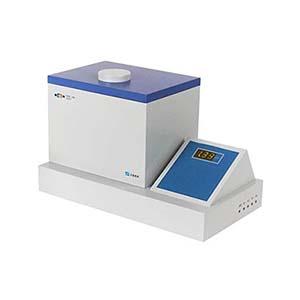
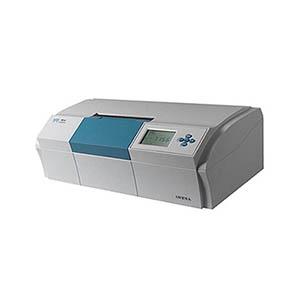
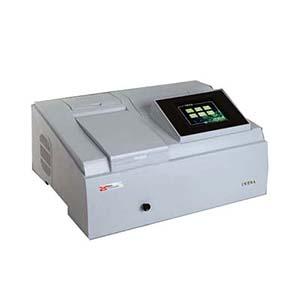
NIRMagic 2300 Near Infrared Fuel Quality Analyzer
Product Introduction
The
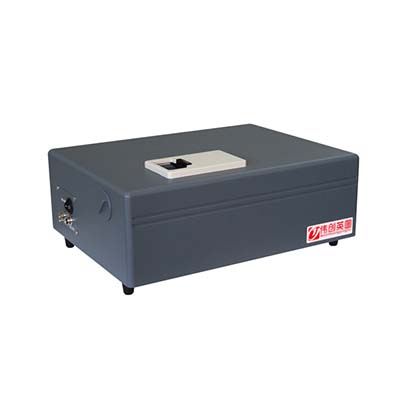
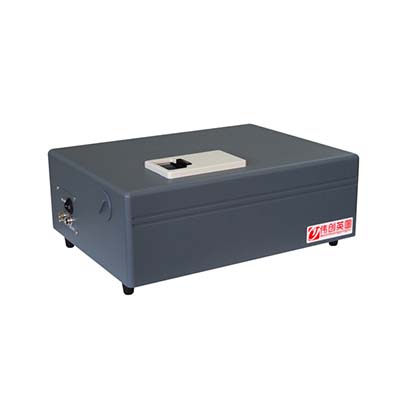
NIRMagic 2300 Near Infrared Fuel Quality Analyzer is a compact benchtop
instrument that uses near-infrared (NIR) spectroscopy and chemometric models
for rapid, non-destructive qualitative and quantitative analysis. It measures
samples containing organic functional groups such as C–H, N–H, and O–H without
conventional sample pretreatment.
Designed
for refineries, fuel storage facilities, petroleum laboratories, and production
plants, this NIR fuel analyzer supports rapid screening, process monitoring,
and fuel quality management. With a measurement time of 15 seconds or less, it
offers an efficient solution for routine petroleum testing.
Performance Features
1. No Sample
Pretreatment: Analyzes suitable samples directly, simplifying sample
preparation and reducing testing workload.
2. Rapid
Multi-Parameter Analysis: Measures multiple configured parameters
simultaneously, with each analysis completed in ≤15 seconds.
3. Compact and Portable
Design: Lightweight construction supports use in laboratories and suitable on-site
testing environments.
4. User-Friendly
Software: Chinese-language operating interface simplifies routine operation and user
training.
5. Instrument Self-Test: Built-in
self-diagnostic functionality helps users monitor instrument operating status.
6. Advanced Chemometric
Software: Supports qualitative identification, quantitative prediction, spectral
matching, and spectral retrieval.
7. Stable Measurement
Performance: Designed for consistent results in routine fuel quality
analysis.
8.Temperature-Controlled
Measurement: Provides sample temperature control from 5°C to 70°C, with
±0.5°C control accuracy.
Working Principle
The
NIRMagic 2300 uses near-infrared spectroscopy to measure the interaction
between near-infrared light and a sample. Organic molecular bonds, including
C–H, N–H, and O–H, produce characteristic spectral responses.
The
instrument collects spectral data and processes them using chemometric analysis
models established for specific sample types and target parameters. By
comparing measured spectra with calibrated models, the analyzer performs
qualitative identification and quantitative prediction of fuel properties.
Actual
analytical accuracy and the available measurement parameters depend on the
calibration models, sample type, and validation results.
Technical Parameters
|
Parameter
|
Specification
|
|
Model
|
NIRMagic
2300 (2300H)
|
|
Wavelength
Range
|
600–1100
nm
|
|
Spectral
Resolution
|
1
nm
|
|
Sample
Size
|
50
mm
|
|
Analysis
Time
|
≤15
seconds
|
|
Sample
Temperature Control Accuracy
|
±0.5°C
|
|
Sample
Temperature Control Range
|
5°C–70°C
|
|
Light
Source Life
|
>10,000
hours
|
|
Communication
Interface
|
USB
2.0
|
|
Ambient
Temperature
|
5°C–40°C
|
|
Relative
Humidity
|
5%–95%
|
|
Operating
System
|
Windows
|
|
Power
Supply
|
DC
12 V / 7 A
|
|
Dimensions
|
360
× 270 × 150 mm
|
|
Instrument
Weight
|
6.0
kg
|
Application Scenarios
• Refinery Process
Quality Control: Supports routine monitoring of petroleum products during
refining and production.
• Fuel Storage and
Distribution: Assists with fuel quality checks during storage and before
product dispatch.
• Special
Fuel Testing: Enables rapid screening of suitable specialty fuel samples
using validated calibration models.
• Petroleum
Research Laboratories: Supports fuel research, product development,
and routine analytical workflows.
• Oil Production
Facilities: Helps streamline quality management and process
monitoring.
NIRMagic 2300 vs. Conventional Fuel Testing Methods
|
Comparison Factor
|
NIRMagic 2300 NIR Analyzer
|
Conventional Laboratory Methods
|
|
Analysis
Speed
|
≤15
seconds per measurement
|
Varies
by method and parameter
|
|
Sample
Pretreatment
|
Not
required for suitable applications
|
May
require preparation or chemical reagents
|
|
Analysis
Approach
|
Spectral
measurement with chemometric models
|
Method-specific
chemical or physical testing
|
|
Multi-Parameter
Testing
|
Multiple
calibrated parameters can be analyzed simultaneously
|
Often
requires separate procedures or instruments
|
|
Reagent
Consumption
|
No
routine analytical reagents required for spectral measurement
|
Some
methods require reagents
|
|
Portability
|
Compact,
6.0 kg benchtop design
|
Depends
on the equipment
|
|
Best
Suited For
|
Rapid
screening, routine monitoring, and process quality control
|
Reference
testing and methods requiring standardized direct measurement
|
Note: NIR spectroscopy does not automatically replace every
standardized reference method. Calibration, model validation, and comparison
with applicable reference methods are necessary for reliable results.
Frequently Asked Questions (FAQ)
1. What is the NIRMagic 2300 Near Infrared Fuel Quality
Analyzer used for?
It
is designed for rapid fuel quality screening, refinery process monitoring,
petroleum product management, and laboratory analysis using near-infrared
spectroscopy.
2. How long does one analysis take?
Each
measurement takes 15 seconds or less, depending on the configured analytical
application.
3. Does the analyzer require sample pretreatment?
Suitable
samples can be measured without conventional pretreatment. Sample handling
requirements depend on the sample type and analytical method.
4. Can the NIRMagic 2300 measure multiple fuel parameters
simultaneously?
Yes.
It supports simultaneous prediction of multiple parameters when appropriate,
validated chemometric calibration models are available.
5. What is the wavelength range of the NIRMagic 2300?
The
instrument operates over a wavelength range of 600–1100 nm, with a spectral
resolution of 1 nm.
6. Can the analyzer be used for on-site testing?
Yes.
Its compact dimensions of 360 × 270 × 150 mm and weight of 6.0 kg make it
suitable for laboratory use and transport to appropriate testing locations.
7. What sample temperature range does the instrument
support?
The
sample temperature control range is 5°C–70°C, with a control accuracy of
±0.5°C.
8. Does the instrument require calibration?
Yes.
Quantitative fuel analysis requires suitable calibration models developed and
validated for the target fuel types and parameters. Calibration maintenance may
be necessary to maintain measurement reliability.