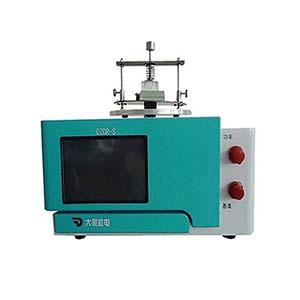
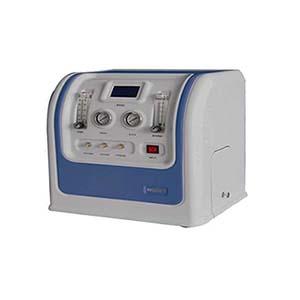
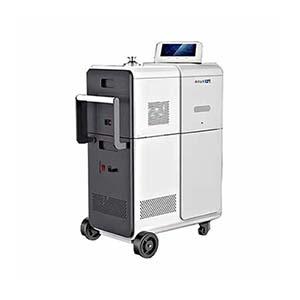
JS94J Zeta Potential Measurement Instrument
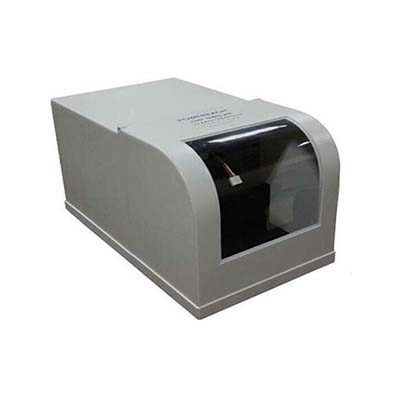
- PRODUCT DETAIL
JS94J Zeta Potential Measurement Instrument
Product Introduction
The
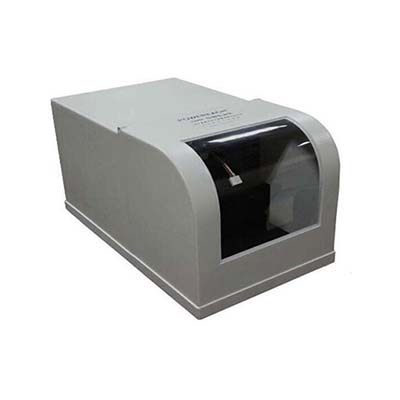
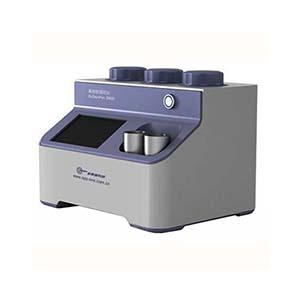
JS94J Zeta Potential Measurement Instrument is a solid micro-electrophoresis
analyzer designed to measure the Zeta potential of particles dispersed in
liquid systems and the interfacial electrical properties of emulsion droplets.
It helps researchers evaluate particle surface charge, determine isoelectric
points, and investigate interfacial reaction mechanisms.
The
instrument features a compact, open electrophoresis cell that requires only 0.5
mL of sample per measurement. Its carefully designed electrode holder works
with the electrophoresis cup to provide a stable measurement arrangement. A
three-dimensional positioning platform helps users locate the measurement area
through a computer-displayed crosshair image.
The
JS94J uses a semiconductor near-field optical illumination system and a
constant low-frequency switching power supply to support stable, efficient
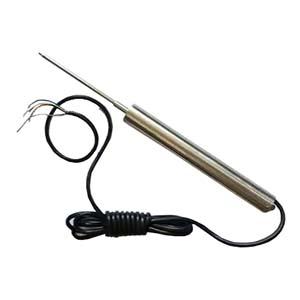
measurements. A temperature probe continuously monitors ambient temperature,
allowing the software to incorporate temperature data into Zeta potential
calculations.
It
is suitable for research, quality evaluation, and teaching applications in
cosmetics, mineral processing, papermaking, healthcare, construction materials,
ultrafine materials, environmental protection, and marine chemistry.
Performance Features
• Low sample consumption: Requires
only 0.5 mL of sample per measurement, reducing sample use and operating costs.
• Open electrophoresis
cell: The cup-shaped cell design is easy to operate and clean.
• Stable electrode
assembly: The electrode holder is designed to work closely with the electrophoresis cup.
Silver, platinum, and titanium metal-wire electrodes are available.
• Three-dimensional
positioning: A 3D platform and computer crosshair display help users
identify the measurement position.
• Near-field optical
illumination: Semiconductor light-emitting technology uses only tens of
microwatts of power, helping minimize thermal effects on measurement
conditions.
• Low-frequency switching
power supply: Constant low-frequency switching helps prevent electrode
polarization and improve measurement speed.
• Automatic
temperature monitoring: A temperature probe continuously samples
ambient temperature and transmits readings to the computer.
• Automated
calculation: Software uses temperature information to adjust
calculation parameters for Zeta potential measurement.
Working Principle
The
JS94J uses the solid micro-electrophoresis method to evaluate the electrical
properties of particle-liquid and emulsion interfaces.
When
an electric field is applied to a dispersion, charged particles migrate through
the liquid according to their electrophoretic mobility. The instrument uses its
optical observation system to identify the particle measurement region and
monitor electrophoretic behavior. The resulting measurement data are used to
calculate Zeta potential, which indicates the electrical potential associated
with the particle-liquid interface.
By
measuring Zeta potential over different pH conditions, researchers can identify
the isoelectric point, where the measured Zeta potential approaches zero. This
information helps evaluate particle surface charge, dispersion stability, and
interfacial reaction behavior.
Technical Parameters
Parameter
Specification
Model
JS94J
Measurement
Method
Solid
micro-electrophoresis
Measurable
Properties
Particle
Zeta potential and emulsion droplet interfacial electrical properties
Suitable
Particle Size
0.1–10
μm
Sample
System
Water-based
dispersions
Sample
Volume
0.5
mL per measurement
General
pH Range
2.0–12.0
Extended
pH Range
1.6–13.0
pH
Adjustment Increment
0.1
Temperature
Range
5–35°C
Temperature
Resolution
0.1°C
Measurement
Accuracy
Systematic
error within 5%
Electrode
Materials
Silver,
platinum, and titanium metal wire
Optical
System
Semiconductor
near-field optical illumination
Temperature
Monitoring
Continuous
temperature sampling
Power
Supply
220
V, 50 Hz
Power
Consumption
150
W
Recommended
Environment
Heated
indoor laboratory; shockproof platform recommended
Application Scenarios
• Cosmetics: Evaluate
the surface charge and dispersion properties of cosmetic particles and
emulsions.
• Mineral processing: Study the
surface electrical properties of mineral particles and their dispersion
behavior.
• Papermaking: Investigate
particle surface charge in pulp and papermaking-related aqueous systems.
• Healthcare
and pharmaceutical research: Characterize the interfacial electrical
properties of suitable dispersed systems.
• Construction
materials: Study the surface charge characteristics of fine particles and material
suspensions.
• Ultrafine materials: Evaluate
particle surface charge and isoelectric points.
• Environmental
protection: Analyze particle-liquid interface properties in
environmental samples.
• Marine chemistry: Investigate
interfacial electrical behavior in aqueous and marine-related systems.
• Academic
research and teaching: Demonstrate electrophoresis, Zeta potential,
and isoelectric point measurement principles.
Comparison: JS94J vs. Other Zeta Potential Measurement
Approaches
Comparison Item
JS94J Solid Micro-Electrophoresis
General Zeta Potential Measurement
Measurement
Principle
Solid
micro-electrophoresis
Depends
on instrument technology
Sample
Volume
0.5
mL
Model-dependent
Sample
Type
Water-based
dispersions, 0.1–10 μm particles
Depends
on measurement method
Measurement
Positioning
3D
platform with computer crosshair display
Model-dependent
Temperature
Monitoring
Continuous
temperature sampling
Model-dependent
Electrode
Materials
Silver,
platinum, titanium
Model-dependent
Isoelectric
Point Research
Supported
through Zeta potential measurement at different pH values
Depends
on instrument and testing procedure
Frequently Asked Questions
1. What does the JS94J Zeta potential instrument measure?
It
measures the Zeta potential of particles in liquid dispersions and the
interfacial electrical properties of emulsion droplets. It can also be used to
determine isoelectric points and study interfacial reaction mechanisms.
2. What particle size range is suitable for the JS94J?
The
instrument is suitable for particles with sizes from 0.1 to 10 μm in
water-based dispersion systems.
3. How much sample is required for each measurement?
The
instrument requires approximately 0.5 mL of sample per measurement, helping
reduce sample consumption.
4. What is the pH measurement range?
The
general operating pH range is 2.0–12.0. The instrument can also be used over an
extended range of 1.6–13.0, with pH adjustment increments of 0.1.
5. How does the JS94J help determine the isoelectric point?
Researchers
can measure Zeta potential at different pH values. The pH at which the Zeta
potential approaches zero indicates the isoelectric point.
6. Does the instrument monitor temperature automatically?
Yes.
A temperature probe continuously samples ambient temperature and sends the
readings to the computer for use in Zeta potential calculations.
7. Which electrode materials are available?
The
electrode assembly can use silver, platinum, and titanium metal-wire
electrodes.
8. What is the measurement accuracy of the JS94J?
The
specified systematic measurement error is within 5%.
9. Which industries can use the JS94J?
It
is suitable for cosmetics, mineral processing, papermaking, healthcare,
construction materials, ultrafine materials, environmental protection, marine
chemistry, and academic research.