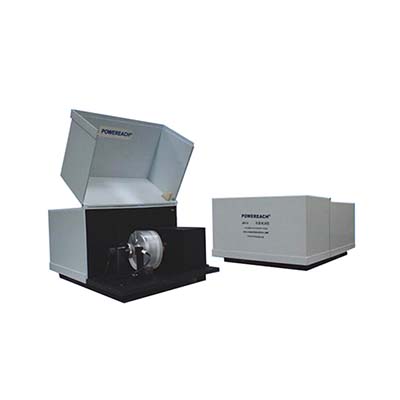
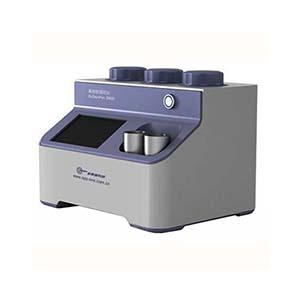
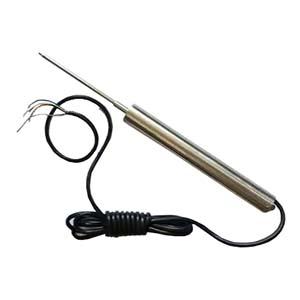
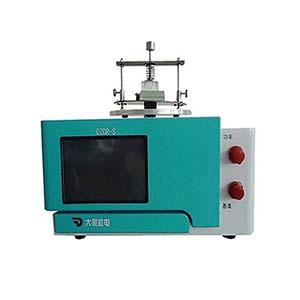
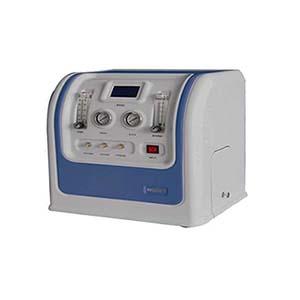
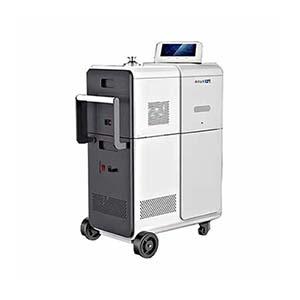
JN01A High-Concentration Zeta Potential Electrophoresis Analyzer
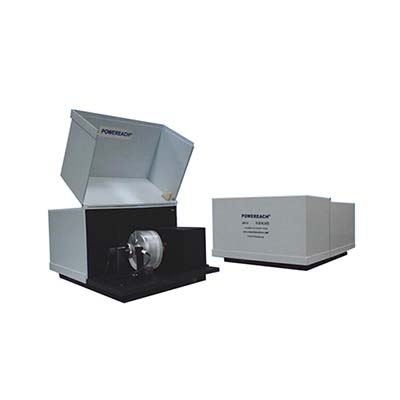
- PRODUCT DETAIL
JN01A High-Concentration Zeta Potential Electrophoresis
Analyzer
Product Introduction
The
JN01A High-Concentration Zeta Potential Electrophoresis Analyzer is designed to
measure the Zeta potential of particles in high-concentration and concentrated
dispersion systems. Unlike measurement approaches intended primarily for dilute
samples, the JN01A is developed for suspensions closer to actual industrial
operating conditions, including drilling mud, industrial wastewater, and
papermaking systems.
Its
continuously rotating sample cell helps reduce particle sedimentation during
measurement. The sample cell also accommodates both large and small particles,
helping provide a more representative assessment of the overall dispersion
rather than relying only on the behavior of easily observed fine particles.
The
JN01A is suitable for industrial process research, quality control, and
teaching applications in petrochemicals, wastewater treatment, papermaking,
cosmetics, mineral processing, healthcare, construction materials, ultrafine
materials, and environmental protection.
Performance Features
• High-concentration
sample measurement: Designed for concentrated dispersions and
suspension systems closer to real industrial operating conditions.
• Continuously
rotating sample cell: Keeps the sample moving during measurement to
help reduce particle sedimentation.
• Representative particle
assessment: Takes account of both large and small particles in the
sample cell.
• Reduced
fine-particle observation bias: Helps address measurement limitations
associated with sedimentation of larger particles and observation of only
smaller particles.
• Industrial
application suitability: Particularly relevant to drilling mud,
industrial wastewater, paper pulp, and coating preparation.
• Process optimization
support: Zeta potential measurements help evaluate particle surface charge and manage
dispersion behavior in industrial processes.
Working Principle
The
JN01A uses an electrophoresis-based approach to determine the Zeta potential of
particles in concentrated dispersion systems.
When
an electric field is applied, charged particles move through the liquid medium
according to their electrophoretic behavior. The instrument evaluates this
behavior to determine the Zeta potential, which provides information about
particle surface charge and dispersion characteristics.
During
measurement, the sample cell rotates continuously to help limit particle
settling. This is particularly useful for concentrated samples containing
particles of different sizes, where sedimentation can affect measurement
representativeness.
Technical Parameters
Parameter
Specification
Model
JN01A
Product
Type
Electrophoresis
apparatus / Zeta potential analyzer
Measurement
Target
Particle
Zeta potential
Sample
Type
High-concentration
and concentrated dispersion systems
Sample
Cell
Continuously
rotating sample cell
Particle
Assessment
Includes
large and small particles in the sample
Measurement
Method
Electrophoresis-based
Zeta potential measurement
Main
Application
Industrial
suspensions and concentrated dispersions
Note: Numerical measurement ranges, sample volume, pH
range, temperature range, and measurement accuracy were not provided in the
source.
Application Scenarios
• Petrochemical industry: Measurement
of Zeta potential in oil drilling mud to study suspension characteristics and
support drilling-fluid management.
• Wastewater
treatment: Evaluation of particle surface charge in industrial wastewater suspensions to
support treatment and solid-liquid separation processes.
• Papermaking: Monitoring
Zeta potential in pulp and coating preparation to help control production
conditions and improve paper quality.
• Cosmetics: Characterization of concentrated particle and emulsion dispersions.
• Mineral
processing: Investigation of particle surface charge and suspension
behavior.
• Construction materials: Evaluation
of concentrated particulate systems and material dispersions.
• Environmental
protection: Analysis of particle charge in environmental suspensions.
• Research and teaching: Demonstration of electrophoresis and Zeta potential measurement in chemistry,
chemical engineering, and materials science.
Comparison:JN01A vs. Conventional Zeta Potential
Measurement Approaches
Feature
JN01A
Conventional Measurement Approaches
Sample
Concentration
Designed
for high-concentration dispersions
Often
optimized for dilute samples, depending on method
Sample
Cell
Continuously
rotating
Depends
on instrument design
Sedimentation
Management
Rotation
helps reduce particle settling
May
be affected by particle sedimentation
Particle
Assessment
Considers
large and small particles
May
be influenced by the observable particle population
Industrial
Relevance
Designed
for samples closer to actual operating conditions
Depends
on sample preparation and measurement method
Typical
Applications
Drilling
mud, wastewater, papermaking
General
particle and dispersion characterization
Frequently Asked Questions
1. What is the JN01A Zeta potential analyzer used for?
The
JN01A measures particle Zeta potential in high-concentration and concentrated
dispersion systems, particularly industrial suspensions such as drilling mud,
wastewater, and papermaking materials.
2. Can the JN01A measure high-concentration samples?
Yes.
It is specifically designed for concentrated dispersion systems that more
closely reflect actual industrial operating conditions.
3. Why does the JN01A use a continuously rotating sample
cell?
Continuous
rotation helps reduce particle sedimentation during measurement, improving the
representativeness of samples containing particles of different sizes.
4. Can the instrument account for both large and small
particles?
The
sample cell design is intended to include both large and small particles in the
measurement sample, helping avoid reliance solely on observations of fine
particles.
5. Is the JN01A suitable for drilling mud analysis?
Yes.
It can be used to measure the Zeta potential of drilling mud in the
petrochemical industry.
6. Can the JN01A be used in wastewater treatment?
Yes.
It can help evaluate the Zeta potential of suspended particles in industrial
wastewater, supporting studies of particle charge and treatment processes.
7. How is the JN01A used in the papermaking industry?
Zeta
potential measurements can help monitor pulp and coating preparation systems,
supporting process control and paper quality improvement.
8. Which other industries can use the JN01A?
Other
applications include cosmetics, mineral processing, healthcare, construction
materials, ultrafine materials, environmental protection, and marine chemistry.