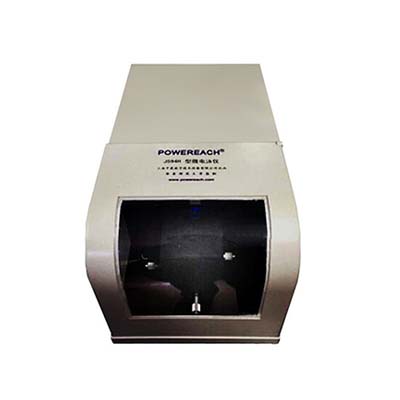
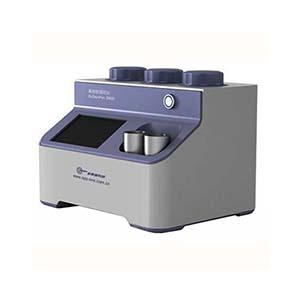
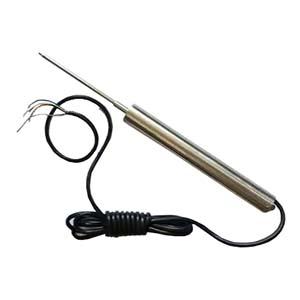
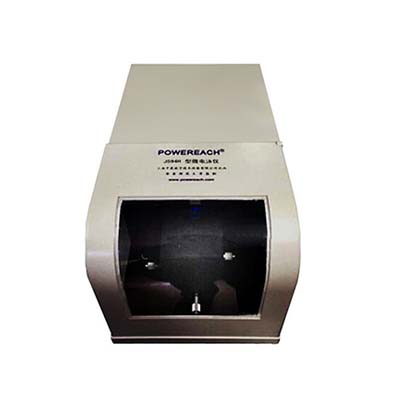
JS94H-1 Micro Electrophoresis Zeta Potential Analyzer
- PRODUCT DETAIL
JS94H-1 Micro Electrophoresis Zeta Potential Analyzer
Product Introduction
The
JS94H-1 Micro Electrophoresis Zeta Potential Analyzer is designed to measure
the zeta potential of solid-liquid interfaces in particle dispersion systems
and the interfacial electrical properties of emulsion droplets. It also
supports isoelectric point determination and the investigation of interfacial
reaction mechanisms.
By
analyzing particle zeta potential and isoelectric points, the instrument helps
researchers understand surface electrical properties, evaluate colloidal
stability, and investigate particle surface modification processes.
Featuring
a low-volume electrophoresis cell, precision optical positioning, and a
semiconductor near-field optical system, the JS94H-1 offers reliable
measurements with minimal sample consumption. It is suitable for cosmetics,
mineral processing, papermaking, pharmaceuticals, healthcare, building
materials, ultrafine materials, environmental protection, marine chemistry, and
laboratory education.
Performance Features
1. Low Sample
Consumption: The specially designed electrophoresis cell requires only 0.5 mL
of sample per measurement, reducing sample waste and operating costs.
2. Specialized
Electrophoresis Cell: A 0.5 cm thick glass cell with built-in electrodes
provides a specially engineered flow field for stable electrophoresis
measurements.
3. Stable Electrode
System: The precision electrode holder works closely with the open-cup
electrophoresis cell. Silver, platinum, and titanium electrode wires are
available with surface treatment for stable operation.
4. Three-Dimensional
Positioning: A precision three-dimensional adjustment platform and crosshair
positioning system allow operators to locate measurement positions accurately
through the computer display.
5. No Stationary Layer
Positioning Issue: The crosshair-based optical positioning arrangement helps
eliminate measurement positioning difficulties associated with stationary
layers.
6. Low-Power Optical
System: Semiconductor near-field optical illumination operates at only tens of
microwatts, minimizing heat generation and its potential influence on
measurement accuracy.
7. Enhanced Particle
Observation: Adjustable optical magnification and shorter-wavelength blue and
green light improve the observation of smaller particles.
8. Easy Operation and
Cleaning: The open-cup electrophoresis design simplifies sample loading,
cleaning, and routine operation.
Working Principle
The
JS94H-1 operates based on the micro-electrophoresis principle. When an electric
field is applied to a particle dispersion system, charged particles migrate
through the liquid medium according to their electrophoretic mobility.
The
instrument uses a specialized electrophoresis cell with integrated electrodes
and an optical observation system to monitor particle movement. By observing
particle migration under controlled conditions, the instrument determines the
zeta potential associated with the electrical characteristics of the
particle-liquid interface.
It
can also be used to investigate emulsion droplet surface charge and determine
isoelectric points by examining changes in particle electrophoretic behavior
under different pH conditions.
Technical Parameters
Parameter
Specification
Model
JS94H-1
Instrument
Type
Micro
Electrophoresis Zeta Potential Analyzer
Power
Consumption
Less
than 150 W
Power
Supply
220
V, 50 Hz
Operating
Environment
Shockproof
platform
Operating
Temperature
5–35°C
Temperature
Reading Resolution
0.1°C
Measurement
Accuracy
Error
within 5%
Applicable
Particle Size
0.5–20
μm dispersed systems
Applicable
pH Range
2.0–12.0
or 1.6–13.0
pH
Adjustment Step
0.1
Optical
Resolution
4
μm/pixel
Optical
System
Long-working-distance
microscopic optical system
Working
Distance
7
mm
Electrophoresis
Cell
Open-cup
type
Sample
Volume
Approximately
0.5 mL
Electrode
Materials
Silver,
platinum, and titanium
Positioning
System
Three-dimensional
adjustment platform with crosshair positioning
Application Scenarios
• Cosmetics
Industry: Evaluate the surface charge and dispersion stability of cosmetic
emulsions, suspensions, and fine particles.
• Mineral Processing:
Study the surface electrical properties of mineral particles to support
flotation and dispersion optimization.
• Papermaking
Industry: Analyze particle surface charge in pulp, fillers, and papermaking
chemical systems.
• Pharmaceutical
Research: Investigate colloidal systems, pharmaceutical suspensions, and
particle surface modification.
• Building
Materials: Evaluate the dispersion characteristics and interfacial properties
of cement and other fine material systems.
• Environmental
Protection: Study suspended particles and colloidal pollutants in environmental
samples.
• Marine Chemistry:
Investigate the interfacial electrical behavior of particles in marine and
aqueous environments.
• Scientific
Research and Education: Support experiments involving electrophoresis, colloid
chemistry, surface science, and interfacial reaction mechanisms.
JS94H-1 vs. Conventional Electrophoresis Apparatus
Comparison Factor
JS94H-1
Conventional Electrophoresis Apparatus
Sample
Consumption
Approximately
0.5 mL
Depends
on cell design
Electrophoresis
Cell
Special
open-cup glass cell
Traditional
cell configurations
Electrode
Design
Integrated
electrode arrangement
Conventional
electrode installation
Positioning
Three-dimensional
platform with crosshair
Depends
on instrument configuration
Optical
System
Low-power
semiconductor near-field optics
Varies
by optical design
Particle
Observation
Adjustable
magnification with blue and green light
Depends
on optical configuration
Cleaning
Simple
open-cup design
Depends
on cell structure
Main
Applications
Zeta
potential and isoelectric point analysis
Electrophoresis
and related measurements
Frequently Asked Questions (FAQ)
1. What is the JS94H-1 Micro Electrophoresis Zeta Potential
Analyzer used for?
It
measures the zeta potential of particle dispersion systems and emulsion
droplets, determines isoelectric points, and investigates interfacial
electrical properties.
2. What is the sample volume required for each measurement?
The
instrument requires approximately 0.5 mL of sample per measurement, making it
suitable for applications where sample availability is limited.
3. What particle size range can the JS94H-1 measure?
It
is designed for dispersed systems with particle sizes ranging from 0.5 to 20
μm.
4. What is the measurement accuracy of this instrument?
The
specified measurement error is within 5%, supporting reliable analysis of
particle surface electrical properties.
5. Can the JS94H-1 measure the isoelectric point?
Yes.
It can determine the isoelectric point by investigating particle
electrophoretic behavior under different pH conditions.
6. What is the applicable pH range?
The
instrument supports a pH range of 2.0–12.0 or 1.6–13.0, depending on the
configuration, with an adjustment step of 0.1.
7. What makes the electrophoresis cell different from
conventional designs?
It
features a specially designed 0.5 cm thick glass cell with built-in electrodes
and a precision-engineered flow field. Its open-cup structure simplifies sample
loading and cleaning.
8. How does the optical system improve measurement
performance?
The
low-power semiconductor near-field optical system minimizes heat generation.
Adjustable magnification and shorter-wavelength blue and green illumination
help operators observe smaller particles more clearly.
9. Which industries can benefit from the JS94H-1?
It
is suitable for cosmetics, mineral processing, papermaking, pharmaceuticals,
building materials, environmental protection, marine chemistry, and scientific
research.