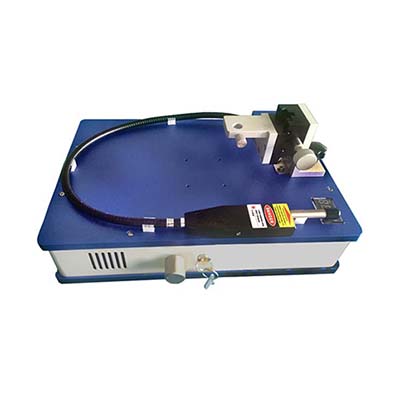
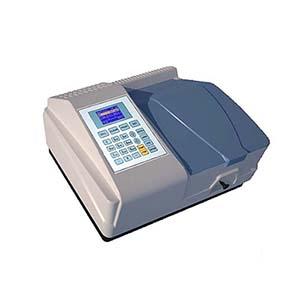
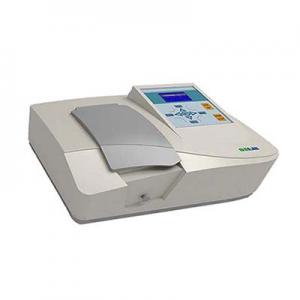
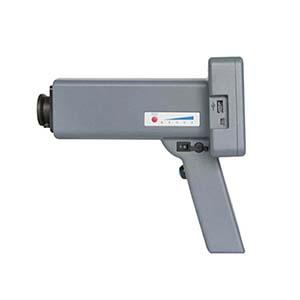
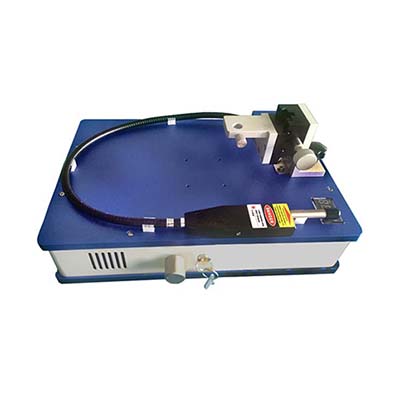
EDGE3000 Portable Raman Spectrometer
- PRODUCT DETAIL
EDGE3000 Portable Raman Spectrometer
Product Introduction
The
EDGE3000 Portable Raman Spectrometer is a compact 785 nm Raman analysis system
designed for rapid material identification and on-site screening. Featuring
one-key detection, automatic identification, and an integrated substance
database, it simplifies Raman spectroscopy for routine testing across multiple
industries.
The
built-in database covers drugs, active pharmaceutical ingredients (APIs),
benzene-series compounds, and common chemicals. Users can also build custom
databases for automatic spectral matching and result display. With a
lightweight design, standardized instrument configuration, and support for
model transfer, the EDGE3000 is suitable for portable testing in food safety,
pharmaceutical quality control, security inspection, jewelry appraisal, and
medical device-related applications.
Its
non-destructive measurement approach helps users obtain molecular fingerprint
information without extensive sample preparation, supporting efficient field
analysis and laboratory screening.
Performance Features
• One-Key
Detection: Simplifies routine testing with straightforward operation and automatic
identification.
• Built-In
Substance Database: Includes reference data for drugs, APIs,
benzene-series compounds, and common chemicals.
• Custom
Database Matching: Supports user-built spectral databases and
automatic matching to display Raman analysis results.
• Non-Destructive
Analysis: Enables rapid material screening while helping preserve sample integrity.
• Portable Design: Compact
dimensions of 306 × 206 × 140 mm and a total weight of 2.5 kg support
convenient transport.
• 785 nm Laser
Excitation: Uses a narrow-linewidth laser with a wavelength of 785 ±
0.5 nm and a linewidth below 0.08 nm.
• Broad Spectral
Coverage: Measures Raman shifts from 150 to 3400 cm⁻¹ for molecular fingerprint analysis.
• High Dynamic Range: Offers a
specified single-acquisition dynamic range of 50,000:1.
• Stable Measurement
Performance: Features wavelength stability of 0.1 nm and sensitivity
consistency below 5% over 0–40°C.
• Standardized
Instrument Configuration: Supports instrument standardization and model
transfer for consistent analytical workflows.
Working Principle
The
EDGE3000 uses Raman spectroscopy to identify materials through the interaction
between laser light and molecular vibrations. Its 785 nm laser illuminates the
sample, and the instrument detects the Raman-scattered light, which contains
spectral features characteristic of the material's molecular structure.
The
spectrometer records the Raman spectrum across 150–3400 cm⁻¹. The analysis software then compares the measured
spectrum with reference data in the built-in or user-created database. Matching
results support rapid substance identification and screening.
This
approach enables non-destructive analysis of suitable samples. Identification
accuracy depends on sample characteristics, spectral quality, database
coverage, and measurement conditions.
Technical Parameters
Parameter
Specification
Model
EDGE3000
Product
Type
Portable
Raman Spectrometer
Overall
Dimensions
306
× 206 × 140 mm
Total
Weight
2.5
kg
Spectral
Range
150–3400
cm⁻¹
Spectral
Resolution
10
cm⁻¹ at 1000 cm⁻¹ (typical, 785 nm
laser)
Additional
Resolution Specification
<0.9
nm at 852 nm
Signal-to-Noise
Ratio
450:1
at 100 ms, 85% full signal
Dark
Noise
Approximately
30 RMS at 100 ms
Integration
Time
8
ms–5 s
Dynamic
Range
50,000:1
(single acquisition)
Wavelength
Stability
0.1
nm at 0–40°C
Sensitivity
Consistency
<5%
at 0–40°C
Slit
Dimensions
Width:
25 μm; Height: 400 μm
Detector
Hamamatsu
S11510-1106
CCD
Pixel Configuration
2048
× 64
Excitation
Wavelength
785
± 0.5 nm
Laser
Linewidth
<0.08
nm
Specified
Laser Lifetime
10,000
hours
Rayleigh
Cutoff Filter
OD6
Probe
Working Focal Length
7.5
mm
Power
Supply
DC
5 V power adapter
Operating
Temperature
0–40°C
Operating
Humidity
5%–80%
Application Scenarios
• Food Safety: Rapid
screening and identification of selected food ingredients, raw materials, and
other substances.
• Pharmaceutical
Quality Control: Preliminary identification of APIs and pharmaceutical raw
materials.
• Security Inspection: On-site
screening of unknown substances, subject to database coverage and applicable
testing procedures.
• Jewelry Appraisal: Raman
spectral analysis to help identify gemstones and other materials.
• Medical
Device Applications: Material screening and characterization for
relevant components and raw materials.
• Chemical Analysis: Identification and comparison of common chemicals and benzene-series compounds.
• Laboratory
Research: Raman spectral acquisition, reference database development, and routine
material analysis.
• Field
Testing: Portable analysis for applications where rapid screening and reduced sample
preparation are beneficial.
EDGE3000 vs. Conventional Raman Analysis Systems
Comparison Item
EDGE3000 Portable Raman Spectrometer
Conventional Laboratory Raman System
Portability
Compact,
2.5 kg design
Depends
on system configuration
Operation
One-key
detection and automatic identification
May
require more manual setup
Substance
Database
Built-in
database plus custom database support
Database
availability varies
Sample
Preparation
Supports
non-destructive analysis with minimal preparation for suitable samples
Depends
on sample and configuration
Spectral
Range
150–3400
cm⁻¹
Varies
by instrument
Detection
Workflow
Automatic
spectral matching and result display
May
rely on separate analysis workflows
Typical
Use
On-site
screening and routine identification
Laboratory
research and detailed analysis
Power
Supply
DC
5 V adapter
Depends
on instrument
Note: This comparison reflects the supplied specifications
and typical system configurations. Actual capabilities depend on the model,
software, accessories, and analytical method.
Frequently Asked Questions
Q1: What is the EDGE3000 Portable Raman Spectrometer used
for?
It
is designed for rapid, non-destructive material identification and on-site
screening in food safety, pharmaceutical testing, security inspection, jewelry
appraisal, and related applications.
Q2: What laser wavelength does the EDGE3000 use?
It
uses a 785 ± 0.5 nm excitation laser with a linewidth below 0.08 nm.
Q3: What substances are included in the built-in database?
The
supplied database includes drugs, active pharmaceutical ingredients,
benzene-series compounds, and common chemicals. Exact database entries should
be confirmed with the supplier.
Q4: Can users create their own substance database?
Yes.
The system supports customer-built databases and automatic spectral matching to
display analysis results.
Q5: Does the EDGE3000 require sample pretreatment?
Many
suitable samples can be measured with minimal preparation. However, some
materials may require specific handling or measurement accessories depending on
their physical properties.
Q6: Is the EDGE3000 suitable for field use?
Yes.
Its compact dimensions and 2.5 kg weight make it suitable for portable testing
and on-site screening. It uses a DC 5 V power adapter.
Q7: What is the spectral range of the EDGE3000?
Its
specified Raman spectral range is 150–3400 cm⁻¹, with a typical resolution of 10 cm⁻¹ at 1000 cm⁻¹ using a
785 nm laser.
Q8: How long does a measurement take?
The
specified integration time is 8 ms to 5 seconds. Total testing time may be
longer because of sample positioning, signal processing, and database matching.
Q9: Can the EDGE3000 identify unknown substances
automatically?
It
can automatically compare measured spectra with available reference data and
display matching results. Identification depends on database coverage, sample
conditions, and spectral quality; unmatched or ambiguous samples may require
further analysis.