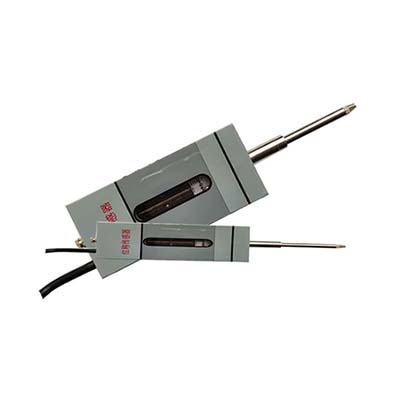
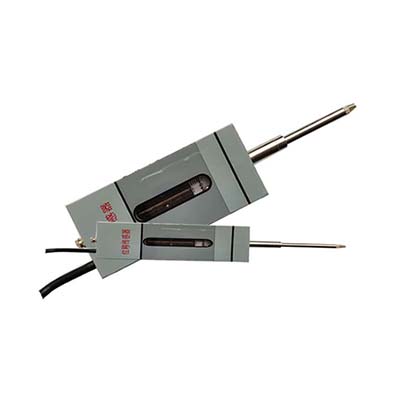
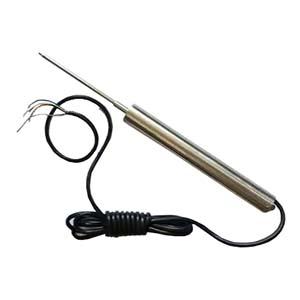
DMWY Half-Bridge Strain Displacement Sensor
Product Introduction
The
DMWY Half-Bridge Strain Displacement Sensor is a precision displacement
measurement device that converts linear displacement or displacement-related
mechanical changes into electrical signals. Based on a half-bridge strain
measurement configuration, it is designed for accurate linear displacement testing
under static, quasi-static, and low-frequency dynamic conditions.
Available
in multiple measurement ranges from ±5 mm to ±300 mm, the DMWY series supports
different experimental and engineering measurement requirements. It can be used
with compatible static or dynamic strain measurement instruments to monitor
displacement in water conservancy and hydropower projects, material mechanics
experiments, bridge and tunnel engineering, aviation research, and civil
engineering applications.
The
sensor features low indication drift, high measurement accuracy, and a
theoretical service life of up to 10 million cycles, depending on actual
testing conditions. It can also be integrated with the manufacturer's wireless
module to form a wireless displacement measurement system.
Performance Features
• Half-bridge strain
technology: Converts linear displacement into an electrical strain
signal for measurement and analysis.
• Multiple measurement
ranges: Available in ranges from ±5 mm to ±300 mm for different displacement testing
requirements.
• High measurement
accuracy: Specified accuracy of ≤0.2% F.S.
• Low indication drift: Indication
change is less than ±3 με over 8 hours.
• Low basic error: Basic error
is less than ±5 με.
• Wide operating
temperature range: Designed for operation from -35°C to +60°C.
• Static and dynamic
compatibility: Suitable for static, quasi-static, and low-frequency
dynamic displacement testing.
• Flexible
system integration: Compatible with static and dynamic strain
gauges and acquisition instruments.
• Wireless
expansion: Can be combined with the manufacturer's wireless module to form a wireless
displacement sensor.
• Long theoretical
service life: Designed for up to 10 million operating cycles, subject to
actual test conditions.
Working Principle
The
DMWY half-bridge strain displacement sensor operates by converting mechanical
displacement into an electrical signal through a strain-sensitive measurement
structure.
When
the measured object moves, the sensor's mechanical sensing element undergoes a
corresponding deformation. This deformation produces a change in the resistance
of the strain-sensitive elements arranged in a half-bridge circuit.
The
resulting electrical signal is transmitted to a compatible strain measurement
instrument, which processes the signal and converts it into a displacement
value according to the sensor's calibration and sensitivity characteristics.
The
half-bridge configuration enables displacement-related strain signals to be
measured for static, quasi-static, and low-frequency dynamic testing. When
paired with a compatible wireless module, the sensor can also be incorporated
into a wireless displacement monitoring system.
Technical Parameters
|
Parameter
|
Specification
|
|
Model
Series
|
DMWY
|
|
Sensor
Type
|
Half-Bridge
Strain Displacement Sensor
|
|
Measurement
Ranges
|
±5,
±15, ±25, ±50, ±100, ±150, ±200, ±300 mm
|
|
Accuracy
|
≤0.2%
F.S.
|
|
Supply
Voltage
|
<10
V
|
|
Operating
Temperature
|
-35°C
to +60°C
|
|
Indication
Change
|
<±3
με (8 hours)
|
|
Basic
Error
|
<±5
με
|
|
Wiring
Configuration
|
Half
bridge: A (red), B (black), C (blue)
|
|
Theoretical
Service Life
|
10
million cycles, depending on actual testing conditions
|
|
Wireless
Function
|
Available
with compatible manufacturer wireless module
|
Model Specifications
|
Model
|
Measurement Range
|
Full-Scale Output (με)
|
Resolution (mm/με)
|
Bridge Resistance (Ω)
|
Dimensions (mm)
|
Weight (g)
|
Reaction Force (N)
|
|
DMWY-10
|
±5
mm
|
4,000
|
0.0025
|
35
|
120
× 38 × 25
|
120
|
1.2–1.5
|
|
DMWY-30
|
±15
mm
|
9,000
|
0.003
|
47.5
|
160
× 38 × 25
|
140
|
1.0–2.0
|
|
DMWY-50
|
±25
mm
|
10,000
|
0.005
|
75
|
210
× 38 × 25
|
150
|
1.0–2.5
|
|
DMWY-100
|
±50
mm
|
20,000
|
0.005
|
75
|
310
× 38 × 25
|
250
|
1.0–3.0
|
|
DMWY-200
|
±100
mm
|
20,000
|
0.01
|
150
|
510
× 38 × 25
|
350
|
2.0–3.5
|
|
DMWY-300
|
±150
mm
|
15,000
|
0.02
|
300
|
710
× 38 × 25
|
600
|
2.0–3.5
|
|
DMWY-400
|
±200
mm
|
20,000
|
0.02
|
300
|
910
× 38 × 25
|
700
|
2.0–3.5
|
|
DMWY-600
|
±300
mm
|
18,000
|
0.0333
|
80
|
1330
× 50 × 40
|
2,500
|
8.0–10.0
|
F.S. refers to full scale. Full-scale output is expressed
in microstrain (με).
Application Scenarios
The
DMWY half-bridge strain displacement sensor is suitable for displacement
measurement in engineering experiments, scientific research, and industrial
testing.
• Water
Conservancy and Hydropower: Monitoring structural displacement and
deformation in dams, hydraulic structures, and hydropower facilities.
• Bridge
Engineering: Measuring displacement and deflection in bridge structures
during load and structural performance tests.
• Tunnel
Engineering: Monitoring deformation and displacement in tunnel
structures and underground engineering experiments.
• Material Mechanics
Testing: Measuring linear displacement and deformation during material loading and
mechanical experiments.
• Civil Engineering
Research: Monitoring displacement in structural models, construction components, and
engineering test specimens.
• Aviation
Research: Supporting displacement measurement in relevant structural and mechanical
experiments.
• Laboratory
Experiments: Providing displacement signals for static, quasi-static,
and low-frequency dynamic research and teaching.
Product Comparison
The
DMWY series provides multiple measurement ranges and configurations to
accommodate different displacement testing requirements.
|
Model
|
Range
|
Full-Scale Output
|
Dimensions
|
Typical Selection
|
|
DMWY-10
|
±5
mm
|
4,000
με
|
120
× 38 × 25 mm
|
Small
displacement tests
|
|
DMWY-30
|
±15
mm
|
9,000
με
|
160
× 38 × 25 mm
|
Short-range
displacement
|
|
DMWY-50
|
±25
mm
|
10,000
με
|
210
× 38 × 25 mm
|
Small-to-medium
displacement
|
|
DMWY-100
|
±50
mm
|
20,000
με
|
310
× 38 × 25 mm
|
Medium
displacement
|
|
DMWY-200
|
±100
mm
|
20,000
με
|
510
× 38 × 25 mm
|
Extended
displacement
|
|
DMWY-300
|
±150
mm
|
15,000
με
|
710
× 38 × 25 mm
|
Large
displacement
|
|
DMWY-400
|
±200
mm
|
20,000
με
|
910
× 38 × 25 mm
|
Large-range
structural tests
|
|
DMWY-600
|
±300
mm
|
18,000
με
|
1330
× 50 × 40 mm
|
Very
large displacement
|
Selection Guide: Select the model
according to the expected displacement range, installation space, and
measurement system. Smaller-range models are suitable for precise measurements
over short travel distances, while the DMWY-300, DMWY-400, and DMWY-600 support
larger displacement measurements.
Frequently Asked Questions (FAQ)
1. What is the DMWY half-bridge strain displacement sensor
used for?
It
is used to measure linear displacement in engineering structures, materials,
and experimental specimens. Typical applications include bridges, tunnels,
hydropower facilities, civil engineering, and material mechanics testing.
2. What measurement ranges are available?
The
DMWY series offers eight ranges: ±5, ±15, ±25, ±50, ±100, ±150, ±200, and ±300
mm.
3. Can the DMWY sensor measure dynamic displacement?
Yes.
It supports static, quasi-static, and low-frequency dynamic displacement
testing when used with a compatible strain measurement system.
4. What is the measurement accuracy?
The
specified accuracy is ≤0.2% F.S. The basic error is less than ±5 με, and the
indication change is less than ±3 με over 8 hours.
5. What is the operating temperature range?
The
sensor is designed to operate from -35°C to +60°C.
6. Which wiring configuration does the sensor use?
It
uses a half-bridge configuration with three wires: A (red), B (black), and C
(blue). Follow the manufacturer's wiring instructions when connecting it to an
acquisition instrument.
7. Can the DMWY sensor be used for wireless displacement
monitoring?
Yes.
When combined with the manufacturer's compatible wireless module, it can form a
wireless displacement sensor.
8. What is the theoretical service life of the sensor?
The
theoretical service life is approximately 10 million cycles. Actual service
life depends on installation, operating conditions, and test requirements.
9. How should users select a suitable DMWY model?
Choose
a model based on the maximum expected displacement, required measurement
resolution, available installation space, and compatible acquisition equipment.