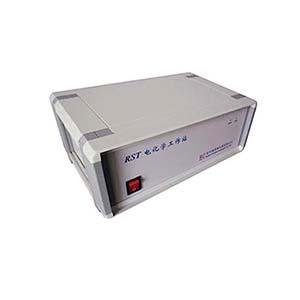
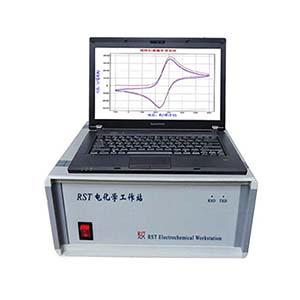
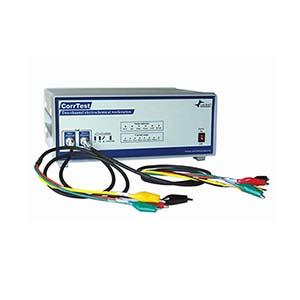
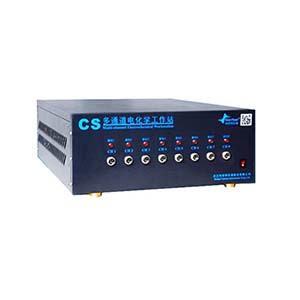
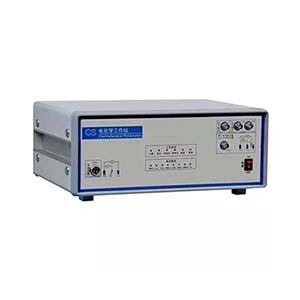
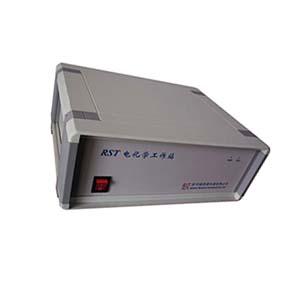
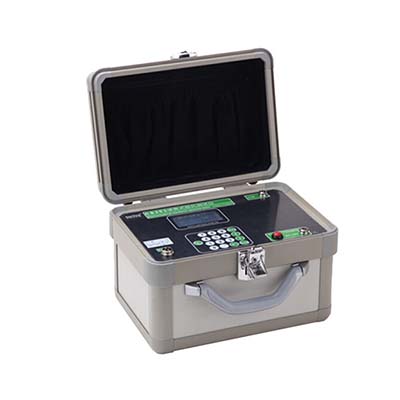
CS353 Portable AC Impedance Tester
- PRODUCT DETAIL
CS353 Portable AC
Impedance Tester
Product Introduction
The
CS353 Portable AC Impedance Tester is a compact electrochemical measurement
instrument designed for AC impedance analysis, corrosion evaluation, and
polarization measurements. Featuring portable construction, intuitive
operation, rapid measurement, and clear result display, it is suitable for both
laboratory testing and field applications.
The
instrument incorporates a built-in rechargeable battery, allowing operation
without an external power supply. A fully charged battery supports up to 10
hours of continuous measurement, making it convenient for on-site corrosion
investigations.
The
CS353 consists of a measurement front end, data memory module, and data output
system. Its advanced control architecture integrates a microcontroller,
high-precision A/D and D/A conversion circuits, communication interfaces, and a
laptop-based operating system. The entire measurement process is automatically
controlled by the microcontroller, including data acquisition, testing, and
storage. Dedicated Windows-based PC software operates the instrument through a
USB connection.
Performance Features
• Portable Design: Compact
construction makes the instrument convenient for transportation and field
measurements.
• Rechargeable Battery: Built-in
rechargeable battery supports up to 10 hours of continuous operation when fully
charged.
• Wide Frequency Range: Supports
measurements across a frequency range of 100 kHz to 1 MHz.
• High Measurement
Resolution: Maximum current resolution reaches 100 pA for sensitive
electrochemical measurements.
• High
Input Impedance: Input impedance of 1 × 10¹² Ω supports high-impedance
measurement applications.
• Automatic Measurement
Control: Microcontroller-based operation automates testing, data acquisition, and
storage.
• PC
Software Operation: Dedicated Windows software provides instrument
control and measurement management through USB.
• Intuitive
Data Display: Measurement results are presented clearly for convenient
analysis and evaluation.
• Field
and Laboratory Use: Battery-powered operation supports corrosion
investigations in locations without readily available power.
Working Principle
The
CS353 Portable AC Impedance Tester performs electrochemical measurements by
applying controlled electrical excitation to an electrochemical system and
monitoring its electrical response.
During
testing, the instrument's measurement front end generates the required
excitation signal and measures the resulting current response. Its
high-precision A/D and D/A conversion circuits process the measurement signals,
while the microcontroller manages the measurement sequence, data acquisition,
and storage.
The
collected data are transmitted to a computer through the USB interface, where
dedicated Windows software enables instrument operation, data display, and
analysis. Its AC impedance measurement capability supports the investigation of
electrochemical interfaces, electrode behavior, and corrosion-related
processes.
Technical Parameters
Parameter
Specification
Model
CS353
Instrument
Type
Portable
AC Impedance Tester
Input
Impedance
1
× 10¹² Ω
Ecorr
Measurement Range
±10
V
Polarization
Potential Range
±10
V
Absolute
Measurement Accuracy
±1%
Frequency
Range
100
kHz–1 MHz
Sine
Wave Amplitude
0–2.5
V
Current
Range
200
nA–2 A
Maximum
Current Resolution
100
pA
Working
Temperature
-10°C
to 50°C
Relative
Humidity
≤80%
RH
Power
Supply
Built-in
rechargeable battery
Continuous
Operating Time
Up
to 10 hours (fully charged)
Communication
Interface
USB
Operating
Software
Windows-based
PC software
Weight
5
kg
Application Scenarios
The
CS353 Portable AC Impedance Tester is widely used in electrochemical research,
metal corrosion evaluation, and materials testing.
• Metal
Corrosion Monitoring: Evaluates corrosion behavior and
electrochemical characteristics of metal materials.
• Rebar
Corrosion Assessment: Investigates corrosion conditions of
reinforcing steel embedded in concrete structures.
• Coating
Corrosion Evaluation: Assesses corrosion developing beneath
protective coatings and coating-related electrochemical behavior.
• Electrodeposition
Research: Supports studies of metal electrodeposition processes and electrode reactions.
• Surface
Adsorption Studies: Investigates adsorption behavior at metal
electrode surfaces.
• Electrochemical Energy
Research: Supports electrochemical measurements related to chemical power sources and
electrode systems.
• Field
Corrosion Testing: Rechargeable battery operation enables
measurements at industrial sites and other locations without external power.
CS353 vs. Conventional Electrochemical Corrosion Testers
Comparison
CS353 Portable AC Impedance Tester
Conventional Laboratory Tester
Instrument
Design
Portable
Typically
laboratory-oriented
Power
Supply
Built-in
rechargeable battery
Typically
external power
Continuous
Operation
Up
to 10 hours
Depends
on power supply
Frequency
Range
100
kHz–1 MHz
Model-dependent
Maximum
Current Resolution
100
pA
Model-dependent
Input
Impedance
1
× 10¹² Ω
Model-dependent
Measurement
Control
Automatic
MCU control
Model-dependent
Data
Communication
USB
Model-dependent
Operating
Software
Windows-based
PC software
Model-dependent
Field
Applications
Suitable
Depends
on configuration
Frequently Asked Questions (FAQ)
1. What is the CS353 Portable AC Impedance Tester used for?
The
CS353 is designed for electrochemical impedance measurements, metal corrosion
evaluation, polarization testing, electrodeposition research, and surface
adsorption studies.
2. How long can the CS353 operate on its built-in battery?
A
fully charged rechargeable battery supports up to 10 hours of continuous
measurement, making the instrument suitable for field applications.
3. What is the frequency range of the CS353?
The
instrument supports a frequency range of 100 kHz to 1 MHz.
4. What is the maximum current measurement resolution?
The
maximum current resolution is 100 pA, supporting sensitive electrochemical
current measurements.
5. Can the CS353 measure corrosion potential and
polarization potential?
Yes.
Both the Ecorr measurement range and polarization potential range are ±10 V.
6. How is the CS353 operated and controlled?
The
instrument is operated through dedicated Windows-based PC software connected
via USB. Its microcontroller automatically manages measurement, data
acquisition, and storage.
7. Can the CS353 be used for corrosion testing of
reinforced concrete?
Yes.
It can be used to assess the corrosion condition of reinforcing steel embedded
in concrete, supporting structural corrosion investigations.
8. Is the CS353 suitable for field measurements?
Yes.
Its portable design and built-in rechargeable battery allow operation in field
environments where external power is unavailable.
9. What is the weight of the CS353 instrument?
The
instrument weighs approximately 5 kg, making it convenient to transport for
laboratory and on-site testing.
NEXT:WNCG-2A Cold Atomic Absorption Mercury Analyzer