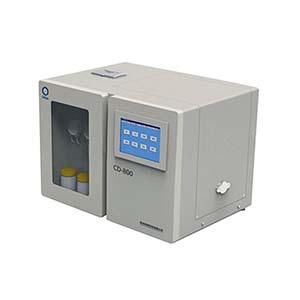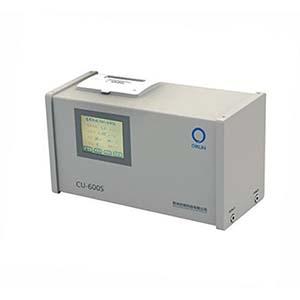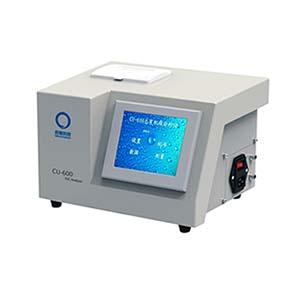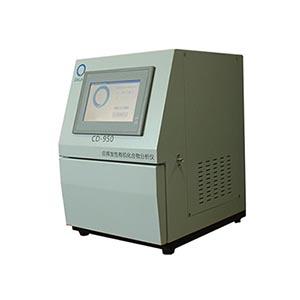
CW-700 Total Organic Carbon (TOC) Analyzer
- PRODUCT DETAIL
CW-700 Total Organic Carbon (TOC) Analyzer
Product Introduction
The CW-700 Total Organic Carbon (TOC) Analyzer is a high-sensitivity water quality analyzer designed for trace-level organic carbon measurement. It combines UV-persulfate oxidation with non-dispersive infrared (NDIR) detection to measure total carbon (TC), inorganic carbon (IC), total organic carbon (TOC), and non-purgeable organic carbon (NPOC).
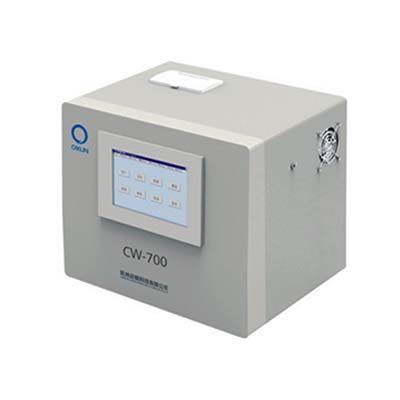
With a 7-inch touchscreen, precision electromagnetic metering pump, real-time operating monitoring, and integrated data storage, the CW-700 provides reliable analytical performance for pharmaceutical water testing, cleaning validation, environmental monitoring, and scientific research laboratories.
Performance Features
• High-sensitivity TOC measurement: Supports a specified detection range of 0.001–100.0 mg/L for trace organic carbon analysis.
• UV-persulfate oxidation: Efficiently oxidizes organic carbon in aqueous samples for subsequent CO₂ detection.
• High-performance NDIR detection: A high-sensitivity infrared detector and optimized optical chamber support precise carbon measurement.
• Multiple analytical modes: Measures TC, IC, TOC, and NPOC using an integrated reactor.
• Precision sample injection: An electromagnetic metering pump ensures consistent sample delivery.
• Real-time system monitoring: Monitors temperature, pressure, and flow rate during analysis.
• User-friendly touchscreen: The 7-inch display simplifies operation and data review.
• Integrated printing: A built-in stylus printer saves workspace and facilitates reporting.
• Convenient data management: Stores up to two years of data for time-based queries and result tracking.
• Compact laboratory design: The 20 kg instrument fits laboratories with limited bench space.
Working Principle
The CW-700 uses UV-persulfate oxidation combined with NDIR detection. It supports two methods for determining total organic carbon.
Subtraction method (TOC = TC − IC)
1. The sample undergoes UV-persulfate oxidation, converting oxidizable carbon compounds into carbon dioxide (CO₂).
2. The generated CO₂ is dehydrated and measured by the NDIR detector to determine total carbon (TC).
3. A separate acidification process converts inorganic carbon into CO₂ for measurement of inorganic carbon (IC).
4. TOC is calculated by subtracting IC from TC.
Direct method
1. Phosphoric acid is added to remove inorganic carbon by converting it into CO₂.
2. UV-persulfate oxidation converts the remaining organic carbon into CO₂.
3. The generated CO₂ is dehydrated and measured by NDIR to determine TOC directly.
These methods support flexible analysis according to sample characteristics and testing requirements.
Technical Parameters
|
Parameter |
Specification |
|
Model |
CW-700 |
|
Analytical Principle |
UV-persulfate oxidation + NDIR detection |
|
Detection Parameters |
TC, IC, TOC, NPOC |
|
TOC Detection Range |
0.001–100.0 mg/L |
|
TOC Detection Precision / Resolution |
0.001 mg/L |
|
TOC Accuracy Error |
≤ ±5% |
|
Sample Volume |
50–6,000 µL |
|
Analysis Time |
3–8 minutes |
|
Repeatability Error |
≤ 3% |
|
Zero Drift |
≤ ±2%/day |
|
Span Drift |
≤ ±2%/day |
|
Oxidizing Reagent |
Sodium persulfate solution |
|
Acid Reagent |
Phosphoric acid solution |
|
Carrier Gas |
High-purity nitrogen, free of CO₂ contamination |
|
Display |
7-inch touchscreen |
|
Data Storage |
Up to 2 years |
|
Operating Temperature |
0–40°C |
|
Relative Humidity |
≤ 85% |
|
Power Supply |
AC 220 V, 50 Hz, voltage fluctuation ≤ ±10% |
|
Power Consumption |
150 W |
|
Dimensions |
38 × 30 × 32 cm |
|
Weight |
20 kg |
Application Scenarios
• Pharmaceutical water testing: TOC analysis of purified water and water for injection.
• Cleaning validation: Evaluation of residual organic contamination in pharmaceutical manufacturing equipment using appropriate sampling methods.
• Drinking water monitoring: Analysis of tap water and other treated water samples.
• Environmental water analysis: Monitoring organic carbon in surface water and other environmental samples.
• Industrial process water: Testing clean water, cooling water, and recycled water.
• Scientific research: Trace-level organic carbon analysis for laboratory experiments and water quality studies.
CW-700 TOC Analyzer Comparison
|
Feature |
CW-700 TOC Analyzer |
Conventional TOC Analyzer |
|
Oxidation Method |
UV-persulfate oxidation |
Depends on model |
|
Detection Technology |
NDIR |
Depends on model |
|
Specified TOC Range |
0.001–100.0 mg/L |
Model-dependent |
|
Analytical Parameters |
TC, IC, TOC, NPOC |
Varies by instrument |
|
Sample Injection |
Precision electromagnetic metering pump |
Manual or automated |
|
User Interface |
7-inch touchscreen |
Model-dependent |
|
Data Management |
Two-year storage with time-based queries |
Varies by model |
|
Power Consumption |
150 W |
Model-dependent |
|
Typical Applications |
Pharmaceutical water, cleaning validation, environmental analysis |
General water quality testing |
The CW-700 is particularly suitable for laboratories requiring sensitive TOC measurement, flexible analytical modes, and convenient data management in a compact instrument. Final instrument selection should consider the applicable testing method, sample matrix, and required validation criteria.
Frequently Asked Questions (FAQ)
Q1: What is the CW-700 TOC Analyzer used for?
It is designed for pharmaceutical water testing, cleaning validation, environmental monitoring, industrial process water analysis, and scientific research.
Q2: What is the analytical principle of the CW-700?
It uses UV-persulfate oxidation to convert organic carbon into CO₂ and NDIR detection to measure the generated CO₂.
Q3: What is the TOC measurement range?
The specified measurement range is 0.001–100.0 mg/L, with a stated detection precision of 0.001 mg/L.
Q4: Which parameters can the CW-700 measure?
It supports TC, IC, TOC, and NPOC analysis.
Q5: Can the CW-700 be used for pharmaceutical cleaning validation?
Yes. It can analyze suitable rinse or other prepared samples for organic carbon residues, subject to the applicable validation method and acceptance criteria.
Q6: How long does a measurement take?
The specified analysis time is approximately 3–8 minutes, depending on sample characteristics and measurement conditions.
Q7: What reagents are required?
The analyzer uses sodium persulfate solution as the oxidizing reagent and phosphoric acid solution as the acid reagent.
Q8: How much analytical data can be stored?
The instrument supports up to two years of data storage, with convenient time-based queries.
Q9: What are the power requirements?
The CW-700 operates on AC 220 V, 50 Hz, with a specified power consumption of 150 W.
NEXT:CU-600S Online Total Organic Carbon (TOC) Analyzer