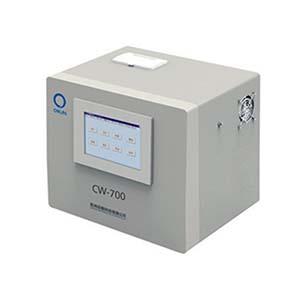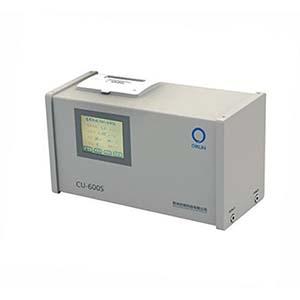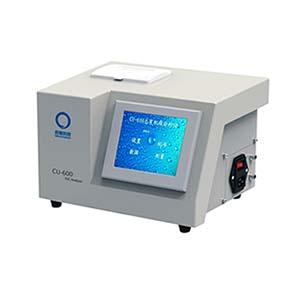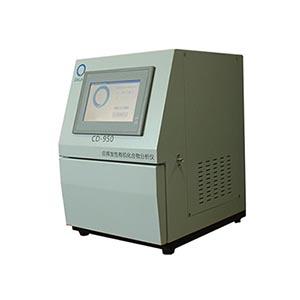
CD-800 High-Sensitivity Total Organic Carbon (TOC) Analyzer for Cleaning Validation
- PRODUCT DETAIL
CD-800 High-Sensitivity Total Organic Carbon (TOC) Analyzer for Cleaning Validation
Product Introduction
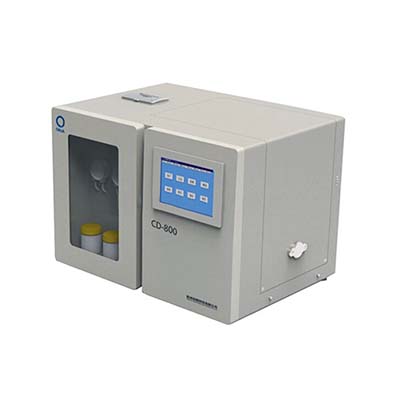
The CD-800 High-Sensitivity Total Organic Carbon (TOC) Analyzer is designed for pharmaceutical cleaning validation and water quality analysis. It combines high-temperature catalytic oxidation with non-dispersive infrared (NDIR) detection to measure total carbon (TC) and inorganic carbon (IC), enabling TOC calculation by subtraction. The analyzer supports NPOC measurement and provides sensitive, reliable results for pharmaceutical, environmental, and industrial water applications.
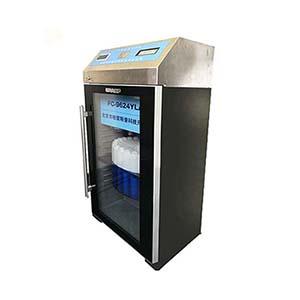
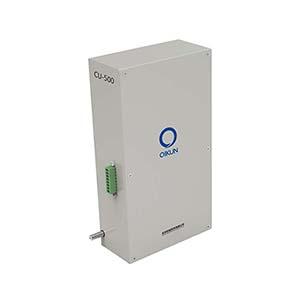
With a 7-inch touchscreen, precision electromagnetic metering pump, real-time system monitoring, and optional automatic sampling and online monitoring modules, the CD-800 improves laboratory efficiency and supports routine quality control.
Performance Features
• High-sensitivity detection: NDIR technology supports TOC measurement across a wide concentration range.
• High-temperature catalytic oxidation: Selectable catalysts and adjustable furnace temperatures up to 1,100°C support efficient sample oxidation.
• Automated sample delivery: A precision electromagnetic metering pump ensures consistent sample injection.
• Efficient moisture removal: Three-stage electronic condensation and dehydration improve gas treatment efficiency.
• Improved inorganic carbon analysis: A heated inorganic carbon reaction tank helps reduce peak tailing and shorten analysis time.
• Intuitive operation: The 7-inch touchscreen displays real-time analytical curves and operating information.
• Real-time monitoring: Temperature, pressure, and flow rate are monitored during operation.
• Convenient reporting: An integrated needle printer and password protection support routine laboratory workflows.
• Optional automation: Automatic sampling and online monitoring modules are available for unattended operation and continuous monitoring.
Working Principle
The CD-800 uses high-temperature catalytic oxidation combined with NDIR detection.
1. Total carbon measurement: The sample is oxidized in a high-temperature furnace, converting carbon compounds into carbon dioxide (CO₂). After cooling and moisture removal, the NDIR detector measures the CO₂ concentration to determine total carbon (TC).
2. Inorganic carbon measurement: An acid reagent, typically phosphoric acid solution, converts inorganic carbon into CO₂. The gas is then cooled, dehydrated, and measured by the NDIR detector to determine inorganic carbon (IC).
3. TOC calculation: Total organic carbon is calculated by subtracting inorganic carbon from total carbon.
TOC = TC − IC
The instrument also supports non-purgeable organic carbon (NPOC) analysis.
Technical Parameters
|
Parameter |
Specification |
|
Model |
CD-800 |
|
Detection Principle |
High-temperature catalytic oxidation and NDIR |
|
Measurable Parameters |
TC, IC, NPOC, TOC |
|
TOC Detection Range |
0.050–35,000 mg/L |
|
Detection Accuracy / Resolution |
0.050 mg/L (as specified; confirm whether this denotes accuracy or detection limit) |
|
Measurement Error |
Less than 5% |
|
Repeatability Error |
Less than 3% |
|
Sample Volume |
20–1,000 µL |
|
Analysis Time |
3–8 minutes |
|
Zero Drift |
Less than 2%/day |
|
Span Drift |
Less than 2%/day |
|
Maximum Furnace Temperature |
1,100°C |
|
Acid Reagent |
Phosphoric acid solution |
|
Carrier Gas |
Pure oxygen, greater than 99.999% |
|
Display |
7-inch touchscreen |
|
Power Supply |
AC 220 V, 50 Hz, voltage fluctuation within ±10% |
|
Power Consumption |
800 W |
Note: The original specification lists the sample quantity as “20–1000 ml.” The µL unit above is a likely correction for a metered analytical injection, but should be confirmed with the manufacturer before publication. The stated 0.050 mg/L detection specification also requires clarification.
Application Scenarios
• Pharmaceutical cleaning validation: Evaluate residual organic contamination on equipment and surfaces through appropriate rinse or swab sample preparation.
• Purified water and process water: Monitor organic carbon in pharmaceutical and industrial water systems.
• Drinking water analysis: Assess organic carbon levels in tap water and other drinking water sources.
• Environmental monitoring: Analyze rivers, lakes, surface water, and sewage.
• Industrial wastewater testing: Evaluate organic carbon in industrial effluent and wastewater treatment processes.
• Cooling and recycled water: Support routine water quality monitoring in industrial circulation systems.
• Online water monitoring: Enable continuous monitoring when equipped with the optional online module.
CD-800 TOC Analyzer Comparison
|
Feature |
CD-800 TOC Analyzer |
Conventional TOC Analyzer |
|
Detection Method |
High-temperature oxidation + NDIR |
Depends on instrument configuration |
|
Carbon Parameters |
TC, IC, NPOC, TOC |
Varies by model |
|
TOC Range |
0.050–35,000 mg/L |
Model-dependent |
|
Furnace Temperature |
Up to 1,100°C |
Model-dependent |
|
Sample Introduction |
Precision electromagnetic metering pump |
Manual or automated, depending on model |
|
User Interface |
7-inch touchscreen with real-time curves |
Varies by model |
|
Automation |
Optional automatic sampler and online module |
Depends on configuration |
|
Typical Applications |
Cleaning validation, water quality, wastewater |
General laboratory and water analysis |
The CD-800 is suitable for laboratories seeking a versatile TOC analyzer with high-temperature oxidation, NDIR detection, and optional automation. Actual performance should be evaluated against the required analytical method and validation criteria.
Frequently Asked Questions (FAQ)
Q1: What is the CD-800 TOC Analyzer used for?
It is used for pharmaceutical cleaning validation, water quality analysis, environmental monitoring, and industrial wastewater testing.
Q2: How does the CD-800 measure total organic carbon?
It measures total carbon and inorganic carbon using oxidation and NDIR detection, then calculates TOC as TC minus IC.
Q3: What is the TOC detection range?
The specified TOC range is 0.050–35,000 mg/L.
Q4: How long does one analysis take?
The typical analysis time is approximately 3–8 minutes, depending on the sample and measurement conditions.
Q5: Can the CD-800 be used for pharmaceutical cleaning validation?
Yes. It is designed for cleaning validation applications, provided the sampling procedure, analytical method, and instrument performance meet the applicable validation requirements.
Q6: Does the analyzer support automatic sampling?
Yes. An optional automatic sampling module is available for reduced manual intervention and unattended operation.
Q7: Can the CD-800 monitor water quality continuously?
Yes. An optional online monitoring module is available for continuous measurement in compatible installations.
Q8: What carrier gas does the analyzer require?
The specified carrier gas is pure oxygen with a purity greater than 99.999%.