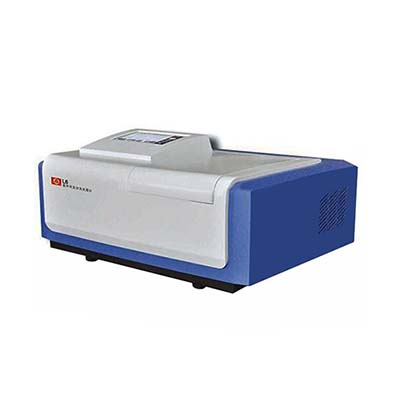
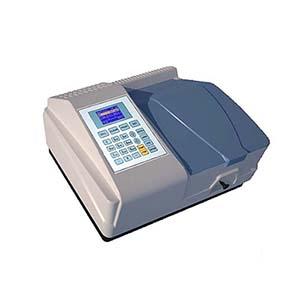
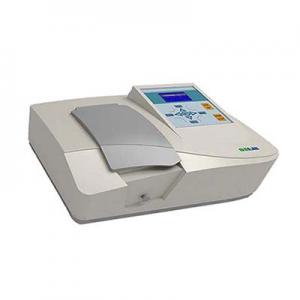
L6 UV-Vis Spectrophotometer
- PRODUCT DETAIL
L6 UV-Vis Spectrophotometer
Product Introduction
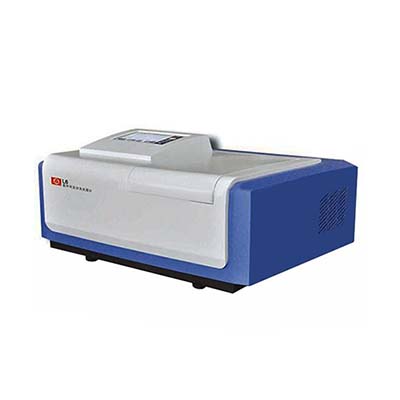
The L6/L6S UV-Vis Spectrophotometer is a versatile analytical instrument designed for routine laboratory analysis, scientific research, and quantitative measurements. Featuring an advanced optical system, low-noise electronic circuitry, and a double-beam monitoring structure, it delivers reliable performance, measurement accuracy, repeatability, and long-term stability.
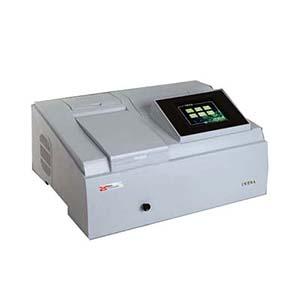
Equipped with a 7-inch color LCD touchscreen interface, multiple spectral scanning modes, and USB connectivity, the L6 UV-Vis Spectrophotometer simplifies instrument operation, data processing, and result management. Its broad wavelength range of 190–1100 nm supports a wide variety of ultraviolet and visible light analysis applications.
Performance Features
1. Advanced Optical and Electronic Design: Integrates optimized optical, mechanical, and electronic systems to provide reliable performance and excellent value for laboratory applications.
2. 7-Inch Color LCD Display: Offers a clear interface and convenient operation for routine measurements and advanced analytical functions.
3. Double-Beam Monitoring Optical System: Supports improved measurement stability and reproducibility through continuous optical signal monitoring.
4. High-Performance Monochromator: Incorporates a holographic grating and low-stray-light optical design to deliver reliable wavelength selection and measurement precision.
5. Automatic Zero and 100% Adjustment: Provides automatic baseline and reference adjustments, with an eight-position linked sample holder for convenient sample measurement.
6. Multiple Measurement and Scanning Modes: Supports full-wavelength scanning, sub-band scanning, dynamic time scanning, wavelength positioning (GOTO λ), linear regression, direct concentration reading, and peak detection.
7. USB Data Connectivity: Connects directly to a computer for spectral data processing, scan-curve analysis, report management, and large-scale storage of test records.
8. Thermal Printer Support: Enables printing of measurement results, spectral scans, wavelength-scanning curves, time-scanning curves, and linear regression data when the printer is configured.
9. Data Protection and Quick Initialization: Advanced power protection helps preserve stored measurement data, spectral curves, regression equations, and instrument correction information for convenient startup and continued operation.
10. Long-Life Deuterium Lamp: Uses a high-energy, long-life flange-positioned deuterium lamp to support ultraviolet measurement performance.
Working Principle
The L6 UV-Vis Spectrophotometer measures the interaction between ultraviolet-visible light and a sample to determine its transmittance or absorbance.
The instrument directs light through a wavelength-selection system incorporating a monochromator and holographic grating. The selected wavelength is then used for sample analysis. By comparing the transmitted light intensity with the reference intensity, the instrument calculates transmittance and absorbance values.
Using the double-beam monitoring optical structure, the instrument monitors light signals to help compensate for variations in light-source intensity and improve measurement stability. With appropriate calibration and sample preparation, the resulting absorbance data can be used for quantitative analysis, including concentration determination through linear regression or calibration curves.
Technical Parameters
|
Parameter |
Specification |
|
Model |
L6 / L6S |
|
Wavelength Range |
190–1100 nm |
|
Maximum Allowable Wavelength Error |
±0.5 nm |
|
Wavelength Repeatability |
≤0.2 nm |
|
Spectral Bandwidth |
2 nm |
|
Stray Light |
≤0.036%T |
|
Stray Light Test Conditions |
220 nm with NaI; 360 nm with NaNO₂ |
|
Transmittance Range |
0.0–200.0%T |
|
Absorbance Range |
−0.301 to 4.000 A |
|
Maximum Allowable Transmittance Error |
±0.3%T |
|
Drift |
≤0.0009 A/h |
|
Drift Test Conditions |
After 2 hours of warm-up, at 250 nm and 500 nm |
|
Transmittance Repeatability |
≤0.15%T |
|
Baseline Flatness |
0.002 A, 200–1090 nm (L6S only) |
|
Noise at 100%T |
≤0.15%T |
|
Noise at 0%T |
≤0.10%T |
|
Scan Speed |
Fast, medium, and slow |
|
Display |
7-inch color LCD |
|
Sample Holder |
Eight-position linked sample holder |
|
Data Interface |
USB |
|
Printing |
Thermal printer support |
|
Ambient Temperature |
5–35°C |
|
Ambient Humidity |
<85% RH |
|
Power Supply |
AC 220 V, 50 Hz (verify the original rated tolerance) |
|
Rated Power |
200 W |
Note: The supplied source lists the absorbance range as “0.301–4.000 A.” The negative sign in the lower limit is interpreted as −0.301 A based on the original notation, and should be confirmed with the manufacturer. The power-supply tolerance also requires confirmation.
Application Scenarios
The L6/L6S UV-Vis Spectrophotometer is suitable for a variety of laboratory and research applications, including:
• Chemical Analysis: Absorbance measurement, concentration determination, and quantitative analysis of chemical solutions.
• Pharmaceutical Laboratories: UV-visible testing of suitable pharmaceutical ingredients, formulations, and analytical samples using validated methods.
• Environmental Testing: Analysis of water and environmental samples using appropriate UV-visible colorimetric methods.
• Educational and Research Institutions: Spectroscopy experiments, analytical chemistry teaching, and scientific research.
• Quality Control Laboratories: Routine inspection, batch comparison, and verification of sample consistency.
• Industrial Laboratories: Analytical testing in chemical manufacturing, materials research, and related industries.
• Biochemical Research: Absorbance-based analysis of suitable biological and biochemical samples.
L6 vs. L6S UV-Vis Spectrophotometer
Both models belong to the same UV-Vis spectrophotometer series. The supplied specifications identify baseline flatness as a feature specifically applicable to the S series.
|
Comparison Item |
L6 |
L6S |
|
Wavelength Range |
190–1100 nm |
190–1100 nm |
|
Spectral Bandwidth |
2 nm |
2 nm |
|
Optical Configuration |
Double-beam monitoring |
Double-beam monitoring |
|
Display |
7-inch color LCD |
7-inch color LCD |
|
Spectral Scanning |
Supported |
Supported |
|
USB Connectivity |
Supported |
Supported |
|
Baseline Flatness Specification |
Not specified in the supplied source |
0.002 A, 200–1090 nm |
|
Recommended Selection |
Routine UV-Vis analysis and laboratory testing |
Applications requiring the specified baseline-flatness performance |
The comparison is based only on the supplied product information. Confirm any additional differences in optical performance, software, and configuration with the manufacturer.
Frequently Asked Questions
Q1: What is the wavelength range of the L6 UV-Vis Spectrophotometer?
The instrument covers 190–1100 nm, supporting measurements across ultraviolet and visible wavelengths.
Q2: What is the spectral bandwidth of the L6?
The specified spectral bandwidth is 2 nm, suitable for many routine UV-visible analytical applications.
Q3: Does the L6 support double-beam measurement?
Yes. It features a double-beam monitoring optical structure designed to improve measurement stability and reproducibility.
Q4: What scanning modes are available?
The instrument supports full-wavelength scanning, sub-band scanning, dynamic time scanning, wavelength positioning, peak detection, and linear regression functions.
Q5: Can the L6 UV-Vis Spectrophotometer measure sample concentration?
Yes. It supports direct concentration reading and linear regression. For quantitative analysis, users can establish an appropriate calibration curve using suitable standards and validated analytical procedures.
Q6: Can measurement data be transferred to a computer?
Yes. The USB interface enables computer connectivity for data processing, spectral curve analysis, and storage of test records, subject to the supplied software and configuration.
Q7: Can the instrument print measurement results?
Yes. Thermal printing is supported for measurement results, spectral scans, scanning curves, and linear regression data when a compatible printer is available.
Q8: What is the difference between the L6 and L6S models?
The supplied specifications list a baseline flatness of 0.002 A over 200–1090 nm specifically for the L6S. Other model differences should be verified with the manufacturer.
Q9: What maintenance does the L6 UV-Vis Spectrophotometer require?
Routine maintenance includes keeping optical surfaces and sample compartments clean, using appropriate cuvettes, allowing the instrument to warm up before measurements, and checking baseline performance. The deuterium lamp should be replaced according to the manufacturer's maintenance instructions when necessary.