DMTY Strain Earth Pressure Sensor
- PRODUCT DETAIL
DMTY Strain Earth Pressure Sensor
Product Introduction
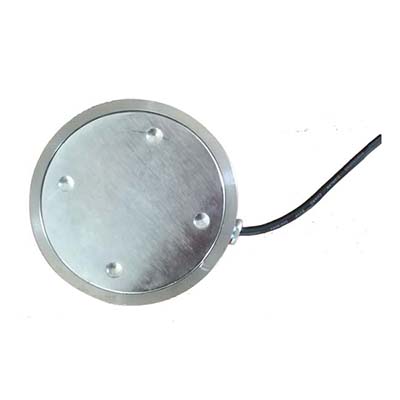
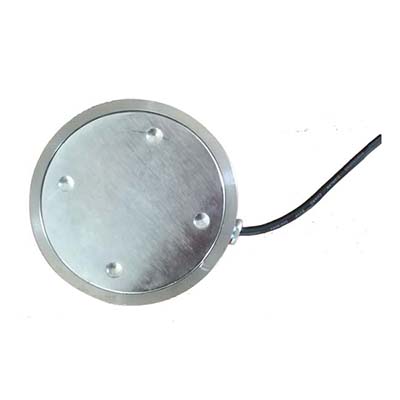
The DMTY Strain Earth Pressure Sensor is a high-precision contact stress sensor designed to measure pressure distribution within foundations, underground structures, tunnels, and slope materials. It can be embedded in different media to monitor internal pressure in geotechnical and structural engineering tests.
The sensor is also suitable for measuring lateral pressure on reinforced concrete formwork, including beams, slabs, and columns. With high output sensitivity, good linearity, repeatability, and stability, it provides reliable measurements for both static and dynamic testing.
Featuring a compact, lightweight structure, water-resistant construction, and convenient installation, the DMTY sensor can be reused in multiple test applications. Its customizable measurement range makes it adaptable to different engineering conditions and pressure measurement requirements.
Performance Features
• High-precision pressure measurement: Accuracy of ≤0.2% F.S. for reliable contact stress measurement.
• Wide measurement range: Available range from 0.05 to 20 MPa, with customization options.
• Static and dynamic testing: Suitable for measuring both steady pressure and changing stress conditions.
• High output sensitivity: Full-scale output is approximately 1,000 με and can reach 3,000 με, depending on sensor diameter.
• Good measurement characteristics: Offers good linearity, repeatability, and long-term stability.
• Compact construction: 117 mm diameter and 28 mm thickness for convenient installation in test structures.
• Water-resistant design: Suitable for embedded measurement applications where moisture resistance is required.
• Reusable design: Can be used across multiple field and laboratory testing projects.
• Flexible data acquisition: Compatible with dynamic and static strain acquisition instruments and digital display instruments.
Working Principle
The DMTY strain earth pressure sensor operates on a strain measurement principle. When external pressure acts on the sensor's contact surface, its internal sensing structure undergoes a small deformation, producing a corresponding change in electrical resistance in the strain-sensitive elements.
The sensor uses a full-bridge configuration to convert this mechanical strain into an electrical signal. A compatible strain amplifier or acquisition instrument processes the signal and converts it into a measurement value representing the applied contact pressure.
By embedding the sensor in soil, foundation materials, tunnel structures, or other test media, engineers can monitor internal pressure distribution. It can also measure lateral pressure exerted on reinforced concrete formwork during structural testing.
Technical Parameters
|
Parameter |
Specification |
|
Model |
DMTY |
|
Product Type |
Strain Earth Pressure Sensor |
|
Diameter |
117 mm |
|
Thickness |
28 mm |
|
Measurement Range |
0.05–20 MPa (customizable) |
|
Accuracy |
≤0.2% F.S. |
|
Bridge Resistance |
350 Ω, full bridge |
|
Full-Scale Output |
Approximately 1,000 με; up to 3,000 με |
|
Output Characteristics |
Full-scale output varies with sensor diameter; smaller diameter generally produces lower output |
|
Measurement Type |
Static and dynamic |
|
Outlet Direction |
Side outlet |
|
Wiring |
Red, yellow, blue, and black correspond to A, B, C, and D |
|
Strain Amplifier Sensitivity Coefficient |
K = 2.0 |
|
Compatible Equipment |
Dynamic and static strain acquisition instruments; digital display instruments |
F.S. refers to full scale. The full-scale output is expressed in microstrain (με).
Application Scenarios
The DMTY strain earth pressure sensor is suitable for pressure and contact stress monitoring in geotechnical and civil engineering applications:
• Foundation Engineering: Measurement of internal pressure distribution in foundation soils and different foundation layers.
• Tunnel Engineering: Monitoring contact pressure and stress distribution around underground structures and tunnel linings.
• Slope Stability Testing: Measurement of internal pressure changes within slope materials and geotechnical test models.
• Underground Structure Testing: Embedded pressure monitoring in underground structures and construction materials.
• Reinforced Concrete Formwork: Measurement of lateral pressure on formwork for beams, slabs, and columns.
• Geotechnical Research: Static and dynamic stress testing in soil mechanics and engineering laboratories.
• Structural Engineering Experiments: Contact stress measurement in model tests and field engineering studies.
Product Comparison
The DMTY is designed for embedded contact stress measurement, distinguishing it from general strain gauges and surface-mounted pressure sensors.
|
Feature |
DMTY Strain Earth Pressure Sensor |
General Strain Gauge |
Surface-Mounted Pressure Sensor |
|
Primary Measurement |
Internal earth pressure and contact stress |
Local material strain |
Applied surface pressure |
|
Installation |
Embedded in test media or structures |
Bonded to a material surface |
Mounted on a measurement surface |
|
Measurement Range |
0.05–20 MPa, customizable |
Depends on gauge and installation |
Depends on model |
|
Accuracy |
≤0.2% F.S. |
Depends on model |
Depends on model |
|
Measurement Type |
Static and dynamic |
Static and dynamic, depending on system |
Depends on model |
|
Output |
Full-bridge strain signal |
Strain signal |
Depends on sensor type |
|
Typical Applications |
Foundations, tunnels, slopes, concrete formwork |
Structural strain testing |
Equipment and surface pressure monitoring |
The DMTY is particularly suitable when engineers need to measure internal pressure distribution or contact stress directly within a test medium rather than only measuring surface strain.
Frequently Asked Questions (FAQ)
1. What is the DMTY strain earth pressure sensor used for?
It measures internal pressure distribution and contact stress in foundations, tunnels, slope materials, underground structures, and reinforced concrete formwork.
2. What is the measurement range of the DMTY sensor?
Its specified measurement range is 0.05–20 MPa. Customized ranges can be provided according to project requirements.
3. Can the DMTY sensor perform both static and dynamic measurements?
Yes. It is designed for both static and dynamic testing and can be connected to compatible strain acquisition equipment.
4. What is the accuracy of this earth pressure sensor?
The specified measurement accuracy is ≤0.2% F.S., where F.S. represents the full-scale output value.
5. What is the full-scale output of the sensor?
The full-scale output is approximately 1,000 με and can reach 3,000 με. The actual output depends on sensor diameter, with smaller diameters generally producing lower full-scale output.
6. How is the DMTY sensor connected to a data acquisition instrument?
It uses a 350 Ω full-bridge configuration with four wires. Red, yellow, blue, and black correspond to terminals A, B, C, and D, respectively.
7. Which instruments are compatible with the DMTY sensor?
It can be used with compatible dynamic and static strain acquisition instruments and digital display instruments.
8. Can the sensor be embedded in soil or concrete structures?
Yes. It is designed for embedded contact stress measurement in different foundation materials, tunnel and slope media, and structural testing applications. Installation should follow the test design and sensor mounting requirements.
9. Can the measurement range be customized?
Yes. The specified range is 0.05–20 MPa, and customized measurement ranges are available for different engineering applications.