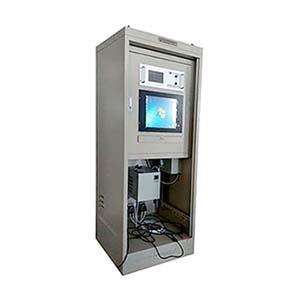
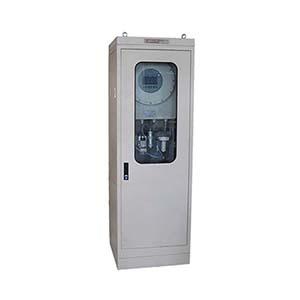
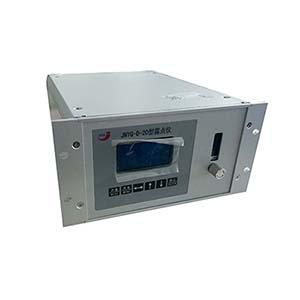
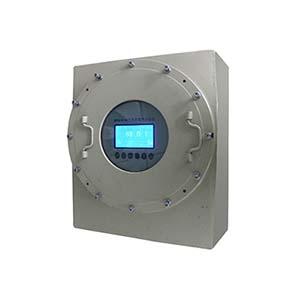
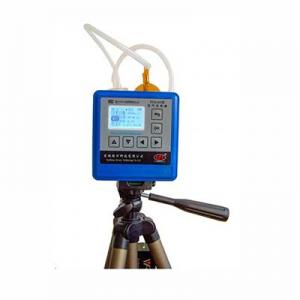
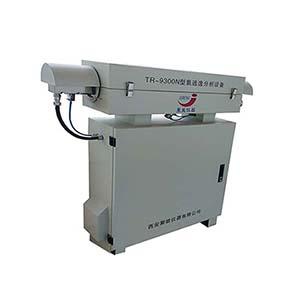
JNYQ-O-10 High-Standard Exhaust Gas Oxygen Analyzer

- PRODUCT DETAIL
JNYQ-O-10 High-Standard Exhaust Gas Oxygen Analyzer
Product Introduction
The
JNYQ-O-10 High-Standard Exhaust Gas Oxygen Analyzer is designed for oxygen
concentration measurement in industrial exhaust gases, combustion processes,
and laboratory applications. Featuring an anti-corrosion sensor,
anti-cross-interference technology, and advanced digital signal processing, it
delivers reliable oxygen analysis for process monitoring and combustion
optimization.
With
a measuring range of 0–100% O₂,
configurable range options, analog signal output, optional RS232/RS485
communication, and upper/lower limit alarm control, the analyzer supports
integration into industrial monitoring and control systems.
Performance Features
• Anti-Corrosion Sensor: Designed
for improved durability in suitable industrial measurement environments.
• Anti-Cross-Interference: Helps
minimize interference from other gas components.
• Advanced
Digital Processing: Supports stable measurement and reliable
signal processing.
• Multiple Signal
Outputs: Supports audible, visual, display-related, relay, and message alerts, depending
on configuration.
• Wide Measurement Range: Measures
oxygen concentrations from 0–100%, with selectable range specifications.
• Flexible
Connectivity: Provides isolated analog output and optional RS232/RS485
communication.
• Alarm Control: Supports
upper and lower limit switching outputs for process monitoring.
• Combustion
Optimization: Helps maintain an appropriate balance between combustion
air and fuel.
• Compact Power
Requirements: Power consumption below 70 W.
Working Principle
The
JNYQ-O-10 measures oxygen concentration in gas samples using its oxygen sensing
system and digital signal processing technology. The sensor converts the
oxygen-related response into an electrical signal, which the analyzer processes
and converts into a concentration reading.
The
measured oxygen concentration can be used to monitor exhaust gas conditions,
evaluate combustion efficiency, and support process control. The exact sensing
technology is not specified in the available product information.
Technical Parameters
Parameter
Specification
Model
JNYQ-O-10
Product
Type
Exhaust
Gas Oxygen Analyzer
Measuring
Component
Oxygen
(O₂)
Measuring
Range
0–100%;
selectable range options
Accuracy
≤
±1% FS
Zero
Drift
±1%
FS / 7 days
Span
Drift
±1%
FS / 7 days
Linearity
Error
±1%
FS
Repeatability
≤
±1%
Response
Time (T90)
≤
15 s
Power
Consumption
<
70 W
Power
Supply
220
VAC ±10%, 50 Hz ±5%
Isolated
Current Output
0/4–20
mA; 500 Ω load
Communication
Interface
RS232
or RS485, selectable
Output
Control
Upper
and lower limit passive switching outputs
Operating
Temperature
5–45°C;
avoid direct sunlight
Operating
Humidity
0–85%
RH
Installation
Horizontal
installation; avoid vibration and shock
Gas
Environment
No
strongly corrosive gas
Wind
Speed
≤
1 m/s
Note: FS means full scale. Confirm the configured
measurement range, output functions, and installation requirements before
ordering.
Application Scenarios
• Thermal
Power Plants: Monitor exhaust oxygen levels and optimize the
combustion-air-to-fuel ratio.
• Cement
Plants: Support kiln combustion monitoring and process efficiency improvement.
• Metallurgical Plants: Measure
oxygen concentration in relevant combustion and exhaust gas streams.
• Chemical Plants: Monitor
oxygen concentration in process gases.
• Fertilizer Production: Support
oxygen analysis in industrial gas processes.
• Hydrogen Industry: Measure
oxygen concentration in applicable gas streams.
• Laboratories: Analyze
oxygen content in combustion experiments and gas testing.
• Medical Biology
Research: Support research involving respiratory processes in plants and animals, where
the configured measurement method is suitable.
JNYQ-O-10 vs. Conventional Oxygen Analyzers
Comparison Item
JNYQ-O-10
Conventional Oxygen Analyzer
Measuring
Range
0–100%,
with selectable ranges
Depends
on model
Sensor
Design
Anti-corrosion
sensor
Depends
on sensor type
Interference
Control
Anti-cross-interference
technology
Depends
on measurement principle
Signal
Processing
Advanced
digital processing
Depends
on model
Analog
Output
Isolated
0/4–20 mA
Depends
on configuration
Communication
Optional
RS232/RS485
Depends
on model
Alarm
Control
Upper/lower
limit switching outputs
Depends
on configuration
Power
Consumption
<
70 W
Depends
on model
Response
Time
≤
15 s (T90)
Depends
on model
Frequently Asked Questions (FAQ)
Q1: What does the JNYQ-O-10 oxygen analyzer measure?
It
measures oxygen concentration in exhaust gases and other suitable gas streams,
with a specified measurement range of 0–100%.
Q2: Can the measurement range be customized?
Yes.
Different range specifications can be selected within the available measurement
range according to application requirements.
Q3: What is the accuracy of the JNYQ-O-10?
The
specified accuracy is ≤ ±1% FS, with linearity error of ±1% FS.
Q4: How quickly does the analyzer respond?
The
specified T90 response time is ≤ 15 seconds.
Q5: What signal outputs are available?
The
analyzer provides an isolated 0/4–20 mA current output and upper/lower limit
switching outputs. Audible, visual, display-related, and message alerts may be
available according to the configuration.
Q6: Does the analyzer support industrial control system
integration?
Yes.
The analog output can transmit measurement signals to compatible control
systems, while optional RS232 or RS485 communication supports digital
connectivity.
Q7: What are the installation requirements?
Install
the analyzer horizontally, avoid vibration and shock, prevent direct sunlight,
and maintain an operating temperature of 5–45°C and humidity of 0–85% RH. The
specified gas environment should contain no strongly corrosive gas.
Q8: Can the JNYQ-O-10 help improve combustion efficiency?
Yes.
Oxygen concentration measurements can help operators adjust the
combustion-air-to-fuel ratio, supporting combustion optimization and process
efficiency.
Q9: Is the JNYQ-O-10 suitable for laboratory applications?
Yes.
It can be used for combustion gas testing and other suitable laboratory oxygen
measurement applications, provided the sample conditions meet the analyzer's
operating requirements.

NEXT:JNYQ-H30 Thermal Conductivity Hydrogen H₂ Analyzer