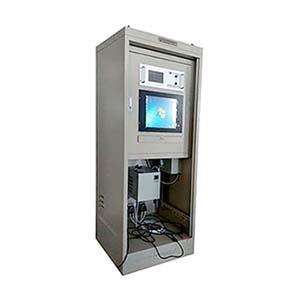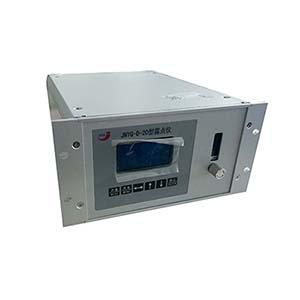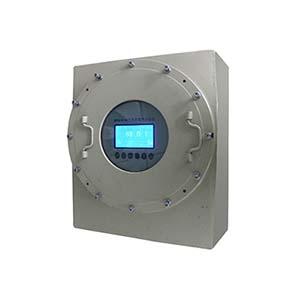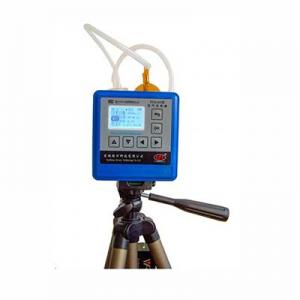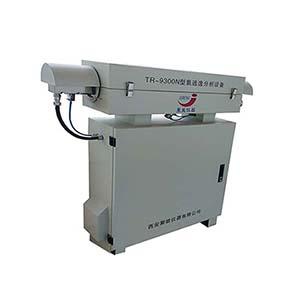
TR-9400 Process analysis system for chemical industry for Gas online monitoring

- PRODUCT DETAIL
TR-9400 Chemical Industry Process Gas Analysis System
Product Introduction
The TR-9400 Process Analysis System for the Chemical Industry is designed for continuous monitoring and analysis of process gases in petrochemical plants, fertilizer production facilities, and other chemical manufacturing environments. It supports three key industrial objectives: process safety monitoring, production process control, and environmental emissions monitoring.
By measuring gas components at critical process points, the TR-9400 helps operators identify abnormal gas concentrations, monitor operating conditions, and maintain product quality. Its application-specific configuration can be tailored to different process streams, including semi-water gas, carbon monoxide-rich gas, carbon dioxide streams, synthesis gas, recycle gas, and natural gas hydrogen production furnaces.
Performance Features
• Process safety monitoring: Supports the detection of abnormal concentrations of hazardous or potentially explosive process gases, with measurement outputs available for integration into suitable safety control systems.
• Process optimization: Provides gas composition data to help monitor production conditions and maintain product quality.
• Environmental monitoring: Supports monitoring of pollutant-related gas components in exhaust streams to assist emissions management.
• Multi-component analysis: Covers oxygen (O₂), carbon monoxide (CO), carbon dioxide (CO₂), hydrogen (H₂), methane (CH₄), and combined CO+CO₂ measurements.
• Multiple sampling points: Supports application-specific monitoring across different production stages.
• Customizable configuration: Can be tailored to process requirements in petrochemical, fertilizer, and hydrogen production applications.
• Broad process coverage: Supports analysis of synthesis gas, regenerated CO₂, refined gas, fresh gas, recycle gas, and hydrogen production furnace streams.
Working Principle
The TR-9400 is a process gas analysis system designed to measure selected gas components at designated monitoring points. Process gas is introduced to the configured analytical system, where suitable gas measurement technologies determine the concentration of target components.
The resulting measurements can be used to track process conditions, identify abnormal gas composition changes, support production adjustments, and monitor exhaust gas composition. Where required, measurement signals can be integrated with plant control or alarm systems to support process interlocks and operational safety.
Note: The specific analytical technologies, sampling configuration, response time, and output interfaces were not provided and should be confirmed with the supplier.
Technical Parameters
Process Monitoring Points and Measurement Ranges
|
Monitoring Point |
Measured Component |
Selection Range |
|
Semi-water gas |
O₂ |
0–2% |
|
Medium-variable outlet |
CO |
0–5% |
|
Low-variable outlet |
CO |
0–1% |
|
Carbon export |
CO₂ |
0–2% |
|
Regenerated CO₂ |
O₂ |
0–15% |
|
Refined gas |
CO + CO₂ |
0–100 ppm |
|
Fresh gas |
H₂ |
35–75% |
|
Synthetic recycle gas |
CH₄ |
0–25% |
|
Synthetic recycle gas |
H₂ |
35–75% |
|
Primary furnace for hydrogen production from natural gas |
CH₄ |
0–15% |
|
Secondary furnace for hydrogen production from natural gas |
CH₄ |
0–1% |
|
Heavy-oil hydrogen-production vaporizing furnace |
CH₄ |
0–10% |
Note: Monitoring point names have been translated from the supplied source. Confirm the original process terminology and exact sampling-point definitions with the supplier before finalizing an engineering specification.
General System Information
|
Parameter |
Specification |
|
Model |
TR-9400 |
|
Product Type |
Chemical Industry Process Gas Analysis System |
|
Main Functions |
Process safety monitoring, process control, environmental monitoring |
|
Target Industries |
Petrochemical, fertilizer, chemical manufacturing, hydrogen production |
|
Measured Components |
O₂, CO, CO₂, H₂, CH₄, CO+CO₂ |
|
Measurement Ranges |
Application-specific; see table above |
|
System Configuration |
Customizable according to process requirements |
|
Safety System Integration |
Measurement signals may be integrated with compatible control systems; interface details require confirmation |
Application Scenarios
• Petrochemical production: Monitoring gas composition at critical process points to support stable plant operation.
• Fertilizer manufacturing: Analysis of process gases in synthesis gas preparation and related production stages.
• Hydrogen production: Methane monitoring in primary and secondary natural gas reforming furnaces and heavy-oil hydrogen production systems.
• Synthesis gas monitoring: Measurement of hydrogen, methane, carbon monoxide, carbon dioxide, and oxygen in selected gas streams.
• Process safety management: Detection of abnormal gas concentrations to support alarms and interlock strategies when integrated with appropriate safety systems.
• Environmental emissions monitoring: Tracking selected gas components in exhaust streams to support pollution control and environmental management.
TR-9400 Process Gas Analysis System Comparison
|
Feature |
TR-9400 |
General-Purpose Gas Analyzer |
|
Application Focus |
Chemical production process monitoring |
Depends on instrument configuration |
|
Monitoring Points |
Multiple process-specific points can be configured |
Often configured for individual sampling applications |
|
Gas Components |
O₂, CO, CO₂, H₂, CH₄, CO+CO₂ |
Depends on sensor or analytical technology |
|
Measurement Ranges |
Defined for specific process streams |
Depends on model |
|
Process Control Support |
Designed to support process monitoring and control |
Depends on available outputs and integration |
|
Safety Monitoring |
Can support alarm and interlock applications with suitable integration |
Depends on system design and safety qualification |
|
Environmental Applications |
Supports selected gas-emissions monitoring |
Depends on measured components |
|
Customization |
Tailored to petrochemical and fertilizer processes |
Depends on supplier and configuration |
Frequently Asked Questions
1. What is the TR-9400 process analysis system used for?
It is designed for process gas analysis in chemical, petrochemical, fertilizer, and hydrogen production facilities, supporting safety monitoring, process control, and environmental management.
2. Which gases can the TR-9400 monitor?
The supplied specifications list oxygen (O₂), carbon monoxide (CO), carbon dioxide (CO₂), hydrogen (H₂), methane (CH₄), and combined CO+CO₂ measurements.
3. Can the TR-9400 support process safety interlocks?
The measurement results can be designed for integration with compatible control or safety systems. Actual interlock functionality, response time, certifications, and fail-safe behavior must be confirmed for the selected configuration.
4. What is the CO measurement range at the medium-variable outlet?
The specified range is 0–5%.
5. What is the measurement range for CO+CO₂ in refined gas?
The specified combined measurement range is 0–100 ppm.
6. Can the system monitor hydrogen production furnaces?
Yes. The listed applications include primary natural gas hydrogen-production furnaces, secondary furnaces, and heavy-oil hydrogen-production vaporizing furnaces, with methane ranges of 0–15%, 0–1%, and 0–10%, respectively.
7. Can the TR-9400 be customized for different chemical processes?
Yes. Its monitoring points and measurement configuration can be tailored to specific process requirements. The available gas components, ranges, sampling system, and interfaces should be agreed upon during project design.
8. Can the TR-9400 be used for environmental monitoring?
It supports monitoring of selected gas components in exhaust streams to assist emissions management. Regulatory compliance suitability depends on the measured pollutants, analytical performance, applicable standards, and installation configuration.

NEXT:K10 Full Digital Color Doppler Ultrasound Diagnostic System