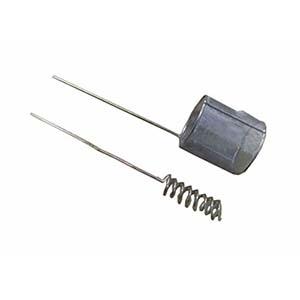
K1300 All-PTFE Photoelectrochemical Cell

- PRODUCT DETAIL
K1300 All-PTFE Photoelectrochemical Cell
Product Introduction
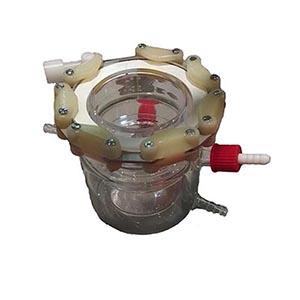
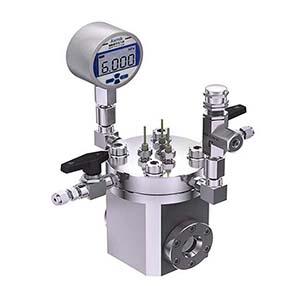
The K1300 All-PTFE Photoelectrochemical Cell is designed for photoelectrochemical (PEC) experiments, electrochemical analysis, photocatalysis research, dye-sensitized solar cell studies, catalyst evaluation, and materials performance testing.
Featuring an all-PTFE cell body, a quartz optical window with 95% light transmittance, and a replaceable ion-exchange membrane, the K1300 supports flexible experimental configurations. Its quick-change design simplifies window and membrane replacement, while precise working electrode area control helps improve experimental consistency. Available in 5 mL, 25 mL, and 40 mL capacities, it accommodates different laboratory testing requirements.
Performance Features
• All-PTFE construction: The cell body and lid use PTFE for laboratory electrochemical applications.
• High-transmittance quartz window: Provides 95% light transmittance for photoelectrochemical experiments.
• Quick-change optical window: The quartz plate can be disassembled and replaced conveniently.
• Replaceable ion-exchange membrane: Enables flexible cell configurations for membrane-separated experiments.
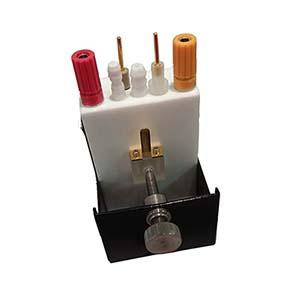
• Convenient electrode installation: Supports quick installation of the working electrode.
• Precise electrode area control: Allows accurate control of the working electrode's exposed area.
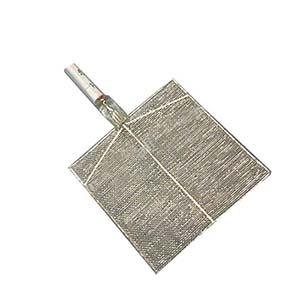
• Electrode accessories included: Equipped with a silver/silver chloride (Ag/AgCl) reference electrode and a platinum wire electrode.
• Multiple volume options: Available in 5 mL, 25 mL, and 40 mL capacities.
Working Principle
The K1300 photoelectrochemical cell combines controlled electrochemical reactions with optical irradiation. Light enters through the quartz window and interacts with a photoactive material, generating excited charge carriers that can participate in oxidation-reduction reactions at the electrode-electrolyte interface.
During testing, the working electrode serves as the primary reaction surface, while the reference electrode provides a stable potential reference and the platinum wire electrode serves as a counter electrode. When configured with a suitable ion-exchange membrane, the cell can also support experiments involving separated reaction environments.
By monitoring electrical and electrochemical responses under illumination, researchers can investigate photocatalytic activity, charge-transfer behavior, photoelectric conversion, and electrode material performance.
Technical Parameters
|
Parameter |
Specification |
|
Model |
K1300 |
|
Product Type |
All-PTFE Photoelectrochemical Cell |
|
Cell Body Material |
PTFE |
|
Lid Material |
PTFE (Teflon) |
|
Optical Window Material |
Quartz |
|
Light Transmittance |
95% |
|
Available Volumes |
5 mL, 25 mL, 40 mL |
|
Optical Window |
Quickly removable and replaceable |
|
Ion-Exchange Membrane |
Replaceable |
|
Working Electrode Installation |
Quick installation |
|
Working Electrode Area |
Precisely controllable |
|
Reference Electrode |
Silver/silver chloride (Ag/AgCl) |
|
Counter Electrode |
Platinum wire |
|
Main Applications |
PEC research, electrochemical analysis, photocatalysis, catalyst and materials evaluation |
Application Scenarios
• Photocatalytic PEC research: Evaluation of photoactive materials and light-driven electrochemical reactions.
• Electrochemical analysis: Investigation of electrode reactions, redox behavior, and charge-transfer processes.
• Dye-sensitized solar cell research: Study of photoelectric conversion and related electrochemical mechanisms.
• Catalyst performance evaluation: Comparison of catalytic activity under controlled illumination conditions.
• Materials characterization: Assessment of electrode materials and photoelectrochemical properties.
• Photoelectrochemical synthesis: Research into light-assisted synthesis and electrochemical enrichment.
• Energy conversion studies: Investigation of light-to-electrical and light-assisted chemical energy conversion.
K1300 Photoelectrochemical Cell Comparison
|
Feature |
K1300 All-PTFE PEC Cell |
Conventional Photoelectrochemical Cell |
|
Cell Body Material |
PTFE |
Depends on model |
|
Optical Window |
Quartz, 95% transmittance |
Depends on model |
|
Window Replacement |
Quick disassembly and replacement |
Depends on design |
|
Ion-Exchange Membrane |
Replaceable |
Depends on design |
|
Working Electrode Installation |
Quick installation |
Depends on design |
|
Electrode Area Control |
Precisely controllable |
Depends on design |
|
Volume Options |
5 mL, 25 mL, 40 mL |
Varies by model |
|
Supplied Electrodes |
Ag/AgCl reference and platinum wire electrodes |
Depends on configuration |
Frequently Asked Questions
1. What is the K1300 photoelectrochemical cell used for?
It is designed for photocatalytic PEC experiments, electrochemical analysis, dye-sensitized battery or solar cell research, catalyst evaluation, and materials performance studies.
2. What material is used for the K1300 cell body?
The cell body and lid are made of PTFE (Teflon), a fluoropolymer commonly used in laboratory equipment.
3. What is the light transmittance of the quartz window?
The quartz optical window has a specified light transmittance of 95%, allowing light to reach photoactive materials during PEC experiments.
4. Can the quartz window be replaced?
Yes. The quartz plate can be quickly disassembled and replaced, facilitating maintenance and experimental setup changes.
5. Is the ion-exchange membrane replaceable?
Yes. The K1300 supports quick replacement of the ion-exchange membrane for different experimental configurations.
6. What volume options are available?
The K1300 is available in 5 mL, 25 mL, and 40 mL versions.
7. Which electrodes are included?
The cell is equipped with a silver/silver chloride reference electrode and a platinum wire electrode. Confirm the complete supply configuration with the supplier before ordering.
8. Can the working electrode area be controlled?
Yes. The design allows precise control of the exposed working electrode area, supporting more consistent electrochemical measurements.
9. Is the K1300 suitable for photoelectric conversion studies?
Yes. It can be used to investigate photoelectrochemical responses, light-assisted redox reactions, and photoelectric conversion performance under suitable experimental conditions.