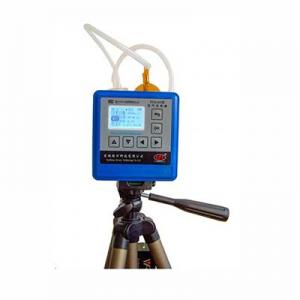
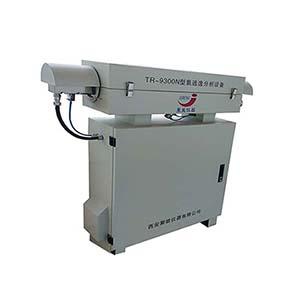
TR-1000 Professional Chemical Plant Ammonia Gas Meter
Product Introduction
The
TR-1000 Professional Chemical Plant Ammonia Gas Meter is a fixed online gas
detection instrument designed for industrial environments requiring continuous
toxic gas monitoring. Featuring a highly sensitive sensor, intelligent
microcontroller-based monitoring circuitry, and standard three-wire 4–20 mA
output, it supports integration with gas alarm controllers, distributed control
systems (DCS), and programmable logic controllers (PLC).
Its
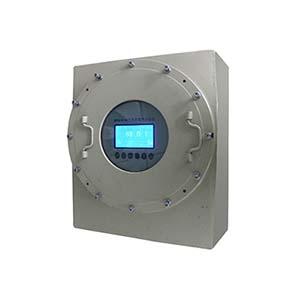
explosion-proof cast aluminum housing, IP66 protection, and resistance to
common sensor contaminants make it suitable for demanding applications in
chemical plants, petrochemical facilities, metallurgy, power generation, and
other industrial production and storage areas.
The
TR-1000 platform supports multiple gas detection configurations, including
ammonia (NH₃), carbon monoxide (CO), hydrogen
sulfide (H₂S), chlorine (Cl₂), formaldehyde (HCHO), and toluene (C₇H₈), depending
on the selected sensor and measurement range.
Performance Features
1. Resistance to Sensor
Poisons: Designed for resistance to sulfides, silicones, and chlorides, helping maintain
sensor performance in challenging industrial environments.
2. Long Sensor Service
Life: Specified sensor lifetime of up to three years, depending on operating
conditions and maintenance.
3. Standard 4–20 mA
Output: Three-wire analog output supports long-distance signal transmission and
industrial control integration.
4. Explosion-Proof
Construction: Fixed cast aluminum housing with specified Ex d IIC T6
protection for suitable hazardous-area installations.
5. Intelligent
Monitoring Circuit: Microcontroller-based electronics support
stable signal processing and convenient adjustment.
6. Fast Response: Specified T90 response
time of 30 seconds or less.
7. Reliable Online
Monitoring: Designed for continuous gas detection in industrial
production and storage environments.
8. Flexible System Integration: Compatible
with the manufacturer's gas alarm controllers and suitable for connection to
compatible DCS and PLC systems.
9. Long-Distance
Transmission: Specified transmission distance of up to 1,000 m, subject
to cable selection, installation conditions, and signal-system design.
Working Principle
The
TR-1000 uses gas detection technology selected according to the target gas and
sensor configuration. The specified detection principles include
electrochemical sensing and catalytic combustion.
In
an electrochemical configuration, the target gas interacts with the sensing
electrode, generating an electrical signal related to its concentration. The
instrument's electronic circuit processes this signal and converts it into a
standardized 4–20 mA output for monitoring and control systems.
The
catalytic combustion principle is applicable to suitable combustible gas
configurations. The exact sensing principle depends on the selected model and
target gas; the supplied gas-specific table identifies electrochemical
detection for the listed TR-1000 configurations.
Technical Parameters
General Specifications
|
Parameter
|
Specification
|
|
Model
|
TR-1000
|
|
Detection
Method
|
Diffusion
|
|
Detection
Principle
|
Electrochemical
or catalytic combustion, depending on configuration
|
|
Signal
Output
|
Three-wire
4–20 mA
|
|
System
Compatibility
|
Gas
alarm controllers, compatible DCS and PLC systems
|
|
Recommended
Signal Cable
|
Three-core
shielded cable, RVVP 3 × 1.0 mm²
|
|
Alternative
Cable Cross-Section
|
0.75–2.5
mm², depending on transmission distance
|
|
Maximum
Specified Transmission Distance
|
1,000
m
|
|
Operating
Voltage
|
18–24
V DC
|
|
Operating
Mode
|
Continuous
online monitoring
|
|
Response
Time
|
≤30
s (T90)
|
|
Sensor
Lifetime
|
Up
to 3 years
|
|
Repeatability
|
±1%
LEL, as specified; confirm applicability for the selected gas configuration
|
|
Linearity
|
1%
F.S.
|
|
Explosion-Proof
Rating
|
Ex
d IIC T6
|
|
Ingress
Protection
|
IP66
|
|
Housing
Material
|
Corrosion-resistant,
explosion-proof cast aluminum
|
|
Net
Weight
|
1.45
kg
|
|
Operating
Temperature
|
−20°C
to +70°C
|
|
Operating
Humidity
|
5–95%
RH, non-condensing
|
Gas Detection Options
|
Model
|
Target Gas
|
Measuring Range
|
Accuracy
|
Detection Principle
|
|
TR-1000
|
Carbon
monoxide (CO)
|
0–1,000
μmol/mol (ppm)
|
≤±5%
F.S.
|
Electrochemical
|
|
TR-1000
|
Toluene
(C₇H₈)
|
0–10
μmol/mol (ppm)
|
Not
specified
|
To
be confirmed
|
|
TR-1000
|
Ammonia
(NH₃)
|
0–10
μmol/mol (ppm)
|
Not
specified
|
To
be confirmed
|
|
TR-1000
|
Formaldehyde
(HCHO)
|
0–10
μmol/mol (ppm)
|
Not
specified
|
To
be confirmed
|
|
TR-1000
|
Hydrogen
sulfide (H₂S)
|
0–1,000
μmol/mol (ppm)
|
Not
specified
|
To
be confirmed
|
|
TR-1000
|
Chlorine
(Cl₂)
|
Not
specified
|
Not
specified
|
To
be confirmed
|
Note: The source specifications do not provide complete
accuracy, detection-principle, or measuring-range information for every gas
option. Confirm the target gas, sensor type, range, and calibration
requirements when ordering. The stated ±1% LEL repeatability should be verified
for non-combustible toxic gas configurations.
Application Scenarios
• Chemical Plants: Continuous monitoring
of ammonia and other specified toxic gases in production and storage areas.
• Petroleum and Petrochemical Facilities: Fixed gas
detection in process units, equipment areas, and storage facilities.
• Coal Mining and
Metallurgy: Gas monitoring in industrial operating environments.
• Power Generation: Integration
with plant monitoring and safety control systems.
• Paper Manufacturing: Detection
of selected toxic gases in production areas.
• Pharmaceutical
Industry: Online monitoring in relevant manufacturing and storage locations.
• Municipal and Fire Safety Systems: Integration
with compatible gas alarm and monitoring equipment.
• Industrial
Warehouses: Continuous monitoring of designated gases in storage
areas.
TR-1000 vs. Conventional Portable Gas Detectors
|
Comparison Item
|
TR-1000 Fixed Gas Detector
|
Conventional Portable Gas Detector
|
|
Monitoring
Mode
|
Continuous
online monitoring
|
Typically
carried by personnel for periodic or personal monitoring
|
|
Installation
|
Fixed
installation
|
Portable
|
|
Signal
Output
|
Three-wire
4–20 mA
|
Depends
on device
|
|
Control-System
Integration
|
Supports
compatible alarm controllers, DCS, and PLC systems
|
Depends
on model and communication options
|
|
Housing
Protection
|
Specified
IP66
|
Varies
by model
|
|
Hazardous-Area
Protection
|
Specified
Ex d IIC T6
|
Depends
on certification and model
|
|
Typical
Application
|
Fixed
industrial gas safety monitoring
|
Personal
protection, inspections, and spot checks
|
Frequently Asked Questions
1. What gases can the TR-1000 detect?
Available
configurations include CO, toluene, NH₃, HCHO, H₂S, and Cl₂. The
required sensor and measurement range must be selected according to the target
gas.
2. Is the TR-1000 suitable for ammonia gas monitoring?
Yes.
An ammonia-specific configuration is listed with a measuring range of 0–10
μmol/mol (ppm). Confirm the required detection range and sensor specifications
before purchase.
3. What output signal does the TR-1000 provide?
It
provides a standard three-wire 4–20 mA analog output for connection to
compatible gas alarm controllers and industrial control systems.
4. Can the TR-1000 connect to a PLC or DCS?
Yes.
The 4–20 mA output can be integrated with compatible PLC and DCS analog input
modules, subject to appropriate wiring and signal configuration.
5. What is the response time?
The
specified response time is T90 ≤30 seconds. Actual response may vary depending
on the target gas, sensor configuration, and installation conditions.
6. How long does the sensor last?
The
stated sensor lifetime is up to three years. Actual service life depends on gas
exposure, environmental conditions, calibration, and maintenance.
7. Is the TR-1000 suitable for hazardous industrial areas?
The
specified enclosure rating is Ex d IIC T6, with IP66 ingress protection.
Confirm the applicable certification, installation requirements, and
suitability for the specific hazardous-area classification before installation.
8. What are the operating environmental conditions?
The
specified operating temperature is −20°C to +70°C, with relative humidity of
5–95% RH under non-condensing conditions.
9. How far can the gas detector transmit its signal?
The
specified transmission distance is up to 1,000 m. The actual achievable
distance depends on cable resistance, cable cross-section, electrical noise,
and the receiving equipment.