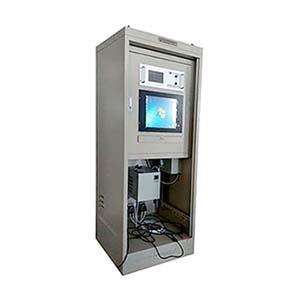
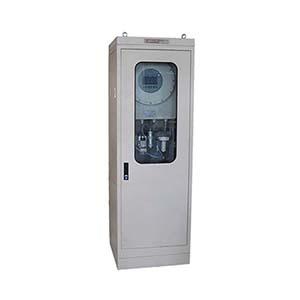
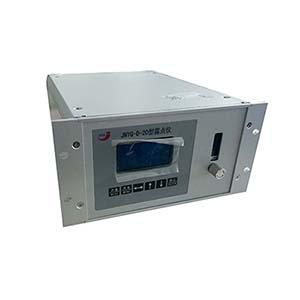
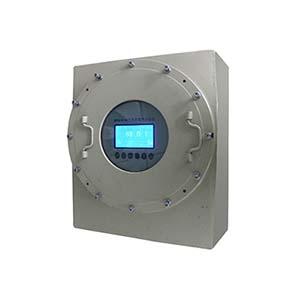
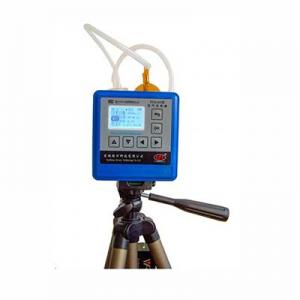
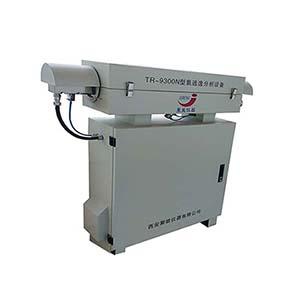
NYQ-THC-51 High-Performance Gas Chromatograph
Product Introduction
The
NYQ-THC-51 High-Performance Gas Chromatograph is an automated online gas
analysis system designed for monitoring non-methane hydrocarbons (NMHCs),
volatile organic compounds (VOCs), methane, and benzene-series compounds.
Equipped with flame ionization detector (FID) or photoionization detector (PID)
technology, it provides flexible configurations for industrial emission
monitoring, organic waste gas recovery, and ambient air quality assessment.
With
electronic pressure control (EPC), electronic flow control (EFC),
temperature-controlled chromatography, and automatic sampling, the NYQ-THC-51
delivers reliable analytical performance for environmental monitoring and
industrial process applications.
Performance Features
1. Precise Gas Control: EPC
maintains carrier gas pressure accuracy better than ±0.05 kPa, while EFC
controls hydrogen and air flow with accuracy better than 0.5% F.S.
2. Flexible Detector
Configuration: Choose FID or PID according to target compounds and
monitoring requirements.
3. High-Precision
Temperature Control: The chromatographic oven provides controllable
temperature accuracy better than ±0.1°C.
4. Automatic Sampling: A diaphragm
pump and sample loop enable constant-volume sampling with low maintenance
requirements.
5. Long-Life Valve System: Imported
six-port or ten-port valves support reliable operation and reduced maintenance.
6. Efficient
Chromatographic Separation: Dual-column parallel backflushing helps reduce
peak tailing and shorten analysis time for methane and NMHC measurements.
7. Intelligent Operation: An
integrated industrial PC, color LCD touchscreen, and automated software
simplify instrument control and data acquisition.
8. Compact
Installation: The standard 25-inch FID configuration fits vertical
instrument cabinets, while the PID configuration is available in a 19-inch
standard enclosure.
Working Principle
The
NYQ-THC-51 uses gas chromatography combined with FID or PID detection to
identify and measure target organic compounds.
• FID configuration: The sample
is separated chromatographically and detected using a flame ionization
detector. It supports methane and NMHC analysis, with detection limits down to
0.1 ppm for methane and 0.05 ppm for NMHC.
• PID configuration: A
photoionization detector measures target aromatic volatile organic compounds,
including benzene, toluene, ethylbenzene, and xylene isomers. The configuration
supports benzene detection limits below 0.1 ppb.
Electronic
gas control, automated sampling, and temperature regulation help maintain
stable operating conditions and repeatable analytical results.
Technical Parameters
FID Configuration
|
Parameter
|
Specification
|
|
Detector
|
High-sensitivity
flame ionization detector (FID)
|
|
Measuring
Range
|
0.1–100
/ 1–1,000 / 10–10,000 ppm, or customized
|
|
Detection
Limit (Methane)
|
0.1
ppm
|
|
Detection
Limit (NMHC)
|
0.05
ppm
|
|
Analytical
Cycle
|
Less
than 1.5 minutes for methane and NMHC; other compounds depend on analytical
conditions
|
|
Reproducibility
|
Less
than 3%
|
|
Zero
Air Consumption
|
200
mL/min
|
|
Hydrogen
Consumption
|
20
mL/min
|
|
Sampling
Method
|
Extractive
sampling with heated sample-line tracing
|
|
Analysis
Method
|
Gas
chromatography
|
|
Operating
Temperature
|
5–35°C
|
|
Signal
Output
|
RS232,
4–20 mA
|
|
Display
and Functions
|
LCD
display, automatic measurement, automatic alarm
|
|
Enclosure
Size
|
25-inch
standard case
|
PID Configuration
|
Parameter
|
Specification
|
|
Detector
|
Photoionization
detector (PID)
|
|
Measuring
Range
|
0–300
ppb, or customized
|
|
Target
Compounds
|
Benzene,
toluene, ethylbenzene, m-xylene, p-xylene, and o-xylene
|
|
Detection
Limit
|
Below
0.1 ppb for benzene
|
|
Reproducibility
|
RSD
≤3% for benzene
|
|
Analytical
Cycle
|
≤15
minutes
|
|
Sample
Volume
|
5–300
mL, adjustable under standard conditions
|
|
Maximum
Thermal Desorption Temperature
|
300°C
|
|
Maximum
Desorption Rate
|
40°C/s
|
|
Carrier
Gas
|
High-purity
nitrogen, greater than 99.995%
|
|
Signal
Output
|
4–20
mA, RS232/RS485, Ethernet
|
|
Enclosure
Size
|
19-inch
standard case
|
Note: FID and PID are alternative detector configurations.
Confirm the selected configuration, applicable measurement ranges, and optional
functions with the manufacturer before ordering.
Application Scenarios
• Petrochemical and
Chemical Industries: Online monitoring of organized VOC emissions
and hydrocarbon-containing exhaust gases.
• Printing and Coating: Monitoring
organic waste gas emissions from printing, spraying, and coating processes.
• Organic
Waste Gas Recovery: Measuring hydrocarbon concentrations in
recovery systems.
• Emission Treatment
Evaluation: Comparing pollutant concentrations before and after
exhaust gas treatment.
• Ambient
Air Monitoring: Measuring benzene-series compounds in petrochemical and
chemical industrial parks.
• Occupational Health: Monitoring
benzene and related aromatic compounds in workplace environments.
NYQ-THC-51 vs. Conventional Gas Analysis Systems
|
Comparison Item
|
NYQ-THC-51
|
Conventional Gas Analysis Systems
|
|
Detection
Configuration
|
Selectable
FID or PID
|
Depends
on instrument configuration
|
|
Gas
Control
|
Electronic
pressure and flow control
|
May
use less integrated control systems
|
|
Temperature
Control
|
Accuracy
better than ±0.1°C
|
Depends
on model
|
|
Sampling
|
Automated
sample-loop sampling
|
May
require more manual intervention
|
|
Chromatographic
Efficiency
|
Dual-column
backflushing available
|
Depends
on separation design
|
|
Data
Interfaces
|
RS232
and 4–20 mA; PID also supports RS485 and Ethernet
|
Varies
by model
|
|
Applications
|
Industrial
emissions, NMHCs, VOCs, and benzene-series monitoring
|
Depends
on target gases and detection method
|
Frequently Asked Questions
1. What gases can the NYQ-THC-51 measure?
The
FID configuration is intended for methane and non-methane hydrocarbon analysis.
The PID configuration targets benzene, toluene, ethylbenzene, and xylene
isomers.
2. What is the difference between the FID and PID
configurations?
FID
is suitable for methane and total non-methane hydrocarbon monitoring, while PID
is designed for sensitive measurement of selected volatile organic compounds,
particularly aromatic compounds.
3. What is the methane detection limit of the FID
configuration?
The
specified methane detection limit is 0.1 ppm. The NMHC detection limit is 0.05
ppm.
4. Can the instrument monitor benzene at sub-ppb levels?
Yes.
The PID configuration specifies a benzene detection limit below 0.1 ppb.
5. How long does a typical analysis take?
The
FID configuration can analyze methane and NMHC in less than 1.5 minutes. The
PID configuration has an analytical cycle of 15 minutes or less.
6. Can the NYQ-THC-51 be integrated into an industrial
monitoring system?
Yes.
The FID configuration supports RS232 and 4–20 mA outputs. The PID configuration
additionally supports RS485 and Ethernet for compatible data acquisition and
control systems.
7. Is the instrument suitable for continuous online
monitoring?
It
is designed for automated online monitoring, including industrial exhaust
emissions, waste gas recovery, and emission-treatment evaluation. Suitability
for a specific installation depends on the sampling system and operating
conditions.
8. What carrier gas is required for the PID configuration?
The
specified carrier gas is high-purity nitrogen with a purity greater than
99.995%.
9. Can the measurement range be customized?
Yes.
The product specifications indicate that measurement ranges can be customized
according to monitoring requirements. Confirm the requested range and
configuration with the manufacturer.