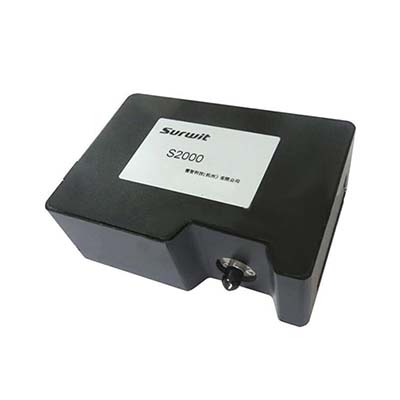
S2000-VIS Fiber Optic Spectrometer
- PRODUCT DETAIL
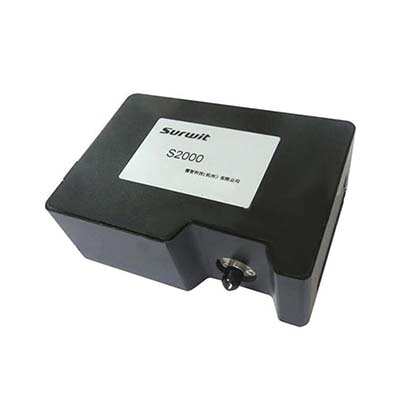
S2000-VIS Fiber Optic Spectrometer
Product Introduction
The
S2000-VIS Fiber Optic Spectrometer is a compact optical analysis instrument
designed for spectral measurement of LEDs, energy-saving lamps, fluorescent
lamps, and other light sources. Featuring a Sony ILX554B 2048-pixel CCD
detector, a 330–1100 nm wavelength range, and 0.2 nm wavelength resolution, it
supports detailed spectral characterization across the visible and
near-infrared regions. Its stable data acquisition system and USB communication
interface help ensure consistent operation, while SpectraPro software provides
advanced spectrum visualization, peak and valley detection, full width at half
maximum (FWHM) analysis, and spectral data export. With USB-powered operation
and a compact design, the S2000-VIS is suitable for laboratory research, optical
testing, and industrial quality control.
Performance Features
• Wide
Spectral Coverage: Measures wavelengths from 330 to 1100 nm for
visible and near-infrared optical analysis.
• High-Resolution
Detection: Provides 0.2 nm wavelength resolution with a 2048-pixel Sony CCD detector.
• Stable Data
Acquisition: Uses a dedicated CCD conversion chip to support baseline
stability despite power supply fluctuations.
• Reliable USB
Communication: Incorporates anti-interference technology and a built-in
USB recovery mechanism to improve communication stability in challenging
electromagnetic environments.
• Low
Stray Light: Stray light below 0.1% supports reliable spectral
measurements.
• High
Linearity: CCD linearity correction of 99.80% supports consistent measurement results.
• Comprehensive
Spectrum Analysis: Supports multiple spectrum displays, spectrum
comparison, snapshots, buffered spectra, peak and valley searching, FWHM
analysis, and coordinate conversion.
• Convenient Data
Management: Records spectra, saves files in SSP format, and supports
exporting spectral data to Excel and Word.
• Compact USB-Powered
Design: Operates directly from a computer's 5 V USB power supply without requiring a
separate power adapter.
• Fiber-Optic
Connectivity: Uses an SMA905 optical interface for integration with
compatible fiber-optic accessories and light collection systems.
Working Principle
The
S2000-VIS Fiber Optic Spectrometer operates by separating incoming light into
its component wavelengths and measuring their intensity with a CCD detector.
Light enters through the SMA905 fiber-optic interface and passes through a 30
μm slit before reaching the diffraction grating. The grating disperses the
light across the 2048-pixel Sony ILX554B CCD sensor, which converts the optical
signal into electrical data. A 16-bit analog-to-digital converter digitizes the
signal for processing by the connected computer. SpectraPro software displays
the resulting spectrum and supports detailed analysis of spectral peaks,
valleys, FWHM, and other wavelength-dependent characteristics.
Technical Parameters
Parameter
Specification
Model
S2000-VIS
Wavelength
Range
330–1100
nm
Detector
Sony
ILX554B, 2048-pixel CCD
Slit
Width
30
μm
Grating
600
lines/mm, specified at 250 nm
Wavelength
Resolution
0.2
nm
Signal-to-Noise
Ratio
300:1
Stray
Light
<0.1%
CCD
Linearity Correction
99.80%
Wavelength
Repeatability Error
<0.2
nm
Absolute
Wavelength Error
<0.5
nm
A/D
Conversion
16-bit
high-precision ADC
Minimum
Exposure Time
3
ms
Maximum
Exposure Time
60
s
Power
Supply
5
V DC via PC USB port
Power
Consumption
95
mA at 5 V (approximately 0.475 W)
Communication
Interface
USB
1.1 or USB 2.0
Fiber-Optic
Interface
SMA905
Software
SpectraPro
Operating
Temperature
−20°C
to 60°C
Dimensions
115
× 80 × 40 mm
Weight
500
g
Application Scenarios
• LED
Spectral Analysis: Measures LED emission spectra to support
optical characterization and quality inspection.
• Energy-Saving Lamp
Testing: Analyzes spectral output from energy-efficient lighting products.
• Fluorescent Lamp
Analysis: Evaluates wavelength distribution and spectral characteristics of fluorescent
light sources.
• Lighting
Product Quality Control: Supports spectral comparison, peak
identification, and consistency testing during production.
• Optical Research
Laboratories: Enables spectral acquisition and analysis for photonics
experiments and light-source research.
• Industrial
Optical Measurement: Integrates with compatible fiber-optic systems
for customized optical inspection and monitoring.
• Educational
and Scientific Research: Provides spectral visualization and
quantitative analysis tools for laboratory experiments.
S2000-VIS vs. Conventional Fiber Optic Spectrometers
Comparison Item
S2000-VIS
Conventional Fiber Optic Spectrometer
Wavelength
Range
330–1100
nm
Depends
on model
Detector
Sony
ILX554B, 2048-pixel CCD
Depends
on detector configuration
Wavelength
Resolution
0.2
nm
Model-dependent
Signal-to-Noise
Ratio
300:1
Model-dependent
Stray
Light
<0.1%
Model-dependent
Minimum
Exposure Time
3
ms
Depends
on model
Maximum
Exposure Time
60
s
Depends
on model
Data
Interface
USB
1.1 or USB 2.0
Depends
on model
Optical
Interface
SMA905
Depends
on model
Spectrum
Analysis Software
SpectraPro
Depends
on software
Power
Supply
5
V USB-powered
USB
or external power, depending on model
Note: Specifications of conventional spectrometers vary by
manufacturer and configuration. Verify individual model specifications before
making a purchasing decision.
Frequently Asked Questions
1. What is the S2000-VIS Fiber Optic Spectrometer used for?
It
is designed for spectral analysis of LEDs, energy-saving lamps, fluorescent
lamps, and other compatible light sources, as well as optical research and
industrial testing.
2. What is the wavelength range of the S2000-VIS?
The
spectrometer covers 330–1100 nm, enabling measurements across the visible and
near-infrared regions.
3. What detector does the S2000-VIS use?
It
uses a Sony ILX554B CCD detector with 2048 pixels for spectral signal
acquisition.
4. What is the wavelength resolution of this spectrometer?
The
specified wavelength resolution is 0.2 nm, supporting detailed analysis of
spectral features.
5. Does the S2000-VIS require a separate power supply?
No.
It operates on 5 V DC supplied through a computer's USB port, with a specified
power consumption of 95 mA.
6. What spectrum analysis functions does SpectraPro
provide?
The
software supports multiple spectrum displays, spectrum comparison, snapshots,
buffered spectra, peak and valley searching, FWHM analysis, coordinate
conversion, spectral recording, and data export to Excel and Word.
7. What file format is used to save spectral data?
The
software saves spectra in SSP format. Saved files can be reopened by
double-clicking them or moving them into the software window.
8. How does the instrument maintain stable measurements?
Its
dedicated CCD conversion chip is designed to support baseline stability under
power supply fluctuations. Anti-interference components and a USB recovery
mechanism also help maintain reliable communication with the computer.
9. Can the S2000-VIS be integrated into an existing optical
system?
Yes.
Its SMA905 fiber-optic interface, USB connectivity, and compact dimensions
support integration into compatible optical measurement systems. Compatibility
with specific probes and accessories should be confirmed before installation.