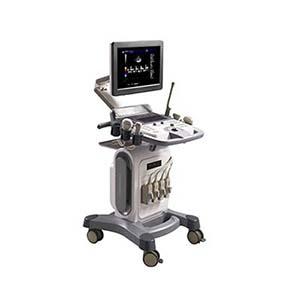
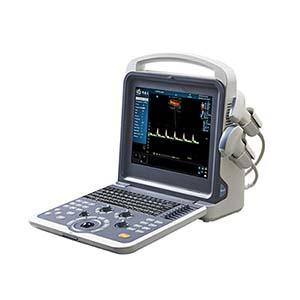
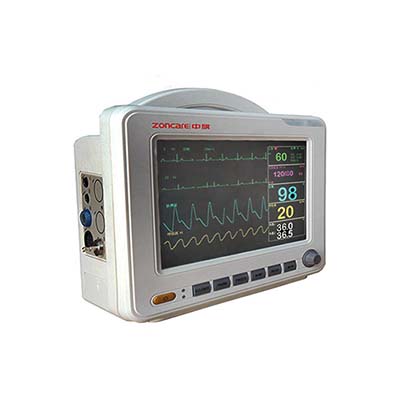
PM-7000A ECG Monitor
- PRODUCT DETAIL
PM-7000A ECG Monitor
Product Introduction
The
PM-7000A ECG Monitor is a multiparameter patient monitoring system designed for
continuous monitoring of essential physiological parameters. Equipped with a
15-inch TFT display, an intelligent voice alarm system, and wireless networking
capabilities, it provides healthcare professionals with clear monitoring
information and timely alerts.
The
PM-7000A supports ECG, respiration (RESP), temperature (TEMP), non-invasive
blood pressure (NIBP), blood oxygen saturation (SpO2), and pulse rate (PR)
monitoring. With storage for up to 720 hours of trend data and 2 hours of full
waveform data, it helps medical staff review patient status and track
physiological changes over time.
Optional
modules, including dual invasive blood pressure (IBP), carbon dioxide (CO2),
CSM/IOC, multi-gas monitoring, and fetal monitoring, allow the system to be
configured for different clinical requirements.
Performance Features
• 15-inch TFT Display: Provides a
large viewing area for patient parameters and monitoring waveforms.
• Intelligent
Voice Alarm: Delivers audible voice alerts to help healthcare
professionals recognize alarm conditions promptly.
• Extended Data Storage: Stores up
to 720 hours of trend data and 2 hours of full waveform data for retrospective
review.
• Wireless Networking: Supports
wireless network connectivity for flexible clinical deployment.
• 14-Language Interface: Offers
multilingual operation, including English, French, German, Spanish, and
Portuguese, among others.
• Comprehensive Parameter
Monitoring: Supports ECG, RESP, TEMP, NIBP, SpO2, and PR monitoring.
• Expandable
Monitoring Functions: Optional modules support additional
physiological and respiratory gas monitoring applications.
• Flexible Configuration: Optional
touchscreen operation, wired networking, and recorder functionality are
available.
Working Principle
The
PM-7000A ECG monitor acquires physiological signals through compatible sensors
and monitoring accessories. The system processes these signals to calculate and
display relevant patient parameters and waveforms.
• ECG: Acquires
cardiac electrical signals to display electrocardiographic waveforms and heart
rate.
• RESP: Monitors
respiratory activity and calculates respiratory rate.
• TEMP: Measures
body temperature using compatible temperature probes.
• NIBP: Measures
blood pressure non-invasively using an appropriate cuff-based measurement
system.
• SpO2 and PR: Uses pulse
oximetry to estimate peripheral oxygen saturation and pulse rate.
• Optional Modules: Expand
monitoring capabilities to include invasive blood pressure, CO2, multi-gas
analysis, and other supported parameters.
The
monitor displays real-time measurements, generates alarms according to
configured monitoring limits, and stores trend and waveform data for clinical
review.
Technical Parameters
Parameter
Specification
Model
PM-7000A
Product
Type
Multiparameter
ECG Patient Monitor
Display
15-inch
TFT
Standard
Monitoring Parameters
ECG,
RESP, TEMP, NIBP, SpO2, PR
Trend
Data Storage
Up
to 720 hours
Full
Waveform Storage
Up
to 2 hours
Alarm
System
Human
voice alarm
Network
Connectivity
Wireless
network; wired network optional
Languages
14
languages
Optional
Monitoring Modules
Dual
IBP, CO2, CSM/IOC, multi-gas, fetal monitoring
Optional
Recording
Recorder
Optional
Operation
Touchscreen
Note: Detailed measurement ranges, accuracy specifications,
alarm limits, supported accessories, and module compatibility should be
confirmed with the manufacturer.
Application Scenarios
• Hospital Wards: Supports
routine monitoring of patients' vital signs.
• Emergency Departments: Provides
continuous physiological monitoring and audible alarm notifications.
• Intensive Care Units: Supports
comprehensive monitoring when configured with the required optional modules.
• Operating
and Recovery Rooms: Can be configured to monitor relevant
physiological parameters during perioperative care.
• Clinical Observation
Areas: Helps medical staff monitor patient trends and review stored waveforms.
• Specialized
Monitoring Departments: Optional CO2, multi-gas, invasive pressure,
and fetal monitoring functions support specific clinical needs when
appropriately configured.
PM-7000A ECG Monitor Comparison
Feature
PM-7000A
Basic Patient Monitor
Display
15-inch
TFT
Varies
by model
Standard
Parameters
ECG,
RESP, TEMP, NIBP, SpO2, PR
Depends
on configuration
Voice
Alarm
Supported
Model-dependent
Trend
Storage
Up
to 720 hours
Model-dependent
Full
Waveform Storage
Up
to 2 hours
Model-dependent
Networking
Wireless;
wired optional
Model-dependent
Language
Support
14
languages
Model-dependent
Expandability
Multiple
optional monitoring modules
Model-dependent
Touchscreen
Optional
Model-dependent
Recorder
Optional
Model-dependent
Frequently Asked Questions
1. What parameters does the PM-7000A ECG monitor measure?
The
standard configuration supports ECG, respiration, temperature, non-invasive
blood pressure, SpO2, and pulse rate monitoring.
2. How long can the PM-7000A store patient data?
It
can store up to 720 hours of trend data and 2 hours of full waveform data.
3. Does the PM-7000A support voice alarms?
Yes.
It features a human voice alarm function to help alert medical staff to
monitoring events.
4. Can the PM-7000A connect to a hospital network?
Yes.
Wireless networking is supported, and wired networking is available as an
option.
5. How many languages does the monitor support?
The
monitor supports 14 languages, including English, French, German, Spanish, and
Portuguese.
6. Which optional monitoring functions are available?
Options
include dual IBP, CO2, CSM/IOC, multi-gas monitoring, and fetal monitoring.
Availability depends on the selected configuration.
7. Is a touchscreen available for the PM-7000A?
Yes.
Touchscreen operation is an optional feature.
8. Can the monitor print or record monitoring data?
A
recorder is available as an optional configuration. Its supported recording
functions should be confirmed with the supplier.
9. Where can the PM-7000A ECG monitor be used?
Depending
on its configuration and applicable medical-device approvals, it may be used in
hospital wards, emergency departments, intensive care units, recovery rooms,
and other clinical monitoring environments.
NEXT:CS2350 Bipotentiostat / Dual-Channel Electrochemical Workstation