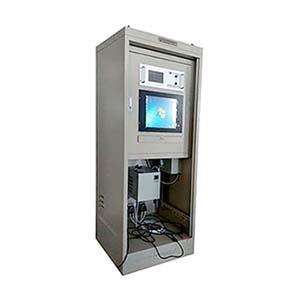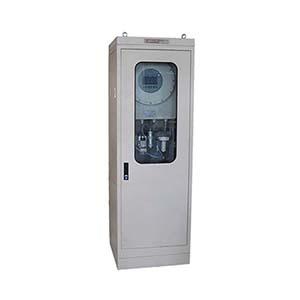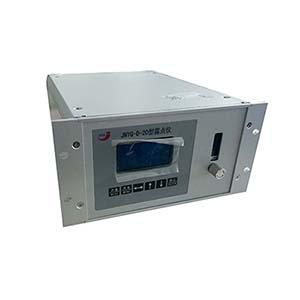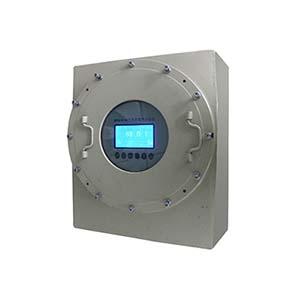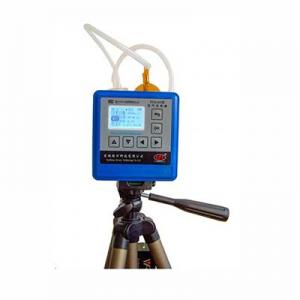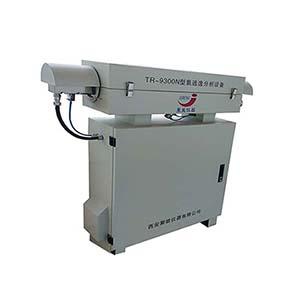
JNYQ-S-81 Flue Gas Analyzer

- PRODUCT DETAIL
JNYQ-S-81 Flue Gas Analyzer
Product Introduction
The
JNYQ-S-81 flue gas analyzer is an online gas analysis instrument designed for
environmental monitoring and industrial process control. Based on ultraviolet
(UV) absorption spectroscopy and chemometric algorithms, it measures the
concentrations of SO₂, NO, NO₂, O₂, and other
configurable gas components.
Featuring
a long-life pulsed xenon lamp, modular architecture, digital signal processing,
and fast response, this analyzer supports continuous emissions monitoring,
industrial process optimization, and gas safety monitoring. Customized
configurations can measure up to four gas components in one instrument.
Performance Features
• Advanced
UV Spectroscopy: Combines UV absorption technology with chemometric
algorithms for gas concentration measurement.
• Long-Life Light Source: Uses a
pulsed xenon lamp with a service life of up to 10 years under specified
operating conditions.
• Reliable Optical
Design: No moving optical parts, reducing mechanical wear and maintenance requirements.
• Modular Architecture: Facilitates
system integration and configuration.
• Digital Signal
Processing: Provides processed measurement data and linear measurement
output.
• Multiple
Signal Outputs: Supports audible, visual, display, relay, and
communication signals.
• Flexible Gas
Configuration: Supports combinations of different target gases, with up
to four components per instrument.
• Fast
Response: T90 ≤ 20 seconds when gas passes directly through the measurement chamber.
Working Principle
The
JNYQ-S-81 uses ultraviolet absorption spectroscopy to determine gas
concentrations. UV light passes through the sample gas, and target gas
molecules absorb light at characteristic wavelengths. The analyzer processes
the resulting absorption signals using chemometric algorithms to calculate gas
concentrations and convert them into measurement outputs.
The
system supports online monitoring of selected gas components, including SO₂, NO, NO₂, and O₂, depending on the instrument configuration.
Technical Parameters
Parameter
Specification
Model
JNYQ-S-81
Measurement
Principle
UV
absorption spectroscopy
Target
Gases
SO₂, NO, NO₂, O₂, and other
configurable gases
SO₂ Measuring Range
0–50,
0–300, 0–3,000 μmol/mol and above; optional dual range of 0–500–3,000
μmol/mol
NOx
Measuring Range
Same
range options as specified for SO₂;
configurable
O₂ Measuring Range
0–25%
Measurement
Accuracy
≤
±1% F.S.
Zero
Drift
≤
±1% F.S./7 days
Span
Drift
≤
±1% F.S./7 days
Sample
Gas Flow Rate
1.5
± 0.5 L/min
Response
Time
T90
≤ 20 seconds when gas passes directly through the measurement chamber
Measurement
Chamber Pressure
≤
20 kPa
Contact
Capacity
120
VAC, 1 A; 24 VDC, 1 A
Analog
Output
Optional
4–20 mA or 0–10 mA DC
Warm-Up
Time
≤
30 minutes
Operating
Temperature
−5°C
to +45°C
Operating
Humidity
≤
90% RH
Power
Supply
220
VAC ±10%, 50 Hz ±5%
Installation
Dimensions
19-inch
× 3U × 360 mm or 19-inch × 4U × 360 mm
Light
Source
Pulsed
xenon lamp, service life up to 10 years
Maximum
Gas Components
Up
to 4, subject to configuration
Note: Measuring ranges and gas combinations are
configurable. Confirm the required gas components, range, and installation
dimensions when ordering.
Application Scenarios
1. Power Plant CEMS: Continuous
monitoring of SO₂, NO, NO₂, and O₂ in flue gas
emissions.
2. Flue Gas
Desulfurization: Monitoring SO₂ and O₂ during desulfurization processes.
3. Flue Gas Denitrification: Monitoring
NO, NO₂, O₂, and NH₃ where
supported by the selected configuration.
4. Waste Incineration: Continuous
monitoring of flue gas emissions from waste incineration facilities.
5. Chlor-Alkali and
Titanium Dioxide Production: Trace Cl₂ analysis in applicable process streams.
6. Sulfur Recovery: Analysis of SO₂ and H₂S in process
gas.
7. Natural Gas Purification: Monitoring
trace H₂S during gas purification.
8. Coal Chemical Processing: CH₃I analysis in applicable process streams.
9. Ambient Air Monitoring: Monitoring
selected gases such as SO₂, NO₂, and O₃ with
suitable configurations.
JNYQ-S-81 vs. Conventional Flue Gas Analyzers
Comparison Factor
JNYQ-S-81
Conventional Gas Analyzers
Measurement
Technology
UV
absorption spectroscopy with chemometric algorithms
Varies
by technology
Optical
Components
No
moving optical parts
Depends
on instrument design
Light
Source
Pulsed
xenon lamp
Depends
on instrument type
Response
Time
T90
≤ 20 seconds under specified conditions
Depends
on measurement method
Gas
Configuration
Up
to four configurable components
Depends
on model
Signal
Output
Analog,
relay, and multiple status signals
Depends
on configuration
Applications
CEMS,
industrial process control, and environmental monitoring
Depends
on application and configuration
Frequently Asked Questions
1. What gases can the JNYQ-S-81 flue gas analyzer measure?
It
can be configured to measure SO₂, NO, NO₂, O₂, and other
target gases. The available components depend on the selected configuration and
application requirements.
2. What is the measurement principle of the JNYQ-S-81?
It
uses UV absorption spectroscopy combined with chemometric algorithms to
calculate gas concentrations from characteristic absorption signals.
3. Can the analyzer be used for continuous emissions
monitoring?
Yes.
It is designed for online gas analysis in applications such as power plant
CEMS, waste incineration emissions monitoring, and industrial environmental
monitoring.
4. What is the response time of the JNYQ-S-81?
The
specified response time is T90 ≤ 20 seconds when the sample gas passes directly
through the measurement chamber.
5. What is the measurement accuracy?
The
specified measurement accuracy is ≤ ±1% of full scale (F.S.).
6. How stable are the measurement results?
Both
zero drift and span drift are specified at ≤ ±1% F.S. over seven days.
7. Does the analyzer support analog signal output?
Yes.
It offers an optional 4–20 mA or 0–10 mA DC analog output, along with relay and
other status or communication signals.
8. Can the JNYQ-S-81 measure multiple gases simultaneously?
Yes.
The analyzer can be configured for up to four gas components, subject to
measurement requirements and instrument configuration.
9. What operating conditions does the analyzer require?
The
specified operating temperature is −5°C to +45°C, with relative humidity ≤ 90%
RH. The power supply is 220 VAC ±10%, 50 Hz ±5%.