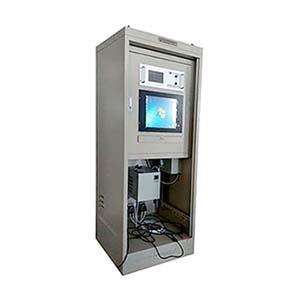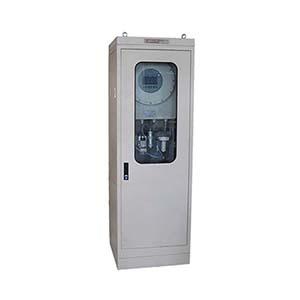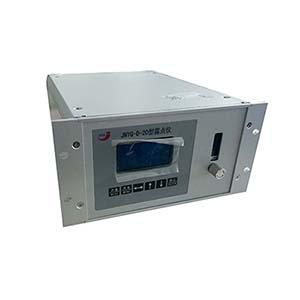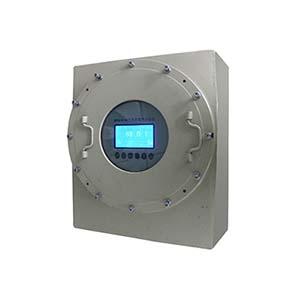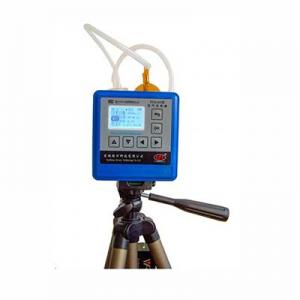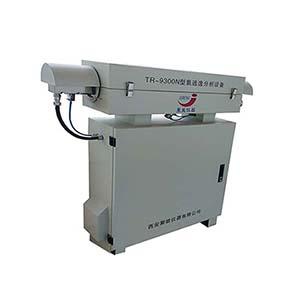
JNYQ-I-41 High-Quality Professional SO₂ Gas Analyzer

- PRODUCT DETAIL
JNYQ-I-41 High-Quality Professional SO₂ Gas Analyzer
Product Introduction
The
JNYQ-I-41 SO₂ Gas Analyzer is an infrared gas
analysis instrument designed for sulfur dioxide (SO₂) measurement in environmental monitoring, industrial
process control, and laboratory applications. It uses non-dispersive infrared
(NDIR) technology to analyze gas concentration and provides digital signal
processing for stable, linearized measurement output.
With
multiple signal and alarm options, selectable RS232 or RS485 communication, and
compatibility with integrated multi-gas systems, the JNYQ-I-41 supports
continuous gas monitoring in suitable applications. It can be used for
atmospheric pollution monitoring, industrial emissions analysis, petroleum and
chemical processes, and public air quality monitoring.
Performance Features
1. NDIR Infrared
Measurement: Uses non-dispersive infrared technology for sulfur dioxide
gas analysis.
2. Advanced Digital
Processing: Processes measurement signals digitally to support
reliable concentration readings.
3. Linearized Output: Provides
linearized measurement output for monitoring and control systems.
4. Multiple Alarm and
Signal Options: Supports sound, light, visual indication, relay, and
message-based alerts, depending on configuration.
5. Multi-Gas System
Integration: Can be combined with compatible gas analyzers under the
same operating conditions, supporting up to four groups in one instrument
system.
6. Flexible
Communication: Selectable RS232 or RS485 communication interfaces.
7. Analog Current
Output: Supports selectable 0–20 mA or 4–20 mA output with a specified load of 500 Ω.
8. Upper and Lower Limit Control: Provides
passive contact outputs for upper- and lower-limit alarm control.
Working Principle
The
JNYQ-I-41 uses the non-dispersive infrared (NDIR) principle to measure sulfur
dioxide concentration. SO₂ absorbs
infrared radiation at characteristic wavelengths. The analyzer measures the
change in infrared energy passing through the gas sample and uses the
relationship between absorption and gas concentration to calculate the SO₂ level.
The
resulting signal is processed digitally and converted into a linearized
concentration output. Alarm and communication functions can transmit
measurement information or alert signals to compatible monitoring and control
systems.
Technical Parameters
Parameter
Specification
Model
JNYQ-I-41
Target
Gas
Sulfur
dioxide (SO₂)
Measurement
Principle
Non-dispersive
infrared (NDIR)
Accuracy
≤
±1% FS
Zero
Drift
±1%
FS / 7 days
Span
Drift
±1%
FS / 7 days
Linearity
Error
±1%
FS
Repeatability
≤
±1%
Response
Time
≤
15 seconds (T90)
Power
Consumption
Less
than 80 W
Power
Supply
220
VAC ±10%, 50 Hz ±5%
Current
Output
Selectable
0–20 mA or 4–20 mA; 500 Ω load
Communication
Interface
RS232
or RS485, selectable
Control
Output
Passive
upper- and lower-limit contact output
Alarm
Options
Sound,
light, visual indication, relay, and message, subject to configuration
Multi-Gas
Integration
Up
to four groups with compatible analyzers under the same conditions
Note: The supplied specifications do not include the SO₂ measurement range, operating temperature and
humidity limits, dimensions, or housing material. Confirm these details with
the manufacturer before purchase or system integration.
Application Scenarios
• Environmental
Monitoring: Measurement of SO₂ in ambient
air and suitable environmental monitoring systems.
• Industrial Emissions
Monitoring: Monitoring sulfur dioxide in pollution-source emissions,
subject to sampling-system and application requirements.
• Petroleum and Chemical
Industries: Gas analysis for applicable industrial process control and
safety monitoring.
• Public Air Quality
Monitoring: Supporting air quality assessment where the analyzer's
range and performance meet project requirements.
• Laboratory
Gas Analysis: Measuring SO₂
concentration in controlled research and testing environments.
• Combustion
Testing: Analyzing sulfur dioxide in combustion-related gas samples where the sampling
system is compatible.
• Multi-Gas Monitoring
Systems: Integration with compatible gas analyzers for measuring multiple gas components
in a unified system.
JNYQ-I-41 vs. General SO₂ Gas Analyzers
Comparison Item
JNYQ-I-41 SO₂ Analyzer
General SO₂ Gas Analyzers
Measurement
Principle
NDIR
infrared
May
use infrared, electrochemical, or other technologies
Signal
Processing
Digital
processing
Depends
on model
Output
Selectable
0–20 mA or 4–20 mA
Depends
on model
Communication
Selectable
RS232 or RS485
Depends
on model
Alarm
Functions
Multiple
signal and alarm options
Depends
on configuration
Multi-Gas
Integration
Up
to four groups with compatible analyzers
Depends
on system design
Best
Application Fit
SO₂ monitoring where
NDIR measurement and available interfaces meet requirements
Depends
on target range, environment, and monitoring needs
Frequently Asked Questions
1. What gas does the JNYQ-I-41 measure?
It
is designed to measure sulfur dioxide (SO₂) using non-dispersive infrared technology.
2. How does the NDIR SO₂ analyzer work?
It
measures infrared absorption by SO₂ at
characteristic wavelengths and uses the absorption signal to determine gas
concentration.
3. What is the accuracy of the JNYQ-I-41?
The
specified accuracy is ≤ ±1% of full scale (FS). The measurement range is not
provided in the supplied information and should be confirmed with the
manufacturer.
4. What output signals are available?
The
analyzer supports selectable 0–20 mA or 4–20 mA current output, with a
specified load of 500 Ω.
5. Does the JNYQ-I-41 support digital communication?
Yes.
RS232 or RS485 communication can be selected according to the required
configuration.
6. Can the analyzer provide alarms?
The
supplied information lists sound, light, visual, relay, and message-based
alerts, along with upper- and lower-limit passive contact outputs. Confirm the
available alarm functions for the selected model.
7. Can the JNYQ-I-41 be integrated into a multi-gas system?
Yes.
It can be combined with compatible analyzers under the same conditions, with up
to four groups supported according to the supplied specifications.
8. Is the JNYQ-I-41 suitable for industrial emissions
monitoring?
It
is listed for environmental monitoring and pollution-source emissions
applications. Confirm the measurement range, sample conditioning requirements,
and applicable regulatory or certification requirements before using it for
compliance monitoring.