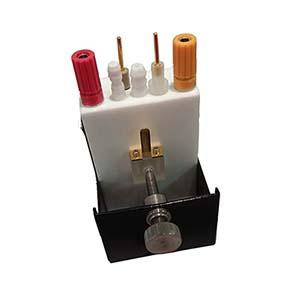
C00-2 Relatively Sealed General Electrolytic Cell

- PRODUCT DETAIL
C00-2 Relatively Sealed General Electrolytic Cell
Product Introduction
The
C00-2 Relatively Sealed General Electrolytic Cell is designed for laboratory
electrochemical experiments requiring a relatively enclosed reaction
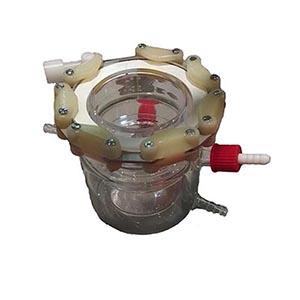
environment. Commonly used with a three-electrode system, it features a glass
cell body and a PTFE cover with a screw-compression sealing structure to
improve sealing performance around the cell opening and electrode connections.
Available
in standard capacities from 30 mL to 500 mL, the C00-2 can also be customized
to meet specific experimental requirements. It supports a sand-core salt bridge
or Luggin capillary, as well as gas inlet and outlet connections with an
integrated gas-sparging device for controlled-atmosphere experiments. A
double-layer configuration is also available, allowing circulating thermostatic
water to regulate the electrolyte temperature.
Performance Features
• Relatively Sealed
Structure: Screw-compression sealing rings secure the glass cell cover and electrode
connections, providing a relatively enclosed experimental environment.
• PTFE Cover: The cover
is made of polytetrafluoroethylene (PTFE), offering chemical resistance for
laboratory applications.
• Flexible Capacity: Standard
cell volumes range from 30 mL to 500 mL, with customized capacities available.
• Three-Electrode
Compatibility: Designed for conventional three-electrode electrochemical
experiments.
• Optional Salt Bridge or
Luggin Capillary: Supports either a sand-core salt bridge or a
Luggin capillary according to experimental requirements.
• Gas Atmosphere Control: Equipped
with gas inlet and outlet ports. The inlet includes a gas-sparging device to
support atmosphere protection.
• Optional Temperature
Control: The double-layer version features a water-circulation jacket for maintaining a
stable electrolyte temperature.
• Multiple Cover Sizes: Available
inner-threaded cover diameters include approximately 35 mm, 50 mm, 60 mm, and
70 mm, depending on cell volume.
Working Principle
The
C00-2 Relatively Sealed General Electrolytic Cell provides an enclosed
environment for electrochemical reactions and measurements. In a typical
three-electrode configuration, the working electrode, reference electrode, and
counter electrode are installed through the PTFE cover and secured using
screw-compression sealing rings.
During
experiments, an electrochemical workstation controls the applied potential or
current and records the electrochemical response. The gas inlet, equipped with
a sparging device, introduces protective or reactive gas into the cell, while
the outlet allows gas to escape and helps maintain the desired experimental
atmosphere.
For
temperature-sensitive measurements, the double-layer version circulates
thermostatic water through the outer jacket, helping maintain a stable
temperature inside the cell.
Technical Parameters
Parameter
Specification
Model
C00-2
Product
Type
Relatively
Sealed General Electrolytic Cell
Cell
Volume
30–500
mL
Customization
Custom
capacities available
Electrode
Configuration
Three-electrode
system
Cell
Structure
Relatively
sealed design
Sealing
Method
Screw-compression
sealing rings
Cover
Material
PTFE
Salt
Bridge Configuration
Sand-core
salt bridge or Luggin capillary
Gas
Connections
Gas
inlet and outlet ports
Gas
Inlet
Integrated
gas-sparging device
Temperature
Control
Optional
double-layer water jacket
Inner-Threaded
Cover Diameters
Approximately
35, 50, 60, and 70 mm
Cover
Dimensions
Vary
according to cell volume
Application Scenarios
The
C00-2 Relatively Sealed General Electrolytic Cell is suitable for laboratory
research and electrochemical testing applications requiring improved
environmental control.
• Electrochemical
Research: Three-electrode measurements and fundamental electrochemical experiments.
• Corrosion Studies: Investigation of metal corrosion behavior under controlled atmospheric
conditions.
• Electrocatalysis: Evaluation
of catalytic electrode materials and electrochemical reaction performance.
• Electrode Material
Testing: Characterization and performance evaluation of different electrode materials.
• Gas-Protected
Experiments: Electrochemical testing under protective gas or other
controlled atmospheres.
• Temperature-Controlled
Research: Experiments requiring stable electrolyte temperatures.
• Battery
and Energy Materials Research: Electrochemical evaluation of
functional materials and reaction systems.
C00-2 vs. C001 Open Conventional Electrolytic Cell
Comparison
C00-2 Relatively Sealed Cell
C001 Open Conventional Cell
Basic
Structure
Relatively
sealed
Open
Cell
Material
Glass
High-borosilicate
glass
Cover
PTFE
cover
Open
configuration
Sealing
Method
Screw-compression
sealing rings
Flanged
opening
Standard
Volume
30–500
mL
30–500
mL
Electrode
Configuration
Three-electrode
system
Three-electrode
system
Salt
Bridge
Optional
Optional
Luggin
Capillary
Optional
Optional
Gas
Inlet and Outlet
Standard
configuration
Optional
Gas
Sparging Device
Included
at gas inlet
Depends
on configuration
Temperature
Control
Optional
double-layer design
Optional
double-layer design
Typical
Application
Relatively
enclosed, atmosphere-controlled experiments
Conventional
open-cell experiments
Frequently Asked Questions (FAQ)
1. What is the C00-2 Relatively Sealed General Electrolytic
Cell used for?
It
is designed for electrochemical experiments requiring a relatively enclosed
environment, including corrosion testing, electrocatalysis research, electrode
characterization, and controlled-atmosphere measurements.
2. What is the standard capacity of the C00-2 electrolytic
cell?
The
standard capacity ranges from 30 mL to 500 mL. Customized capacities can also
be provided according to experimental requirements.
3. What material is used for the C00-2 cell cover?
The
cover is made of PTFE (polytetrafluoroethylene), which offers good chemical
resistance for laboratory electrochemical applications.
4. How does the C00-2 achieve its sealing performance?
The
glass cell and PTFE cover are secured using screw-compression sealing rings.
The electrode connections also use sealing screw rings to create a relatively
enclosed system.
5. Does the C00-2 support gas protection?
Yes.
The cell is equipped with gas inlet and outlet ports. The gas inlet includes a
sparging device for introducing protective or experimental gases.
6. Can the C00-2 be equipped with a salt bridge or Luggin
capillary?
Yes.
It can be configured with either a sand-core salt bridge or a Luggin capillary
according to the requirements of the experiment.
7. Does the C00-2 support constant-temperature experiments?
Yes.
The optional double-layer configuration features a jacket through which
circulating thermostatic water flows to regulate the temperature of the
electrolyte solution.
8. What PTFE cover sizes are available for the C00-2?
The
commonly used inner-threaded cover diameters are approximately 35 mm, 50 mm, 60
mm, and 70 mm. The appropriate size depends on the volume and configuration of
the electrolytic cell.
9. What is the difference between the C00-2 and C001
electrolytic cells?
The
C00-2 features a relatively sealed structure with a PTFE cover, sealing rings,
and standard gas inlet and outlet connections. The C001 uses an open-cell
design and is more suitable for conventional electrochemical experiments
without the same sealing requirements.