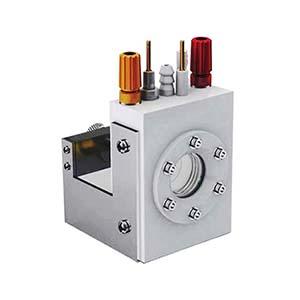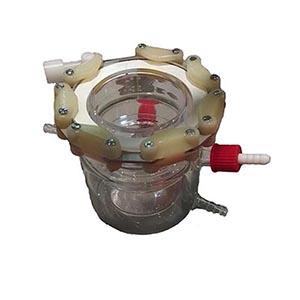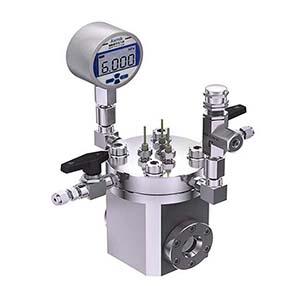
C007-2 2H Absolutely Sealed Replaceable Membrane Electrochemical Cell

- PRODUCT DETAIL
C007-2 2H Absolutely Sealed Replaceable Membrane
Electrochemical Cell
Product Introduction
The
C007-2 2H Absolutely Sealed Replaceable Membrane Electrochemical Cell is
designed for advanced electrochemical experiments requiring strict atmosphere
control and separated anode and cathode chambers. Constructed from
high-borosilicate glass, it features a fully sealed structure, replaceable
ion-exchange membrane, integrated aeration devices, and valve-based vacuum and
pressure control.
The
anode and cathode chambers are separated by an ion-exchange membrane and
connected through a sealed structure that allows convenient membrane
replacement. The working and reference electrodes are positioned in the same
chamber to help reduce uncompensated solution resistance. Available in
single-layer and double-layer configurations, the cell supports both standard
and temperature-controlled electrochemical experiments.
Performance Features
• High-Borosilicate
Glass Construction: Provides a robust glass vessel for laboratory
electrochemical testing.
• Absolutely
Sealed Design: The cell uses valves, dedicated electrode feedthroughs,
and sealing structures to maintain a controlled internal atmosphere.
• Vacuum and Pressure
Control: The cell can be evacuated through its valve and can operate under slight
positive pressure, subject to the specified safety limits.
• Replaceable
Ion-Exchange Membrane: Separates the anode and cathode chambers. The
sealed, linked chamber structure facilitates membrane replacement.
• Custom Electrode
Matching: Electrodes must be customized to fit the cell and its sealing arrangement.
• Sealed
Electrode Feedthroughs: Electrodes are inserted and removed through
dedicated connection ports in the cover, providing a sealed interface.
• Adjustable
Electrode Alignment: The glass sealing section features an
external-threaded port and a 360-degree rotatable PTFE inner core. This helps
align the electrode with the optical window. A POM outer cap provides
compression sealing.
• Integrated
Aeration System: Gas can be introduced below the electrolyte surface.
Different aeration-device designs can be selected according to the experiment,
such as direct aeration for carbon dioxide reduction and a T-shaped aeration
device for nitrogen reduction.
• Overhead Single-Layer
Design: Helps minimize residual solution and reduce liquid retention in the cell
structure.
• Optional
Temperature Control: The double-layer version includes a water
jacket for circulating constant-temperature water and maintaining a stable
electrolyte temperature.
Working Principle
The
C007-2 uses a two-chamber electrochemical configuration in which an
ion-exchange membrane separates the anode and cathode compartments. The
membrane allows selective ionic transport while keeping the two electrolyte
chambers physically separated, supporting experiments that require controlled
reaction environments.
A
potentiostat or other electrochemical testing system connects to the customized
electrodes to apply or measure electrical signals. The working and reference
electrodes are located in the same chamber to help reduce uncompensated
resistance (iR drop).
The
cell's valves allow the internal atmosphere to be controlled through evacuation
or slight pressurization. Its aeration device introduces selected gases below
the liquid surface to establish the required reaction atmosphere. For
temperature-sensitive experiments, circulating water flows through the outer
jacket of the double-layer version to regulate the electrolyte temperature.
Technical Parameters
Parameter
Specification
Model
C007-2
Product
Type
2H
Absolutely Sealed Replaceable Membrane Electrochemical Cell
Cell
Material
High-borosilicate
glass
Cell
Structure
Two-chamber
design
Chamber
Separation
Replaceable
ion-exchange membrane
Sealing
Type
Absolutely
sealed system
Atmosphere
Control
Valves
and aeration devices
Vacuum
Function
Evacuation
through the valve
Pressure
Function
Slight
positive-pressure operation
Maximum
Positive Pressure
≤0.5
MPa for safety
Vacuum
Specification
Source
specification states less than 1 MPa; confirm the intended vacuum rating
before operation
Electrode
Configuration
Customized
electrodes matched to the cell
Electrode
Feedthrough
Dedicated
sealed ports in the cover
Electrode
Alignment
360°
rotatable PTFE inner core
Electrode
Sealing
POM
outer cap compression structure
Working/Reference
Electrode Arrangement
Located
in the same chamber to help reduce iR drop
Gas
Introduction
Below-liquid-surface
aeration
Single-Layer
Version
Overhead
structure to reduce solution retention
Double-Layer
Version
Temperature-control
water jacket
Temperature
Control
Circulating
constant-temperature water
Application Scenarios
The
C007-2 2H Absolutely Sealed Replaceable Membrane Electrochemical Cell is
suitable for:
• Electrochemical carbon
dioxide reduction research
• Electrochemical
nitrogen reduction experiments
• Membrane-separated
electrochemical reactions
• Anode and cathode
reaction studies
• Controlled-atmosphere
electrochemical testing
• Vacuum-assisted
electrochemical experiments
• Slight
positive-pressure electrochemical experiments
• Electrochemical
research requiring temperature regulation
• Laboratory studies of
electrocatalysts and electrode materials
C007-2 vs. Conventional Electrochemical Cells
Comparison Item
C007-2 2H Absolutely Sealed Cell
Conventional Open or General Electrochemical Cell
Sealing
Structure
Absolutely
sealed design
Often
open or relatively sealed
Atmosphere
Control
Valve-based
vacuum/pressure control and aeration
Usually
limited gas-control capability
Chamber
Configuration
Separate
anode and cathode chambers
Often
a single reaction chamber
Membrane
Replaceable
ion-exchange membrane
May
not support membrane separation
Electrode
Installation
Dedicated
sealed feedthroughs with custom-matched electrodes
Often
uses conventional electrode ports
Electrode
Alignment
Rotatable
PTFE inner core for alignment
Usually
fixed or less adjustable
Gas
Introduction
Dedicated
below-surface aeration device
Depends
on cell configuration
Temperature
Control
Optional
double-layer water jacket
May
require external temperature-control equipment
Typical
Applications
Gas-involved,
membrane-separated, controlled-atmosphere reactions
General
electrochemical measurements
Frequently Asked Questions
1. What is the C007-2 2H Electrochemical Cell used for?
It
is designed for electrochemical experiments requiring a sealed environment,
separate anode and cathode chambers, replaceable ion-exchange membranes, and
controlled gas introduction.
2. What does the 2H configuration mean?
The
2H configuration refers to the two-chamber structure. An ion-exchange membrane
separates the anode and cathode chambers, allowing experiments to be conducted
with separate reaction compartments.
3. Can the membrane be replaced?
Yes.
The two chambers are connected through a sealed structure designed to make
membrane replacement convenient.
4. Can the cell be evacuated or pressurized?
Yes.
Valves allow the cell to be evacuated and operated under slight positive
pressure. The specified positive pressure must not exceed 0.5 MPa for safety.
The stated vacuum specification should be confirmed with the manufacturer
before use.
5. Are standard electrodes compatible with the C007-2?
The
electrodes must be customized to match the cell's dimensions, sealing ports,
and connection structure.
6. How are the electrodes sealed?
Electrodes
are inserted through dedicated ports in the cover. The glass sealing section
uses an external-threaded connection, a 360-degree rotatable PTFE inner core,
and a POM outer cap to provide compression sealing and electrode alignment.
7. What is the purpose of the aeration device?
It
introduces gas below the electrolyte surface to establish the required reaction
atmosphere. Different aeration-device shapes can be selected for different
experiments, such as direct gas delivery for carbon dioxide reduction and a
T-shaped device for nitrogen reduction.
8. What is the difference between the single-layer and
double-layer versions?
The
single-layer version features an overhead design that helps reduce solution
retention. The double-layer version adds a water jacket through which
circulating constant-temperature water can flow to regulate the electrolyte
temperature.
9. Why are the working and reference electrodes placed in
the same chamber?
This
arrangement helps shorten the distance between the working and reference
electrodes, reducing uncompensated solution resistance and the associated iR
drop.

NEXT:C007-10-2 2H Absolutely Sealed Replaceable Membrane Electrochemical Cell