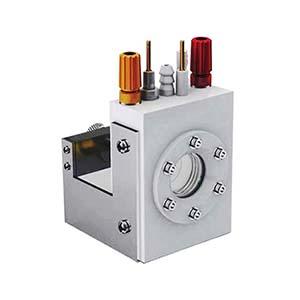
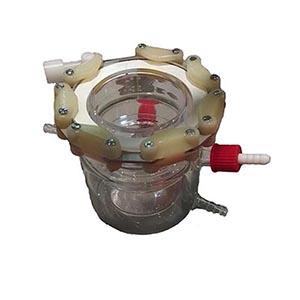
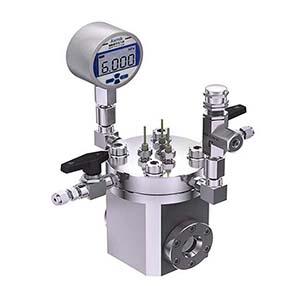
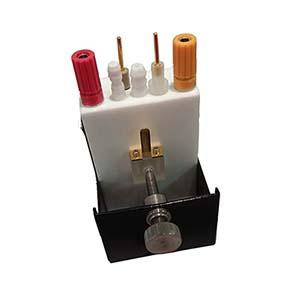
C007-10-2 2H Absolutely Sealed Replaceable Membrane Electrochemical Cell

- PRODUCT DETAIL
C007-10-2 2H Absolutely Sealed Replaceable Membrane
Electrochemical Cell
Product Introduction
The
C007-10-2 2H Absolutely Sealed Replaceable Membrane Electrochemical Cell is a
compact laboratory cell designed for membrane-separated electrochemical
experiments. Constructed from high-borosilicate glass, it features a 10 mL
capacity, a dual-chamber structure, and a replaceable ion-exchange membrane
separating the anode and cathode compartments.
Designed
primarily for three-electrode measurements, the cell supports customized
working, auxiliary, and reference electrodes. Its PTFE cover provides sealed
electrode connections, while the integrated aeration device allows gas
introduction below the electrolyte surface. Optional valves and a sampling port
further expand its experimental flexibility.
Performance Features
• High-Borosilicate Glass
Construction: Provides a durable glass vessel for laboratory
electrochemical applications.
• Compact
10 mL Capacity: Suitable for experiments requiring a small electrolyte
volume.
• Dual-Chamber
Configuration: An ion-exchange membrane separates the anode and cathode
chambers, supporting independent reaction environments.
• Replaceable Membrane
Design: The two chambers are connected through a sealed structure that allows
convenient membrane replacement.
• Custom Electrode
Matching: Working, auxiliary, and reference electrodes can be selected and customized
according to experimental requirements.
•Three-Electrode
Compatibility: Commonly configured with a working electrode, auxiliary
electrode, and reference electrode.
• Reduced iR Drop: The working
and reference electrodes are positioned in the same chamber to help reduce
uncompensated solution resistance.
• Overhead
Single-Layer Structure: Helps minimize solution retention and reduce
liquid accumulation in the cell.
• Sealed
Electrode Connections: Electrode ports use compression sealing rings,
while dedicated connection openings in the PTFE cover provide sealed electrode
feedthroughs.
• Below-Surface
Gas Introduction: An integrated aeration device introduces gas
directly into the electrolyte.
• Optional
Sampling Port: A sampling port can be added to the cell body for
convenient electrolyte sampling.
• Optional
Valve Connections: Valves can be added for expanded experimental
control. Quick-connect fittings use 3 mm diameter PTFE tubing.
Working Principle
The
C007-10-2 operates as a two-chamber electrochemical cell. An ion-exchange
membrane separates the anode and cathode compartments while allowing selective
ionic transport between them. This configuration supports experiments in which
the two electrode reactions need to take place in separate electrolyte
chambers.
The
cell typically uses a three-electrode system. A potentiostat applies or
measures electrical signals through the working, auxiliary, and reference
electrodes. Positioning the working and reference electrodes in the same
chamber helps reduce the distance between them and minimize uncompensated
solution resistance (iR drop).
The
PTFE cover and compression sealing structures provide sealed electrode
connections. Gas can be introduced below the liquid surface through the
aeration device to establish the required experimental atmosphere. Optional
valves and a sampling port allow additional control and monitoring during
testing.
Technical Parameters
Parameter
Specification
Model
C007-10-2
Product
Type
2H
Absolutely Sealed Replaceable Membrane Electrochemical Cell
Cell
Material
High-borosilicate
glass
Cell
Volume
10
mL
Cell
Structure
Dual-chamber
Chamber
Separation
Replaceable
ion-exchange membrane
Sealing
Type
Absolutely
sealed system
Electrode
Configuration
Commonly
three-electrode system
Electrode
Types
Working,
auxiliary, and reference electrodes
Electrode
Matching
Customized
according to experimental requirements
Electrode
Sealing
Compression
sealing ring
Cover
Material
PTFE
Electrode
Feedthrough
Dedicated
sealed openings in the PTFE cover
Working/Reference
Electrode Arrangement
Same
chamber to help reduce iR drop
Single-Layer
Design
Overhead
structure to reduce solution retention
Gas
Introduction
Below-liquid-surface
aeration device
Sampling
Port
Optional
Valves
Optional
Quick-Connect
Tubing
3
mm diameter PTFE tubing
Application Scenarios
The
C007-10-2 2H Electrochemical Cell is suitable for:
• Membrane-separated
electrochemical experiments
• Three-electrode
electrochemical measurements
• Electrocatalyst and
electrode material research
• Anode and cathode
reaction studies
• Gas-involved
electrochemical reactions
• Controlled-atmosphere
electrochemical testing
• Electrolyte sampling
and reaction monitoring
• Laboratory
research in electrochemistry, materials science, and chemical engineering
C007-10-2 vs. Conventional Electrochemical Cells
Comparison Item
C007-10-2 2H Cell
Conventional Single-Chamber Cell
Cell
Structure
Dual-chamber
design
Usually
one reaction chamber
Membrane
Separation
Replaceable
ion-exchange membrane
Usually
no membrane separation
Cell
Volume
10
mL
Varies
by model
Electrode
Configuration
Customizable
three-electrode system
Depends
on cell design
Electrode
Sealing
Sealed
PTFE cover and compression rings
Often
conventional electrode openings
Reference
Electrode Position
Same
chamber as working electrode
Depends
on configuration
Gas
Introduction
Integrated
below-surface aeration
Optional
or model-dependent
Sampling
Optional
sampling port
Depends
on cell design
Valve
Connections
Optional,
with 3 mm PTFE quick-connect tubing
Depends
on cell design
Typical
Applications
Membrane-separated
and gas-involved reactions
General
electrochemical testing
Frequently Asked Questions
1. What is the C007-10-2 2H Electrochemical Cell used for?
It
is designed for laboratory electrochemical research involving
membrane-separated reactions, three-electrode measurements, and controlled gas
introduction.
2. What is the capacity of the C007-10-2 cell?
The
cell has a nominal volume of 10 mL, making it suitable for experiments that
require relatively small electrolyte volumes.
3. How are the anode and cathode chambers separated?
An
ion-exchange membrane separates the two chambers. The sealed chamber connection
is designed to make membrane replacement convenient.
4. Can the electrodes be customized?
Yes.
The working, auxiliary, and reference electrodes must be matched to the cell
according to the experimental requirements.
5. Why are the working and reference electrodes placed in
the same chamber?
This
arrangement helps shorten the distance between the working and reference
electrodes, reducing uncompensated solution resistance and the associated iR
drop.
6. How does the electrode sealing system work?
The
electrode section uses compression sealing rings. Dedicated openings in the
PTFE cover provide sealed electrode feedthroughs to help maintain the cell's
sealed configuration.
7. Can gas be introduced into the electrolyte?
Yes.
The cell includes an aeration device that introduces gas below the liquid
surface.
8. Can the cell be equipped with a sampling port?
Yes.
A sampling port can be added to the cell body according to the experimental
requirements.
9. What tubing is used for optional valve connections?
The
optional valve system uses quick-connect fittings with 3 mm diameter PTFE
tubing.

NEXT:C008-1 3H Replaceable Membrane Electrolyzer